A Curiosity Approach home corner is more than just a play area—it’s a thoughtfully designed space that encourages imagination, independence, and real-life role play. Inspired by early years education principles, this approach focuses on creating a calm, natural, and engaging environment where children can explore freely.
If you want to transform your child’s play space into something meaningful and Pinterest-worthy, this guide will walk you through exactly how to create a Curiosity Approach home corner at home or in a classroom.
🌿 What Is the Curiosity Approach?
The Curiosity Approach is an early childhood philosophy that emphasizes natural materials, real-life objects, and child-led exploration. Instead of bright plastic toys, it focuses on authentic, open-ended resources that spark curiosity and creativity.
- Encourages independent play
- Uses real-life objects
- Promotes imagination over structured play
- Creates calm, cozy environments
🏠 What Is a Home Corner?
A home corner is a role-play area designed to mimic everyday home life. It allows children to pretend cook, clean, care, and organize—helping them develop social, emotional, and practical skills.
✨ Step-by-Step: Creating a Curiosity Approach Home Corner
1. Choose a Calm, Cozy Space
Start by selecting a quiet corner of your home or classroom. Avoid busy, cluttered areas. The goal is to create a peaceful environment that invites focus and creativity.
2. Use Neutral & Natural Tones
Replace bright plastic colors with soft, neutral tones like beige, cream, wood, and pastels. This helps create a calming atmosphere and enhances focus.
3. Add Real-Life Kitchen Items
Include safe, real household items such as:
- Wooden spoons
- Metal bowls
- Mini pots and pans
- Cloth napkins
4. Create Open Shelving
Display items neatly on low shelves so children can access them independently. Keep everything visible and organized to encourage self-directed play.
5. Add Textures and Fabrics
Incorporate soft textiles like linen, cotton, and woven baskets. These add warmth and sensory variety to the space.
6. Include Role-Play Elements
Add items that support imaginative play:
- Aprons
- Play food (preferably wooden or felt)
- Cleaning tools like small brushes or cloths
7. Keep It Minimal
Avoid overcrowding the space. A few carefully chosen items are more effective than too many toys.
8. Rotate Items Regularly
Change items every few weeks to keep the space fresh and exciting.
🎨 Styling Tips for Pinterest-Worthy Home Corners
- Use natural lighting for a soft look
- Add small plants or dried flowers
- Incorporate wooden furniture
- Use baskets for storage
💡 Benefits of a Curiosity Approach Home Corner
- Encourages independent thinking
- Develops real-life skills
- Improves focus and calmness
- Enhances creativity and imagination
💭 Final Thoughts
Creating a Curiosity Approach home corner doesn’t require expensive items—just thoughtful choices. By focusing on simplicity, natural materials, and real-life objects, you can build a beautiful space where children feel inspired to explore and learn.
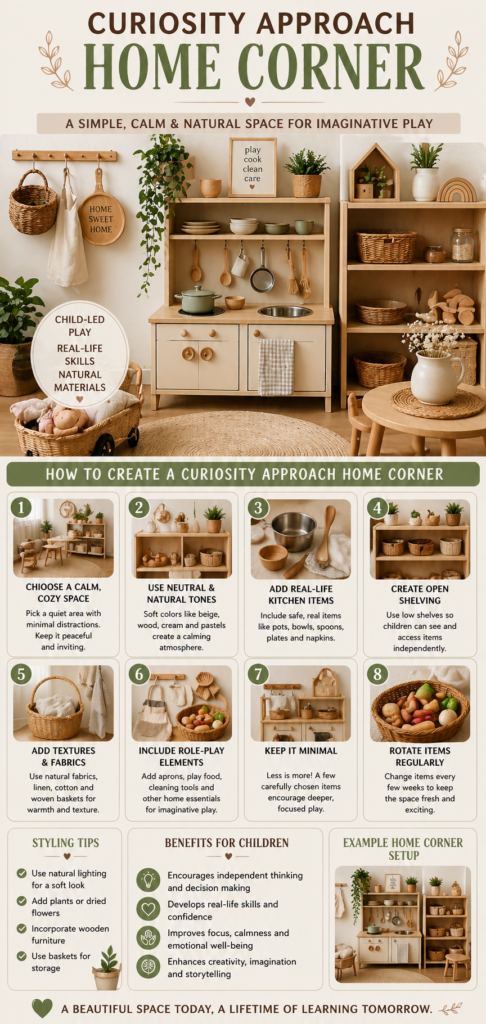
🖼️ Visual Setup Guide
Below is a vertical Pinterest-style image showing how to set up a Curiosity Approach home corner step-by-step.
