The announcement, released April 29, 2026, said ICE officers arrested several individuals across the country who had prior convictions for violent or serious criminal offenses. DHS described the arrests as part of the administration’s effort to enforce immigration law against people it identifies as criminal illegal aliens.
The release opened with a direct statement of the administration’s position, saying that under President Trump and Secretary Mullin, people who break the law will face consequences. DHS also stated that criminal illegal aliens are not welcome in the United States.
In the announcement, Acting Assistant Secretary Lauren Bis thanked ICE law enforcement officers and described the agency’s work as dangerous and essential to public safety. Bis said ICE personnel risk their lives every day to remove murderers, rapists, pedophiles, gang members and terrorists from communities.
“Thank you to the heroes of ICE law enforcement for making America safe again,” Bis said in the release.
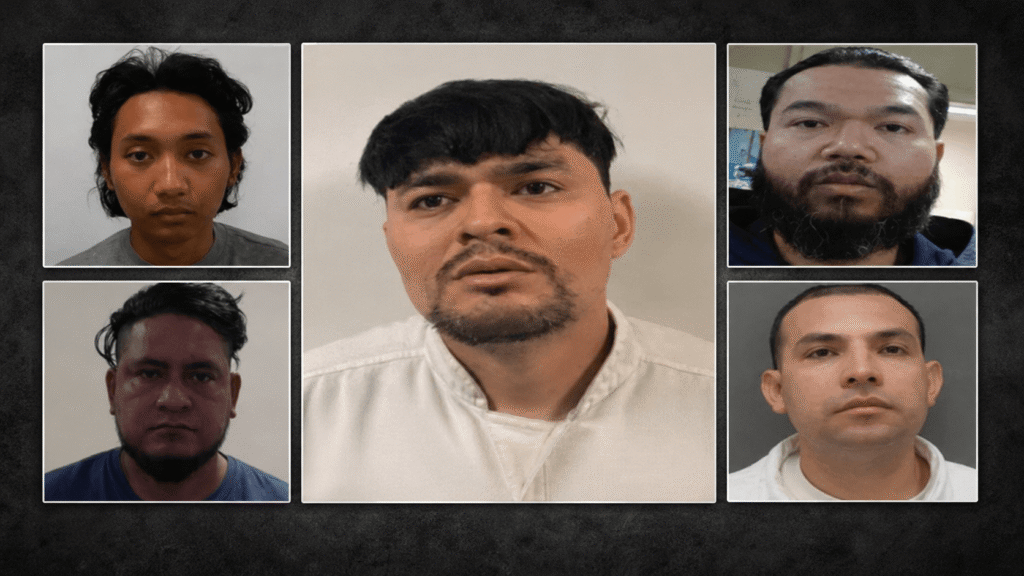
The arrests highlighted by DHS involved individuals with convictions in several states, including Texas, Massachusetts, California, Nevada and Maryland. The release did not provide a detailed timeline for each arrest or describe the operational circumstances under which the individuals were taken into custody. Instead, DHS listed the names, countries of origin and convictions associated with those arrested.
Among those identified was Ricardo Rosales-Pineda, whom DHS described as a criminal illegal alien from Mexico. According to the release, Rosales-Pineda was convicted for murder in Harris County, Texas.
DHS also identified Sarath Lon, described as a criminal illegal alien from Cambodia. The agency said Lon was convicted of homicide — second-degree murder — in Concord, Massachusetts.
Another person listed in the release was Osmar Contreras-Bautista, described by DHS as a criminal illegal alien from Guatemala. DHS said Contreras-Bautista was convicted in Bakersfield, California, for sex with a minor who was more than three years younger.
The agency also named Phil John Amazona Yumang, described as a criminal illegal alien from the Philippines. DHS said Yumang was convicted in Las Vegas, Nevada, for two counts of attempted murder and battery with the use of a deadly weapon.
The fifth person highlighted in the announcement was Christian David Meneses-Machado, whom DHS described as a criminal illegal alien from Nicaragua. According to the release, Meneses-Machado was convicted in Baltimore, Maryland, for transporting a regulated firearm for unlawful sale or trafficking.
The release did not say whether any of the listed individuals were still serving criminal sentences before being taken into immigration custody, whether they had completed sentences, or whether they were arrested directly from local, state or federal custody. DHS also did not provide immigration court dates, removal timelines or additional case histories for the individuals named.
Still, the announcement was written as a public safety message, emphasizing the seriousness of the convictions and the federal government’s position that people convicted of violent or sexually exploitative crimes should not remain in the country unlawfully.
ICE is the federal agency responsible for enforcing immigration laws inside the United States, including the arrest and removal of noncitizens who are subject to removal under immigration law. DHS frequently highlights arrests involving people with serious criminal convictions as part of its broader public messaging around immigration enforcement.
In this announcement, DHS focused on crimes involving violence, sexual offenses and weapons-related conduct. The agency’s list included two murder-related convictions, one conviction involving sex with a minor, one case involving two attempted murder convictions, and one firearm trafficking-related conviction.
The release did not include comments from attorneys or representatives for the people named. It also did not state whether any of the individuals plan to challenge removal proceedings or whether any immigration-related hearings are pending.
The use of the term “criminal illegal alien” in the announcement reflects the language used by DHS in the release. The agency used the phrase repeatedly to describe the people arrested and connected the arrests to the administration’s public safety and immigration enforcement priorities.
DHS did not provide a total number of people arrested in the announcement beyond saying ICE had arrested “more criminal illegal aliens” convicted of serious crimes. The release specifically named five individuals and described the convictions tied to each person.
The announcement also did not provide information about the specific ICE field offices involved, whether the arrests happened in coordinated operations, or whether local law enforcement agencies assisted in any of the arrests. No details were included about whether the arrests happened at homes, detention facilities, workplaces, courthouses or other locations.
What the release made clear is that DHS intended to highlight the severity of the criminal convictions connected to the people arrested. The agency used the announcement to reinforce its message that ICE officers are actively targeting people with serious criminal records who are unlawfully present in the United States.
For the administration, the arrests serve as an example of the kind of immigration enforcement it says is necessary to protect communities. For ICE, the announcement places attention on officers carrying out arrests involving individuals convicted of some of the most serious crimes recognized in the criminal justice system.
The cases named by DHS span several jurisdictions and offenses, but they were presented under one message: that ICE is continuing to arrest and remove criminal illegal aliens who have been convicted of violent, sexual or weapons-related crimes.
The announcement closed by emphasizing the agency’s appreciation for ICE law enforcement officers and the risks they face while carrying out immigration enforcement operations. DHS did not immediately provide further details in the release about next steps for the individuals arrested.