Pipe cleaner flowers are one of the easiest crafts to make when you want something colorful, cheerful, and beginner-friendly. They are soft, bendable, inexpensive, and surprisingly pretty once shaped into petals, stems, and leaves. Whether you are crafting with kids, decorating for spring, making handmade gifts, or looking for a relaxing weekend project, pipe cleaner flowers are a simple idea with endless possibilities.
The best part is that you do not need fancy supplies or advanced crafting skills. A small bundle of pipe cleaners can turn into daisies, tulips, roses, lavender sprigs, sunflowers, and sweet little bouquets. You can keep the flowers playful and bright, or you can choose softer colors for a more elegant handmade arrangement.
This guide will walk you through creative pipe cleaner flower ideas, helpful supplies, styling tips, and easy ways to use your finished flowers. These ideas are perfect for classroom crafts, party activities, Mother’s Day gifts, Easter decorations, spring centerpieces, and cute DIY home decor.
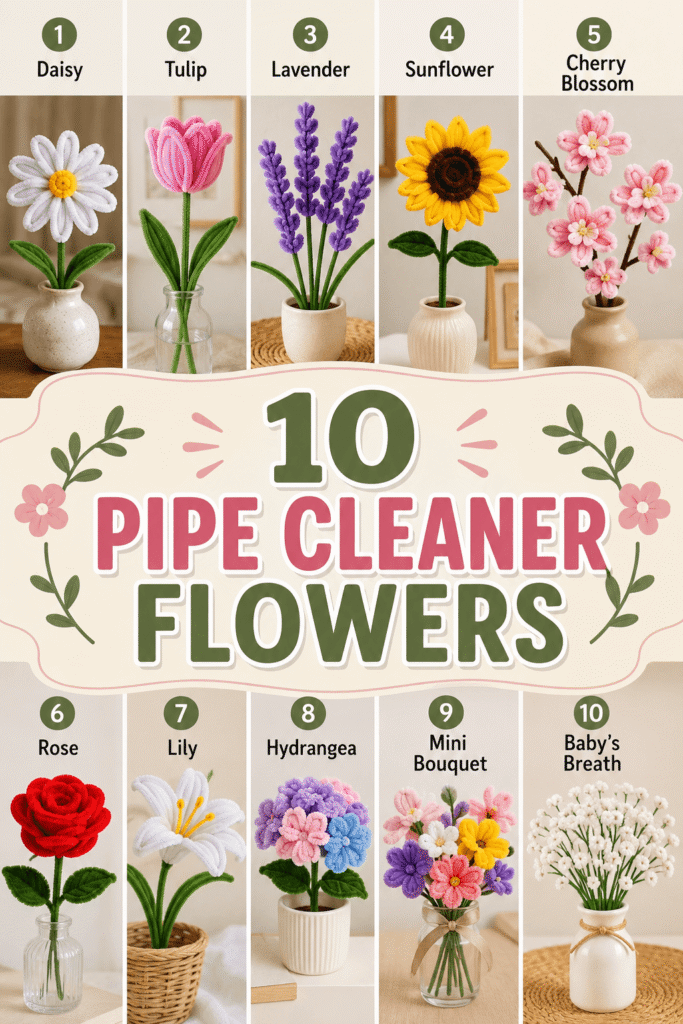
Why Pipe Cleaner Flowers Are So Fun to Make
Pipe cleaners are one of those craft supplies that almost everyone has seen, but they can do so much more than simple kid crafts. Because they are flexible, fluffy, and easy to twist, they are perfect for creating petals that hold their shape. You can bend them into loops, spirals, hearts, leaves, stems, and layered flower shapes without needing glue for every step.
Another reason pipe cleaner flowers are so popular is that they are very forgiving. If a petal looks uneven, you can reshape it. If a stem bends, you can straighten it. If you want a fuller flower, you can simply add more pipe cleaners. This makes the craft relaxing instead of stressful.
They are also lightweight and easy to display. You can place them in jars, tie them to gifts, add them to wreaths, or use them as party favors. Unlike real flowers, they last for a long time and can be made in any color palette you like.
Basic Supplies for Making Pipe Cleaner Flowers
You only need a few simple materials to get started. Most of these can be found at craft stores, dollar stores, or in a basic kids’ craft bin.
- Colorful pipe cleaners for petals
- Green pipe cleaners for stems and leaves
- Yellow, brown, or black pipe cleaners for flower centers
- Scissors or wire cutters
- Small beads or buttons for decorative centers
- Floral tape for a cleaner stem finish
- A small vase, mason jar, or ribbon for displaying flowers
For younger children, adult supervision is helpful when cutting pipe cleaners because the wire ends can be sharp. You can also fold the ends inward to make the flowers safer and neater.
Easy Pipe Cleaner Flower Ideas to Try
There are many different flowers you can make with pipe cleaners, from simple beginner blooms to more detailed layered designs. Start with basic flower shapes, then experiment with extra petals, color blends, and different stem styles.
1. Simple Daisy Pipe Cleaner Flowers
Daisies are a great first pipe cleaner flower because the shape is easy and instantly recognizable. Use white, pink, yellow, or pastel pipe cleaners to create petal loops around a bright center. A yellow pipe cleaner twisted into a small spiral works beautifully for the middle.
To make the petals, fold small sections into loops and twist them together at the base. Attach the flower head to a green pipe cleaner stem, then add one or two leaves. These are perfect for cheerful bouquets, classroom crafts, and spring decorations.
2. Pipe Cleaner Roses
Roses look impressive, but they can be made with a simple spiral technique. Roll a red, pink, peach, or white pipe cleaner into a tight coil, then gently loosen the outer edges to create a rose-like bloom. Add a green stem and small leaves underneath to complete the look.
For a fuller rose, twist two or three pipe cleaners together before coiling them. You can also use different shades of the same color to create a soft ombré effect. Pipe cleaner roses are especially cute for handmade cards, gift toppers, and mini bouquets.
3. Bright Tulip Pipe Cleaner Flowers
Tulips are a wonderful choice for spring crafts because they have a clean, simple shape. Use a pipe cleaner to form rounded petals that cup inward slightly. Red, yellow, purple, pink, and orange all work well for a tulip-inspired bouquet.
To make the flower look more realistic, create three or four petal loops and gather them together at the base. Wrap the bottom with a green pipe cleaner and extend it into a stem. Add one long leaf on each side for that classic tulip look.
4. Pipe Cleaner Sunflowers
Sunflowers are bold, happy, and perfect for summer crafts. Use yellow pipe cleaners for pointed or looped petals, then add a brown or black spiral center. The contrast between the bright petals and darker middle makes the flower stand out beautifully.
These flowers look great in bunches, especially when placed in a rustic jar or small basket. You can also make smaller sunflowers and attach them to napkin rings, pencil toppers, or handmade cards.
5. Lavender Pipe Cleaner Sprigs
Lavender is a lovely option if you prefer a more delicate and elegant craft. Use a green pipe cleaner as the stem, then twist small purple pieces along the top portion to create tiny lavender buds. The result is simple, soft, and beautiful.
Pipe cleaner lavender looks especially pretty when gathered into a small bundle and tied with twine or ribbon. It is a charming idea for farmhouse-style decor, gift wrapping, or a handmade bouquet that feels calm and cozy.
How to Make a Basic Pipe Cleaner Flower
A basic pipe cleaner flower can be made in just a few steps. Once you understand the structure, you can adjust the size, color, and number of petals to create different flower styles.
- Choose one pipe cleaner for the petals and one green pipe cleaner for the stem.
- Fold the petal pipe cleaner into equal loops, twisting at the center after each loop.
- Shape the loops into rounded petals with your fingers.
- Twist a small yellow or contrasting pipe cleaner into a spiral for the flower center.
- Attach the center to the front of the petals by twisting the ends behind the flower.
- Secure the flower head to the green stem.
- Add leaves by folding small green loops and twisting them onto the stem.
This method works for daisies, simple blossoms, and many kid-friendly flower designs. You can make the petals larger for a bold flower or smaller for a mini bouquet.
Tips for Making Pipe Cleaner Flowers Look Better
Small details can make your pipe cleaner flowers look more polished. One helpful tip is to keep your petal sizes consistent. You do not need them to be perfect, but similar shapes help the finished flower look balanced.
Another tip is to use color thoughtfully. A flower made with two shades of pink can look more realistic than one flat color. For playful crafts, mix bold colors like orange, teal, purple, and yellow. For softer decor, choose pastels, creams, sage green, and blush tones.
You can also hide messy twists by wrapping the base of the flower with green pipe cleaner or floral tape. This makes the flower head look more finished and helps secure it to the stem. If the stem feels too floppy, twist two green pipe cleaners together for extra strength.
Creative Ways to Use Pipe Cleaner Flowers
Once you have made a few flowers, there are many ways to use them. They are more than just a simple craft project; they can become decorations, gifts, accessories, and party details.
- Place them in a small vase for a colorful desk arrangement.
- Attach them to wrapped gifts instead of a bow.
- Use them as handmade Mother’s Day or teacher appreciation gifts.
- Turn mini flowers into pencil toppers.
- Add them to a spring wreath or garland.
- Use them as party favors for birthdays or garden parties.
- Glue them onto cards, scrapbook pages, or craft signs.
- Create a bouquet for pretend play or classroom decor.
These flowers are especially useful because they do not wilt. You can make them ahead of time for events, save them from year to year, or let children create their own lasting bouquet.
Pipe Cleaner Flower Bouquets
A pipe cleaner flower bouquet is a beautiful way to combine several flower styles into one finished craft. Try mixing daisies, roses, tulips, and lavender sprigs for a bouquet that has shape and texture. Add extra green leaves between the flowers to make the arrangement look fuller.
For a giftable bouquet, wrap the stems in tissue paper or kraft paper and tie them with ribbon. You can also place the flowers in a mason jar with small stones, pom-poms, or beads at the bottom to help the stems stand upright.
If you are crafting with kids, let each child make one flower, then combine them into a group bouquet. This works well for classroom gifts, family craft nights, or spring bulletin board displays.
Pipe Cleaner Flowers for Kids
Pipe cleaner flowers are a wonderful craft for kids because they encourage creativity, hand strength, and shape recognition. Children can practice twisting, looping, bending, and arranging colors while making something they are proud to display.
For younger kids, keep the design simple. A five-petal daisy or basic loop flower is usually enough. Older kids can try roses, layered flowers, or more detailed bouquets. You can also turn the activity into a color lesson by asking children to create flowers using warm colors, cool colors, or rainbow order.
This craft is also a great choice for rainy days, birthday parties, summer camps, and quiet afternoons at home. The supplies are easy to set out, and the cleanup is much simpler than paint or glitter.
Pipe Cleaner Flowers for Gifts and Decor
Handmade flowers feel thoughtful because they show time and care. A small bunch of pipe cleaner flowers can brighten a desk, windowsill, shelf, or bedside table. They are also a sweet gift for grandparents, parents, teachers, neighbors, and friends.
To make the flowers feel more grown-up, choose a coordinated color palette. Soft pink and cream roses look romantic, while yellow sunflowers and green leaves feel sunny and rustic. Purple lavender with sage green stems creates a calm, cottage-inspired look.
You can also add a handmade tag with a short message. Since the flowers last, the gift becomes a keepsake instead of something temporary.
Common Mistakes to Avoid
One common mistake is making the petals too large for the stem. If the flower head is heavy, the stem may bend or flop. To fix this, use smaller petals or twist two green pipe cleaners together for a stronger stem.
Another mistake is leaving sharp wire ends exposed. Fold the ends inward or tuck them behind petals so the flowers feel neat and safe to handle. This is especially important for kids’ crafts.
Finally, avoid overcrowding one flower with too many colors or bulky pieces. Pipe cleaner flowers look best when the design is clear. Choose one main petal color, one center color, and green for the stem, then add extra details only where they help the design.
Final Thoughts on Pipe Cleaner Flowers
Pipe cleaner flowers are a bright, affordable, and creative craft that anyone can enjoy. They are easy enough for beginners, but flexible enough for more detailed designs. With just a few colorful pipe cleaners, you can create flowers that look cheerful, handmade, and full of personality.
Whether you make a single daisy, a bouquet of roses, a bunch of lavender sprigs, or a playful rainbow arrangement, this craft is a wonderful way to add color to your day. Save this idea for spring crafting, handmade gifts, classroom projects, party activities, or anytime you want a simple DIY project that turns out beautifully.