Learning how to clean a tea kettle is one of those simple home tasks that makes a big difference. A kettle can look fine on the outside while slowly collecting mineral buildup, tea stains, water spots, and even unpleasant odors inside. If your kettle has cloudy residue, white flakes, dull metal, or a strange taste in the water, it is probably ready for a good clean.
The good news is that cleaning a tea kettle does not need to be complicated. Most kettles can be refreshed with common household ingredients like white vinegar, lemon juice, baking soda, or citric acid. With the right method, you can remove limescale, brighten the exterior, clean the spout, and keep your kettle looking beautiful on the counter.
This guide covers easy tea kettle cleaning methods for stovetop kettles, electric kettles, stainless steel kettles, glass kettles, and enamel kettles. You will also find maintenance tips to help prevent buildup so your kettle stays cleaner between deep cleans.
Why Tea Kettles Get Dirty
Tea kettles mostly collect mineral buildup from water. If you live in an area with hard water, calcium and magnesium can leave behind white, chalky deposits called limescale. This buildup often appears on the bottom of the kettle, around the heating element, near the spout, or along the water line.
Even if you only boil water, your kettle can still develop residue over time. If you use your kettle for tea, herbal infusions, or flavored drinks, stains and odors can build up faster. Stovetop kettles may also collect grease, fingerprints, water spots, or heat marks on the outside.
Regular cleaning helps your kettle heat more efficiently, keeps your drinks tasting fresh, and makes the kettle look nicer in your kitchen. It is a small habit that keeps a daily-use item in better condition.
Before You Start Cleaning
Before cleaning any kettle, check the care instructions from the manufacturer if you still have them. Electric kettles need extra care because the base, cord, plug, and electrical parts should never be soaked in water. For stovetop kettles, pay attention to the finish because enamel, copper, glass, and stainless steel may need slightly different handling.
Always let the kettle cool completely before cleaning. Empty any leftover water and remove loose flakes or debris. If the kettle is electric, unplug it first and keep the outside connection points dry.
Also, never mix bleach with vinegar, lemon juice, or other acids. You do not need harsh chemicals to clean a tea kettle, and mixing cleaners can be dangerous. Simple household methods are usually enough.
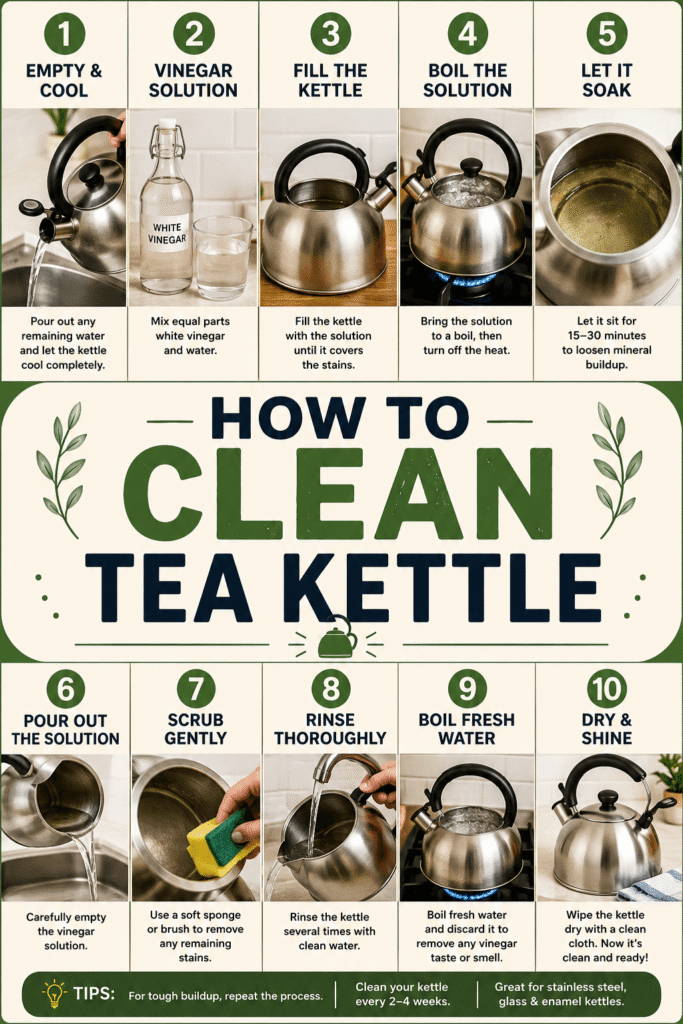
How to Clean the Inside of a Tea Kettle with Vinegar
White vinegar is one of the most popular ways to descale a tea kettle because it helps dissolve mineral buildup. It works especially well for hard water stains and white deposits inside the kettle.
- Fill the kettle halfway with equal parts white vinegar and water.
- Bring the mixture to a boil if your kettle allows boiling with vinegar.
- Turn off the heat or unplug the kettle and let it sit for 20 to 30 minutes.
- Pour out the mixture carefully.
- Rinse the kettle several times with fresh water.
- Boil plain water once or twice and discard it to remove any vinegar smell.
For heavy limescale, let the vinegar solution sit longer before rinsing. If flakes remain, gently wipe the inside with a soft sponge or bottle brush. Avoid sharp tools because they can scratch the surface.
How to Clean a Tea Kettle with Lemon
Lemon is a great option if you want a fresher scent than vinegar. The natural acidity helps loosen mineral deposits while leaving the kettle smelling clean and bright. This method works well for light to moderate buildup.
- Slice one lemon and place the slices inside the kettle.
- Add enough water to cover the stained or scaled areas.
- Boil the lemon water, then turn off the heat.
- Let the lemon water sit for 20 to 30 minutes.
- Pour it out and rinse thoroughly.
- Wipe the inside gently if needed.
You can also use bottled lemon juice if you do not have fresh lemons. After cleaning, boil plain water once and pour it out before making tea. This helps remove any lingering lemon flavor.
How to Use Citric Acid for Tough Limescale
Citric acid is another excellent descaling option, especially for stubborn hard water buildup. It is often used for kettles, coffee makers, and other appliances that collect mineral deposits.
To use it, add about one to two tablespoons of citric acid to a kettle filled halfway with water. Boil the mixture, let it sit for 15 to 20 minutes, then pour it out. Rinse thoroughly and boil plain water once before using the kettle again.
This method is especially helpful for glass kettles because it can make cloudy buildup easier to remove. It is also a good choice when vinegar smell feels too strong.
How to Clean Tea Stains and Odors with Baking Soda
Baking soda is useful for cleaning mild stains and neutralizing odors. It is less acidic than vinegar or lemon, so it is not the strongest descaler, but it works well for freshening the kettle and removing light discoloration.
- Add one to two teaspoons of baking soda to warm water inside the kettle.
- Let it sit for 15 minutes.
- Use a soft sponge or bottle brush to gently clean the inside.
- Pour out the mixture.
- Rinse several times until no baking soda residue remains.
For small stained areas, make a paste with baking soda and a few drops of water. Apply the paste with a soft cloth, rub gently, then rinse well. This can also help clean the outside of stainless steel kettles.
How to Clean the Outside of a Tea Kettle
The outside of a tea kettle can collect fingerprints, grease splatters, water spots, and dull residue. For most stainless steel or enamel kettles, warm water and a few drops of mild dish soap are enough for everyday cleaning.
Use a soft cloth or sponge to wipe the outside, then rinse with a damp cloth. Dry it immediately with a clean towel to prevent water spots. For stainless steel, wiping in the direction of the grain can help the finish look smoother and shinier.
If there are stubborn marks, try a baking soda paste. Rub gently and avoid rough scrubbers, steel wool, or abrasive pads, especially on enamel, painted, or polished finishes. For glass kettles, a microfiber cloth works well to remove spots without scratching.
How to Clean the Spout and Lid
The spout and lid are easy to forget, but they can trap mineral flakes and residue. A small bottle brush, straw brush, or soft toothbrush can help reach narrow areas. Dip the brush in warm soapy water and gently scrub inside the spout as far as you can reach.
If the spout has limescale, let the kettle sit with a vinegar, lemon, or citric acid solution before brushing. This softens the buildup and makes it easier to remove. Rinse well so no cleaner remains trapped near the opening.
Clean the lid separately if it comes off. Wash it with warm soapy water, rinse, and dry it completely before placing it back on the kettle.
How Often Should You Clean a Tea Kettle?
How often you clean your tea kettle depends on how frequently you use it and how hard your water is. If you use the kettle every day, a quick rinse and dry every few days can help prevent residue. A deeper descale every two to four weeks is helpful for many households.
If you notice white flakes in the water, cloudy buildup, slower boiling, or a stale smell, clean the kettle sooner. Hard water areas may require more frequent descaling, while soft water areas may need it less often.
Tips to Keep Your Tea Kettle Cleaner Longer
A few simple habits can reduce buildup and make deep cleaning easier. The most important habit is to empty leftover water after each use. Letting water sit inside the kettle can encourage mineral deposits and stale odors.
- Empty the kettle after boiling instead of storing water inside.
- Leave the lid open for a short time so the inside can dry.
- Use filtered water if hard water causes heavy scale.
- Wipe the exterior regularly with a soft cloth.
- Descale before buildup becomes thick or flaky.
- Avoid boiling tea leaves, milk, or sugary drinks directly in the kettle unless the kettle is designed for it.
These small steps help keep your kettle fresh, clean, and ready for your next cup of tea.
Common Tea Kettle Cleaning Mistakes to Avoid
One common mistake is using harsh scrubbers inside the kettle. Scratches can make surfaces harder to clean in the future and may damage protective finishes. Use soft sponges, cloths, or gentle brushes instead.
Another mistake is forgetting to rinse after descaling. Vinegar, lemon, and citric acid are helpful cleaners, but they should not be left behind in the kettle. Rinse thoroughly and boil plain water once before making tea.
For electric kettles, the biggest mistake is submerging the kettle, base, or plug. Clean electric parts carefully with a damp cloth only, and keep the base completely dry.
Final Thoughts on Cleaning a Tea Kettle
Cleaning a tea kettle is simple when you use the right method for the type of buildup you have. Vinegar, lemon, and citric acid are great for limescale, while baking soda helps with odors and light stains. A soft cloth and mild dish soap can keep the outside looking polished and clean.
With regular care, your kettle can stay fresh, shiny, and pleasant to use every day. Whether you have a stovetop kettle, electric kettle, glass kettle, or stainless steel kettle, these easy cleaning methods will help you enjoy better-tasting tea and a cleaner kitchen routine.
“`
## 2. Pinterest Titles
1. How to Clean a Tea Kettle and Remove Limescale Fast
2. Easy Tea Kettle Cleaning Tips for a Fresh, Shiny Kettle
3. The Best Way to Clean a Tea Kettle with Vinegar, Lemon, and Baking Soda
## 3. Pinterest Description
Learn how to clean a tea kettle with simple household ingredients like vinegar, lemon, baking soda, and citric acid to remove limescale, stains, odors, and water spots. These easy tea kettle cleaning tips work for stovetop, electric, stainless steel, and glass kettles so your tea tastes fresh every time. #HowToCleanTeaKettle #TeaKettleCleaning #CleaningTips #KitchenCleaning #DescaleKettle #HomeHacks #CleanHome #NaturalCleaning