Learning how to clean an oven without scrubbing can make one of the most dreaded kitchen chores feel much easier. Burnt-on grease, baked spills, sticky residue, and smoky food splatters can make an oven look impossible to clean. The good news is that you do not always need heavy scrubbing to loosen the mess.
The secret is time, steam, and the right gentle cleaning method. Instead of attacking the oven with a rough pad, you can soften grime first so it wipes away with far less effort. A no-scrub oven cleaning routine is especially helpful if you want to avoid harsh scraping, protect the oven finish, or simply make the job feel less exhausting.
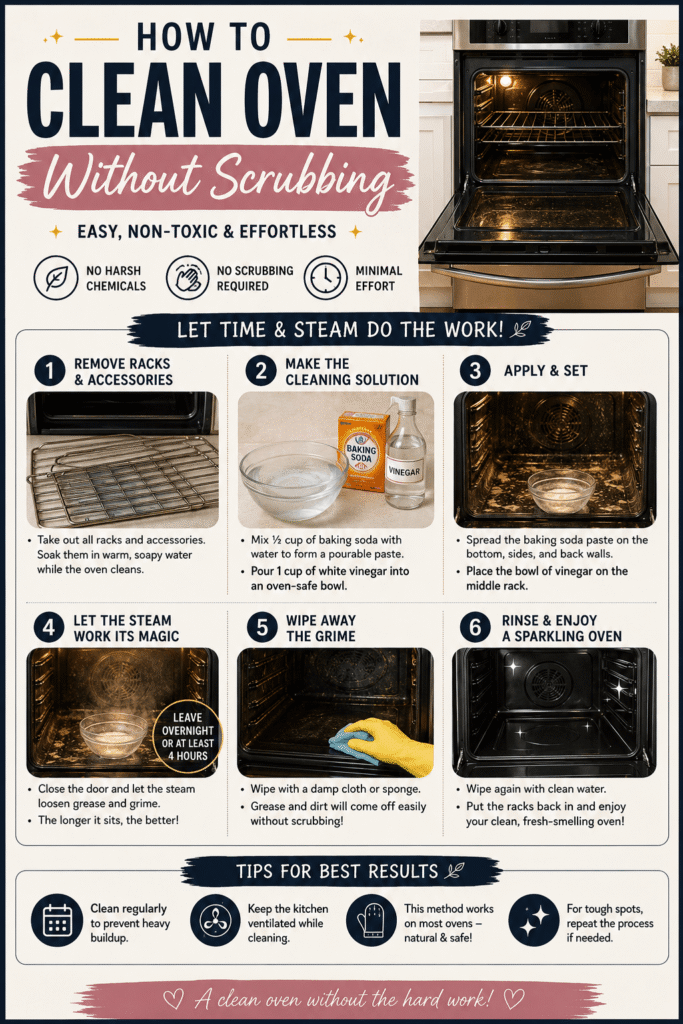
This guide covers easy ways to clean an oven without scrubbing, including baking soda paste, vinegar steam, lemon steam, dish soap soaking, oven rack cleaning, door glass cleaning, and maintenance tips. These methods are practical for everyday ovens and can help your kitchen feel cleaner without turning oven cleaning into a full workout.
Before You Start: Oven Cleaning Safety Tips
Before cleaning your oven, make sure it is completely cool. Remove pans, loose crumbs, foil, and anything stored inside. If your oven is electric, avoid soaking heating elements. If your oven is gas, avoid getting excess liquid near the igniter, burner holes, or vents.
Always check your oven manual if you are unsure about a cleaning method. Some oven interiors, coatings, and self-cleaning models have special care instructions. If the manual says not to use certain products or abrasive tools, follow that guidance first.
Keep the kitchen ventilated while cleaning. Open a window or turn on the range hood if you are using steam, vinegar, lemon, or any commercial oven cleaner. Wear gloves if your skin is sensitive, and never mix cleaners together. Mixing bleach with vinegar, ammonia, or other cleaners can create dangerous fumes.
Why No-Scrub Oven Cleaning Works
No-scrub oven cleaning works by softening stuck-on grease before you wipe it away. Most oven messes become difficult because heat bakes food spills onto the oven walls, floor, racks, and glass. If you give a cleaner enough time to sit, the residue loosens and requires much less effort.
Steam also helps because warm moisture can soften splatters and dried food. This is why lemon water, vinegar water, or plain water can make wiping easier after a short warming period. You may still need light wiping, but the goal is to avoid aggressive scrubbing.
Think of it like soaking a dirty pan. A pan is easier to clean after sitting with warm soapy water, and an oven is similar. The longer you let safe cleaners do the work, the less elbow grease you need.
Method 1: Baking Soda Paste Overnight
Baking soda is a popular no-scrub oven cleaning option because it is gentle, inexpensive, and helpful for greasy residue. It works best when you let it sit for several hours or overnight.
- Remove oven racks.
- Mix baking soda with a small amount of water to make a spreadable paste.
- Spread the paste over greasy areas, avoiding heating elements, igniters, vents, and fans.
- Let it sit for several hours or overnight.
- Wipe away the paste with a damp cloth.
- Repeat with clean damp cloths until no residue remains.
For stubborn spots, press a damp cloth over the area for a few minutes before wiping. This rehydrates the baking soda and helps loosen the grime. You should not need heavy scrubbing if the paste has had enough time to work.
Method 2: Vinegar Steam for Light Grease
Vinegar steam is useful for light oven grime, everyday residue, and mild odors. It is not always strong enough for thick burnt-on messes, but it can make a lightly dirty oven much easier to wipe clean.
- Fill an oven-safe dish with water and a splash of white vinegar.
- Place the dish on the oven rack.
- Warm the oven on a low setting for 20 to 30 minutes.
- Turn off the oven and let it cool until safe to touch.
- Wipe the softened residue with a damp microfiber cloth.
The steam helps loosen stuck-on splatters, while the vinegar helps cut mild grease and odor. Make sure the oven is not too hot when wiping. Warm is helpful, but hot surfaces can burn skin or damage cleaning cloths.
Method 3: Lemon Steam for Freshness
Lemon steam is a great choice if your oven smells smoky or stale. It works similarly to vinegar steam but leaves a fresher scent. This method is best for light cleaning and maintenance rather than heavy baked-on spills.
- Slice one or two lemons.
- Place the slices in an oven-safe dish with water.
- Warm the oven on low for 20 to 30 minutes.
- Turn the oven off and let it cool slightly.
- Wipe the interior with a damp cloth.
Lemon steam can make the oven feel fresher after cooking fish, roasted vegetables, casseroles, or anything that leaves behind a strong smell. For thicker grease, use lemon steam first, then follow with baking soda paste if needed.
Method 4: Dish Soap Soak for Oven Racks
Oven racks often collect the most stubborn grime, but soaking can do most of the work for you. Instead of scrubbing immediately, give the grease time to loosen in warm soapy water.
- Remove the oven racks.
- Place them in a bathtub, large sink, or storage bin.
- Add warm water and a few drops of dish soap.
- Let the racks soak for several hours or overnight.
- Wipe with a sponge or cloth.
- Rinse and dry fully before placing them back in the oven.
Place an old towel underneath the racks if soaking them in a bathtub. This helps protect the tub surface from scratches. For extra greasy racks, add a little baking soda to the water and let time do the work.
Method 5: No-Scrub Oven Door Glass Cleaning
Oven door glass can look cloudy from grease, steam, and baked-on splatters. A baking soda paste works well here too because it clings to the glass and softens residue.
- Mix baking soda and water into a paste.
- Spread a thin layer over the inside oven glass.
- Let it sit for 20 to 30 minutes.
- Wipe with a damp microfiber cloth.
- Buff dry with a clean towel.
Avoid using sharp blades unless your oven manual says it is safe for the glass. If the door has vents or openings, keep excess water away from them so liquid does not drip between the glass panels.
Method 6: Use the Self-Clean Feature Carefully
Some ovens have a self-clean feature that uses very high heat to turn food residue into ash. This can reduce scrubbing, but it is not the right choice for every oven or every household. It can create smoke, strong odors, and heat, especially if the oven has a lot of grease inside.
If you use the self-clean feature, remove racks if your manual recommends it, wipe out loose crumbs first, ventilate the kitchen, and follow the appliance instructions exactly. Do not leave heavy spills inside before starting the cycle. After the oven cools completely, wipe away the ash with a damp cloth.
If you have birds, sensitive pets, respiratory sensitivities, or concerns about heat and smoke, choose a gentler steam or baking soda method instead.
Method 7: Commercial No-Scrub Oven Cleaner
A commercial no-scrub oven cleaner can be helpful for very greasy ovens, but it should be used carefully. Always choose a product that is appropriate for your oven type and follow the label directions. Some products are not meant for self-cleaning ovens, convection fans, aluminum, painted surfaces, or certain coatings.
Ventilate the kitchen, wear gloves, and keep children and pets away while the product works. Do not mix commercial oven cleaner with vinegar, bleach, ammonia, or homemade cleaners. After the recommended wait time, wipe thoroughly until no residue remains.
How to Clean the Oven Floor Without Scrubbing
The oven floor often catches drips from cheese, sauces, pies, casseroles, and roasted meats. For a no-scrub method, remove loose crumbs first. Then apply baking soda paste to the cooled oven floor, avoiding vents and heating elements.
Let the paste sit overnight if the mess is baked on. The next day, wipe with a damp cloth. If residue remains, place a damp cloth over the spot for a few minutes to soften it again. Repeat gently rather than scrubbing hard.
How to Prevent Oven Messes
The easiest no-scrub oven cleaning method is prevention. Small habits can stop spills from baking onto the oven in the first place. This keeps future cleaning faster and much easier.
- Place a baking sheet under pies, casseroles, and cheesy dishes.
- Wipe fresh spills after the oven cools.
- Use deep baking dishes for saucy recipes.
- Do not overfill pans.
- Cover splattery foods when the recipe allows.
- Clean small messes before using high heat again.
- Keep oven racks from touching wet spills.
A few seconds of prevention can save a lot of cleaning later. Once food spills bake repeatedly, they become much harder to remove without stronger methods.
What Not to Do When Cleaning an Oven
No-scrub cleaning is meant to be easier and safer, but there are still a few mistakes to avoid. The wrong tools or cleaners can damage your oven or create fumes.
- Do not mix cleaning products.
- Do not use bleach inside the oven.
- Do not pour water directly onto heating elements.
- Do not use steel wool on coated oven interiors.
- Do not scrape with sharp tools unless the manual says it is safe.
- Do not spray cleaner into fans, vents, igniters, or control panels.
- Do not run self-clean with heavy grease or large food spills inside.
Gentle cleaning may take longer, but it is usually easier on the appliance. Let soaking time and steam do the hard work instead of relying on force.
How Often Should You Clean Your Oven?
How often you clean your oven depends on how frequently you cook and how messy your recipes are. If you bake often, roast meats, make casseroles, or cook saucy foods, a quick wipe after spills can help prevent buildup. A deeper cleaning every one to three months is a realistic goal for many kitchens.
If the oven smokes, smells burnt, or has visible grease on the walls and floor, clean it sooner. Smoke during preheating is often a sign that old food residue is burning again.
Final Thoughts on Cleaning an Oven Without Scrubbing
You can clean an oven without heavy scrubbing by using soaking time, steam, baking soda paste, dish soap, and gentle wiping. The key is patience. When you let grime soften first, the mess is much easier to remove.
Start with the gentlest method that fits your oven: baking soda paste for baked-on grease, vinegar or lemon steam for light residue, soapy soaking for racks, and careful commercial cleaners only when needed. With regular maintenance and smart spill prevention, your oven can stay cleaner without exhausting scrubbing sessions.