A well-designed mudroom can completely change the way your home feels when you walk through the door. Instead of shoes scattered across the floor, bags dropped on chairs, and coats piled anywhere they land, a mudroom gives every everyday item a clear place to go.
The best mudroom ideas are both practical and pretty. They help you manage clutter, protect your floors, simplify busy mornings, and create a welcoming transition between the outdoors and the rest of your home.
Whether you have a large entryway, a narrow hallway, a garage entrance, or just a small wall near the back door, you can create a mudroom setup that works beautifully. These ideas will help you design a space that looks polished, feels intentional, and makes daily life easier.
Why a Mudroom Is Worth Creating
A mudroom is more than a spot to take off shoes. It is a hardworking drop zone for the items your household uses every day, including coats, backpacks, keys, sports gear, dog leashes, umbrellas, and seasonal accessories.
When the entry area is organized, the rest of the home feels cleaner. You are less likely to track dirt through the house, lose important items, or waste time searching for what you need before leaving.
A beautiful mudroom can also add style and personality to your home. With the right combination of storage, seating, hooks, baskets, and finishes, even a small mudroom can feel custom and inviting.
1. Built-In Mudroom Lockers
Built-in lockers are one of the most classic mudroom ideas because they give each person a dedicated storage zone. A tall locker-style setup can include hooks for coats, cubbies for bags, shelves for hats, and baskets for smaller items.
This type of mudroom works especially well for families. Each child or household member can have their own station, which makes it easier to keep backpacks, jackets, shoes, and school supplies separated.
For a polished look, paint the lockers in a color that complements the rest of your home. Soft white, warm beige, sage green, navy blue, charcoal, and greige are all beautiful options that work with many decor styles.
2. A Storage Bench With Shoe Cubbies
A bench is one of the most useful features you can add to a mudroom. It gives everyone a comfortable place to sit while putting on or taking off shoes, and it can double as hidden or open storage.
Shoe cubbies underneath the bench keep footwear off the floor and make the space instantly neater. Open cubbies are easy for kids to use, while baskets can hide less attractive items and create a softer, more decorative look.
To make the bench feel cozy, add a washable cushion or a few simple pillows. Choose durable fabrics in colors that can handle everyday use, especially if your mudroom is near an exterior door.
3. Wall Hooks for Everyday Essentials
Wall hooks are simple, affordable, and extremely effective. They are perfect for coats, tote bags, hats, dog leashes, umbrellas, and reusable shopping bags.
Hooks are often easier to use than hangers, especially in a busy household. When storage is quick and effortless, everyone is more likely to put things where they belong.
For a designer look, install hooks on a wood rail, beadboard panel, or painted accent wall. Black metal hooks create a modern farmhouse feel, brass hooks add warmth, and simple wood pegs give the space a clean Scandinavian look.
4. A Small Mudroom Nook
You do not need a full room to create a functional mudroom. A small nook near the front door, back door, laundry room, or garage entry can become an organized drop zone with just a few smart pieces.
Use a narrow bench, a row of hooks, and a slim shelf to create a mini mudroom in a tight area. Even a small wall can hold bags, jackets, and keys when it is planned well.
To keep a small mudroom from feeling crowded, use light colors and simple storage. Choose pieces that fit the wall without blocking the walkway, and avoid adding too many decorative items.
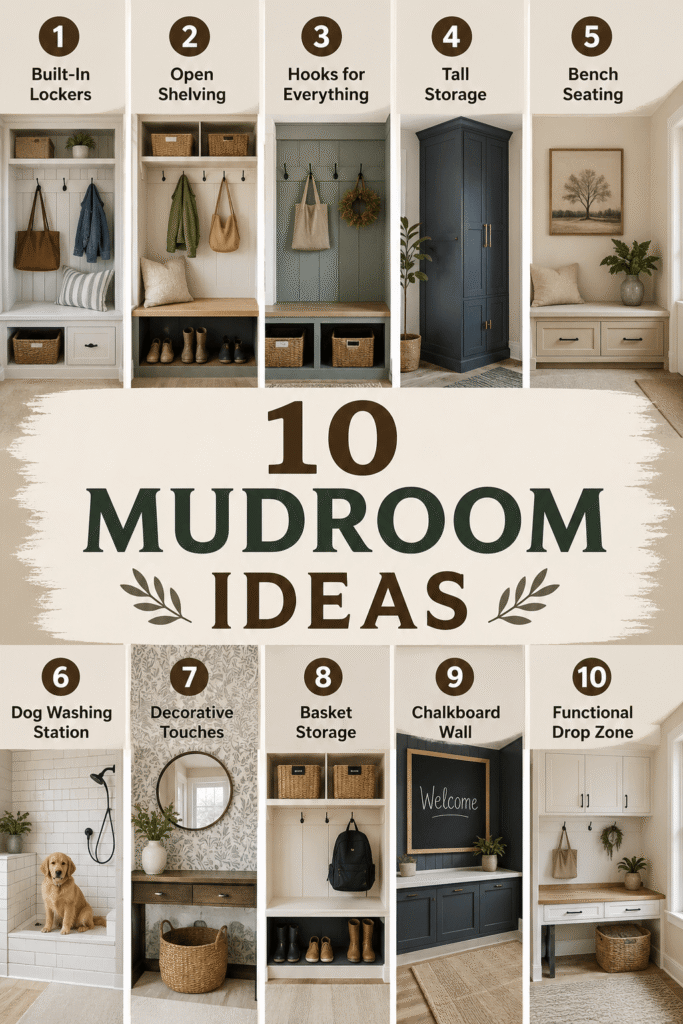
5. Baskets for Hidden Storage
Baskets are one of the easiest ways to make a mudroom look organized. They hide visual clutter while still keeping everyday items easy to reach.
Use baskets for gloves, scarves, pet supplies, sunscreen, sports accessories, cleaning cloths, or extra socks. Labeling each basket can make the system even easier to maintain.
Natural woven baskets add warmth and texture, while wire baskets create a more industrial or farmhouse look. Fabric bins can work well in family mudrooms because they are lightweight and easy to pull in and out of cubbies.
6. Durable Flooring for Muddy Shoes
Because a mudroom handles wet shoes, dirty boots, and outdoor gear, flooring matters. The right floor should be easy to clean, moisture-resistant, and durable enough for daily traffic.
Tile is a popular mudroom choice because it is practical and stylish. Patterned tile can turn the space into a statement area, while slate, brick, or stone-look tile can add a timeless, hardworking feel.
If you prefer a softer look, choose luxury vinyl plank or waterproof flooring that can handle spills and dirt. Add a washable rug or runner to catch debris and make the entry feel more welcoming.
7. A Mudroom Laundry Combo
If your laundry room is near an exterior door, it can easily double as a mudroom. This layout is especially helpful because dirty clothes, towels, and sports uniforms can go straight into the wash.
Combine laundry storage with entryway organization by adding hooks, a bench, cabinets, and a shoe mat. Use upper cabinets for detergent and cleaning supplies, then reserve lower areas for shoes, bags, and pet items.
A mudroom laundry combo should feel organized instead of overcrowded. Keep surfaces clear, use matching bins, and choose a simple color palette so the room feels calm and functional.
8. Pet-Friendly Mudroom Storage
A mudroom is the perfect place to organize pet essentials. Leashes, harnesses, towels, treats, waste bags, grooming tools, and food containers can all be stored near the door for easy access.
Add a hook for each leash, a basket for toys, and a washable mat for wet paws. If you have the space, a lower cabinet or pull-out drawer can hold pet food and supplies while keeping them out of sight.
For homes with dogs, keep a stack of absorbent towels near the entrance. This makes it easy to wipe paws before pets walk through the house.
9. Cabinets for a Clean, Hidden Look
If you prefer a tidy and minimal entryway, closed cabinets may be the best mudroom solution. Cabinets hide coats, shoes, bags, and supplies so the space always looks cleaner from the outside.
Cabinets are especially helpful in open-concept homes where the mudroom can be seen from the kitchen, living room, or main hallway. They allow you to keep practical items nearby without creating visual clutter.
Mix closed cabinets with a few open hooks or shelves for balance. This gives you hidden storage for messy items and quick-access storage for things you use every day.
10. Decorative Details That Make It Feel Finished
Once the main storage is in place, small decorative details can make your mudroom feel more intentional. A stylish mirror, framed art, warm lighting, or a pretty runner can turn a practical space into a beautiful part of your home.
Consider adding beadboard, shiplap, vertical paneling, wallpaper, or a painted accent wall behind the bench and hooks. These details add texture and charm without taking up floor space.
Keep the decor simple so the mudroom stays functional. A few beautiful touches are enough to make the space feel welcoming without getting in the way of daily use.
Smart Mudroom Organization Tips
No matter which mudroom ideas you choose, the goal is to create a system that is easy to maintain. A mudroom should make your life simpler, not add another space that feels difficult to keep clean.
- Give each family member a dedicated hook, basket, or cubby
- Use labels so everyone knows where items belong
- Keep only current-season items in the mudroom
- Add a tray or mat for wet shoes and boots
- Use vertical space with shelves, hooks, and tall cabinets
- Choose washable rugs, cushions, and storage bins
- Declutter the area weekly to prevent overflow
A simple system usually works best. When storage is visible, reachable, and easy to use, the whole household is more likely to keep the mudroom organized.
Best Colors and Materials for a Mudroom
Mudrooms are hardworking spaces, so choose colors and materials that can handle real life. Medium tones, natural textures, and washable finishes are usually the most forgiving.
White and cream can look bright and fresh, but they may need more frequent cleaning. Greige, warm taupe, sage green, dusty blue, navy, charcoal, and soft black are beautiful choices that hide scuffs better while still looking stylish.
For materials, consider painted wood, beadboard, tile, stone, metal hooks, woven baskets, and performance fabrics. These elements create a mudroom that feels practical, layered, and welcoming.
How to Make a Small Mudroom Look Bigger
If your mudroom area is small, focus on vertical storage and light visual weight. Wall-mounted hooks, floating shelves, narrow benches, and slim shoe cabinets can provide function without making the space feel cramped.
A mirror can also help reflect light and make the entry feel more open. Choose a simple mirror above a bench or shelf to add both style and usefulness.
Try to keep the floor as clear as possible. The more open floor space you can see, the larger and cleaner the mudroom will feel.
Final Thoughts on Mudroom Ideas
The best mudroom ideas combine beauty with everyday function. Whether you choose built-in lockers, a simple bench, wall hooks, baskets, cabinets, or a laundry room combo, the goal is to create a space that supports your daily routine.
Start with the biggest problem in your entryway. If shoes are always scattered, add cubbies or baskets. If bags pile up, install hooks. If the space feels messy, use closed cabinets or matching bins to create a cleaner look.
With the right setup, your mudroom can become one of the most useful and attractive areas in your home. It can help you stay organized, protect your floors, and create a smoother transition every time you come and go.