Mudroom shoe storage can make the difference between a calm entryway and a messy pile of sneakers, boots, sandals, and everyday shoes. Since the mudroom is usually the first place everyone drops what they are carrying, it needs storage that is easy to use, easy to clean, and simple enough for the whole household to maintain.
The best mudroom shoe storage ideas are practical, but they can also look beautiful. With the right combination of benches, cubbies, baskets, shelves, trays, and cabinets, your entryway can feel organized instead of chaotic.
Whether you have a large mudroom, a narrow hallway, a garage entry, a laundry room entrance, or a tiny back door nook, there are smart ways to store shoes without sacrificing style. These ideas will help you create a mudroom that keeps clutter off the floor and makes your home feel more put together every day.
Why Mudroom Shoe Storage Matters
Shoes are one of the biggest sources of entryway clutter. They are used daily, they come in different sizes, and they often bring dirt, water, grass, mud, or snow into the house.
Without a storage system, shoes naturally end up scattered across the floor. This makes the mudroom harder to clean, harder to walk through, and less welcoming when you come home.
A good shoe storage setup gives every pair a place to land. It also helps protect your floors, speed up busy mornings, and keep seasonal footwear from taking over the entryway.
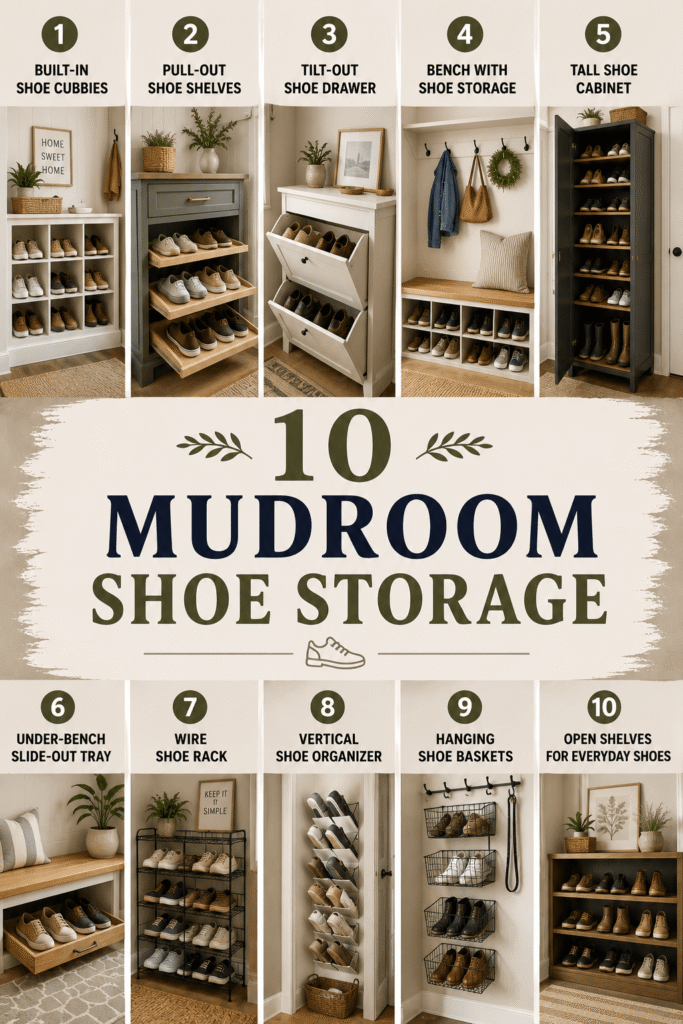
1. Built-In Shoe Cubbies
Built-in shoe cubbies are one of the most popular mudroom shoe storage ideas because they look custom and keep shoes neatly separated. Each cubby can hold one pair of shoes, making it easy to see what is available and easy to put shoes away.
This option works especially well under a mudroom bench. The bench provides a comfortable spot to sit while putting on shoes, while the cubbies underneath keep the floor clear.
For a family mudroom, consider assigning each person their own row or section. This makes the system easier to maintain and helps prevent everyone’s shoes from getting mixed together.
2. A Mudroom Bench With Open Shelves
An open shelf bench is a simple and practical way to store everyday shoes. Unlike deep cabinets, open shelves make it easy to slide shoes in and out quickly.
This is a great choice for busy households because it does not require opening doors, pulling out bins, or carefully arranging everything. Shoes can be stored neatly while still staying within reach.
To make the look feel more polished, keep only the most-used shoes on the shelves. Store off-season or special-occasion footwear somewhere else so the mudroom does not become overcrowded.
3. Woven Baskets for Hidden Shoe Storage
If you prefer a softer, less cluttered look, woven baskets are a beautiful option. They hide shoes while adding texture and warmth to the mudroom.
Baskets work especially well in open cubbies, on lower shelves, or beneath a bench. They can hold sandals, kids’ shoes, slippers, sports shoes, or seasonal accessories.
Choose sturdy baskets that are easy to pull out and large enough for the shoes you use most often. Adding small labels can help everyone know where each type of shoe belongs.
4. Pull-Out Shoe Drawers
Pull-out drawers are ideal if you want mudroom shoe storage that looks clean from the outside. They keep shoes hidden but still make them easy to access.
This option is especially helpful in open-concept homes where the mudroom is visible from the kitchen, hallway, or living space. Closed storage keeps the entryway looking tidy even when the drawers are full.
For the best function, choose drawers with durable interiors that can handle dirt and moisture. A washable drawer liner can make cleanup much easier.
5. Boot Trays for Wet and Muddy Shoes
A boot tray is one of the simplest mudroom shoe storage solutions, but it is also one of the most useful. It gives wet, muddy, or snowy shoes a dedicated place to dry without damaging the floor.
Boot trays are perfect near the door, especially during rainy or winter seasons. They can hold boots, gardening shoes, rain shoes, cleats, or any pair that needs time to dry.
Look for a tray with raised edges to contain water and debris. For a more decorative look, choose a metal, rubber, wood, or stone-style tray that fits the rest of your mudroom design.
6. Tall Shoe Cabinets
Tall shoe cabinets are a great choice when floor space is limited but vertical space is available. They make use of the wall height and can store many pairs without taking up much room.
A slim tall cabinet works well in narrow mudrooms, small entryways, and garage entrances. It can hide shoes behind doors while keeping the walkway open and uncluttered.
Choose a cabinet with adjustable shelves if possible. This gives you flexibility for sneakers, flats, boots, sandals, and children’s shoes as your storage needs change.
7. Floating Shoe Shelves
Floating shelves can create simple, modern mudroom shoe storage without a bulky furniture piece. They are especially useful in small spaces where every inch matters.
Install low floating shelves near the floor for everyday shoes, or stack two to three shelves vertically for more capacity. This keeps shoes organized while still making the space feel open.
For a clean look, choose shelves in the same finish as your bench, trim, or wall color. Wood shelves add warmth, while painted shelves can blend into the background.
8. Labeled Shoe Bins for Kids
Kids’ shoes can quickly take over a mudroom, so labeled bins are a smart solution. Each child can have their own bin for sneakers, school shoes, sandals, or sports footwear.
Bins make cleanup easy because shoes do not need to be perfectly lined up. Kids can simply toss their shoes into the correct bin and move on.
Use picture labels for younger children and written labels for older kids. This simple detail can make the system more independent and easier for everyone to follow.
9. Under-Stair Mudroom Shoe Storage
If your entryway is near a staircase, the area underneath the stairs can become valuable shoe storage. This often-overlooked space is perfect for cubbies, cabinets, drawers, or a small bench.
Under-stair storage works well because it uses space that might otherwise sit empty. It can also create a built-in look that feels intentional and custom.
For a polished design, combine lower shoe storage with upper hooks, shelves, or closed cabinets. This creates a complete mudroom zone in a compact footprint.
10. Seasonal Shoe Rotation
One of the easiest ways to improve mudroom shoe storage is to keep fewer shoes in the mudroom. The entryway should hold the shoes your household uses right now, not every pair you own.
Rotate shoes by season so the mudroom stays manageable. Keep rain boots and everyday sneakers near the door during wet months, then switch to sandals and slip-ons in warmer weather.
Store off-season shoes in bedroom closets, bins, upper shelves, or under-bed storage. This keeps your mudroom from feeling crowded and makes it easier to keep clean.
Best Mudroom Shoe Storage for Small Spaces
Small mudrooms need storage that works hard without blocking the walkway. Narrow benches, vertical cabinets, slim shoe racks, floating shelves, and wall-mounted systems are all good options.
If your space is very tight, choose closed shoe storage with a shallow depth. This can hide clutter while still allowing the door to open and the walkway to stay clear.
Another helpful small-space trick is to combine functions. A bench with cubbies, a cabinet with hooks above it, or a shelf with baskets underneath can give you multiple types of storage in one area.
How to Keep Mudroom Shoes Organized
Even the prettiest storage system needs simple habits to stay organized. The easier the system is to use, the more likely everyone is to follow it.
- Keep only daily shoes in the mudroom
- Give each person a dedicated cubby, shelf, basket, or bin
- Use a boot tray for wet or dirty shoes
- Add labels so everyone knows where shoes belong
- Clean out the mudroom at least once a week
- Store off-season shoes somewhere else
- Use washable liners, rugs, or mats for easy cleanup
The goal is to create a system that feels natural. If shoes are easy to put away the moment someone walks through the door, the mudroom will stay cleaner with less effort.
Choosing Materials for Mudroom Shoe Storage
Mudroom storage needs to handle dirt, moisture, and daily wear. Choose materials that are durable and easy to wipe clean.
Painted wood, laminate, metal, tile, rubber mats, washable rugs, and sturdy baskets are all practical choices. If you use natural woven baskets, make sure they are strong enough for frequent pulling and heavy shoes.
For a stylish look, mix practical finishes with warm details. A wood bench, black hooks, woven baskets, and neutral tile can create a mudroom that feels both functional and beautiful.
How to Make Mudroom Shoe Storage Look Pretty
Shoe storage is practical, but it can still be attractive. The secret is to reduce visual clutter and repeat a few simple materials or colors.
Matching baskets, consistent labels, a limited color palette, and tidy rows of shoes can make the space feel more intentional. If your shoes are hidden behind drawers or cabinet doors, the whole mudroom will look even cleaner.
Add a few finishing touches like a washable runner, a wall mirror, simple artwork, or a small plant. These details help the mudroom feel like part of the home instead of just a storage zone.
Final Thoughts on Mudroom Shoe Storage
Mudroom shoe storage should make daily life easier. Whether you choose built-in cubbies, a storage bench, baskets, drawers, boot trays, cabinets, floating shelves, or kid-friendly bins, the best solution is the one your household will actually use.
Start by noticing what causes the most clutter. If wet boots are the problem, add a boot tray. If kids’ shoes are everywhere, create labeled bins. If the space looks messy from other rooms, choose closed cabinets or drawers.
With the right shoe storage system, your mudroom can become cleaner, calmer, and more functional. It can help protect your floors, simplify your routines, and make your entryway feel organized from the moment you walk in.