Rice is one of the most popular staple foods in the world, yet many people struggle to cook it properly. Whether your rice turns out too sticky, too dry, or undercooked, a few simple techniques can help you achieve fluffy and delicious results every time.
In this guide, you’ll learn how to cook rice on the stovetop, discover common mistakes to avoid, and find tips for making your rice more flavorful and enjoyable.
Why Learning to Cook Rice Matters
Rice is affordable, versatile, and pairs well with countless dishes. From stir-fries and curries to grilled meats and vegetables, rice can serve as the foundation of a complete meal.
Knowing how to cook rice correctly saves money, reduces food waste, and makes meal preparation much easier throughout the week.
Ingredients You’ll Need
The beauty of rice is its simplicity. You only need a few basic ingredients to get started.
- 1 cup rice
- 2 cups water (for most white rice varieties)
- ½ teaspoon salt (optional)
- 1 teaspoon butter or oil (optional)
Step 1: Choose the Right Rice
Different rice varieties require slightly different cooking methods. Understanding the type of rice you’re using helps you achieve the best texture.
- Long-grain rice produces fluffy, separate grains.
- Jasmine rice has a fragrant aroma and soft texture.
- Basmati rice is light, fluffy, and popular in many international dishes.
- Short-grain rice is softer and stickier.
- Brown rice contains more fiber and requires a longer cooking time.
Step 2: Rinse the Rice
Rinsing rice removes excess surface starch. This helps prevent the grains from becoming overly sticky during cooking.
Place the rice in a fine-mesh strainer and rinse under cold running water. Continue until the water becomes mostly clear.
Step 3: Measure the Water Correctly
The water-to-rice ratio is one of the most important factors in successful rice cooking.
For most white rice, use a ratio of 2 cups water for every 1 cup rice. Some varieties may require slightly less water, so always check package instructions if available.
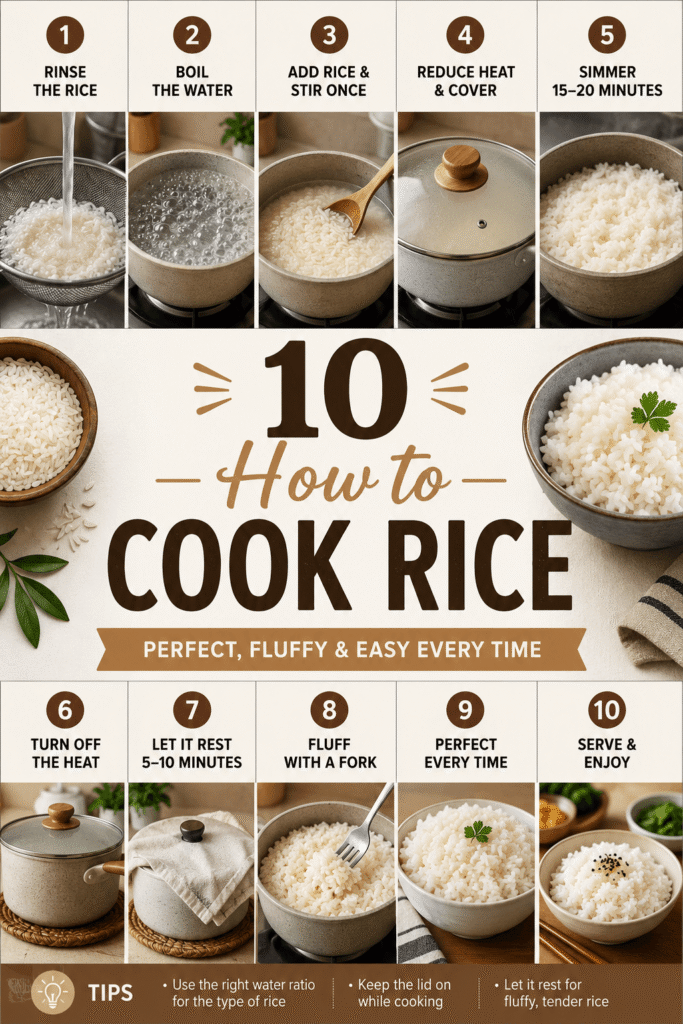
Step 4: Bring Water to a Boil
Add the water to a medium saucepan and place it over high heat. If desired, add salt and a small amount of butter or oil for extra flavor.
Allow the water to reach a full rolling boil before adding the rice.
Step 5: Add the Rice
Once the water is boiling, carefully add the rinsed rice.
Stir once to distribute the grains evenly. Avoid excessive stirring, as this can release starch and create a sticky texture.
Step 6: Reduce Heat and Cover
Immediately lower the heat to the lowest setting and cover the pot with a tight-fitting lid.
This traps steam inside the pot, allowing the rice to cook evenly without losing moisture.
Step 7: Let the Rice Simmer
Cook the rice gently without lifting the lid.
For most white rice varieties, cooking takes approximately 15 to 20 minutes. During this time, the rice absorbs the water and becomes tender.
Resist the temptation to check on the rice repeatedly. Opening the lid releases steam and can affect the final texture.
Step 8: Let the Rice Rest
After cooking, turn off the heat but leave the lid on.
Allow the rice to rest for 5 to 10 minutes. This step helps distribute moisture evenly throughout the pot and creates a fluffier texture.
Step 9: Fluff with a Fork
Use a fork rather than a spoon to fluff the rice.
Gently separate the grains without crushing them. This creates a light and airy texture that’s ideal for serving.
Common Rice Cooking Mistakes
Even experienced cooks occasionally make mistakes when preparing rice.
- Using too much water can make rice mushy.
- Using too little water can leave rice undercooked.
- Removing the lid too often releases important steam.
- Skipping the resting period can result in uneven texture.
- Over-stirring increases stickiness.
Easy Ways to Add Flavor
Plain rice is delicious, but there are many simple ways to make it even better.
- Cook rice in chicken or vegetable broth.
- Add garlic or onion while cooking.
- Mix in fresh herbs before serving.
- Stir in butter for a richer flavor.
- Add lemon juice and zest for brightness.
How to Store Leftover Rice
Allow leftover rice to cool before storing it in an airtight container.
Refrigerate within two hours of cooking and use within three to four days.
When reheating, add a small splash of water to restore moisture and prevent dryness.
Final Thoughts
Cooking rice doesn’t have to be complicated. By using the correct water ratio, keeping the lid on during cooking, and allowing the rice to rest before serving, you can consistently achieve fluffy, delicious results.
With a little practice, rice will become one of the easiest and most reliable foods in your kitchen. Whether you’re preparing a simple weeknight meal or a large family dinner, perfectly cooked rice is a skill that pays off again and again.