Apples are one of the simplest foods to add to a heart-conscious routine, especially if you are looking for everyday ways to support healthier cholesterol levels. They are affordable, easy to find, naturally sweet, and versatile enough to enjoy at breakfast, lunch, snacks, and even dinner.
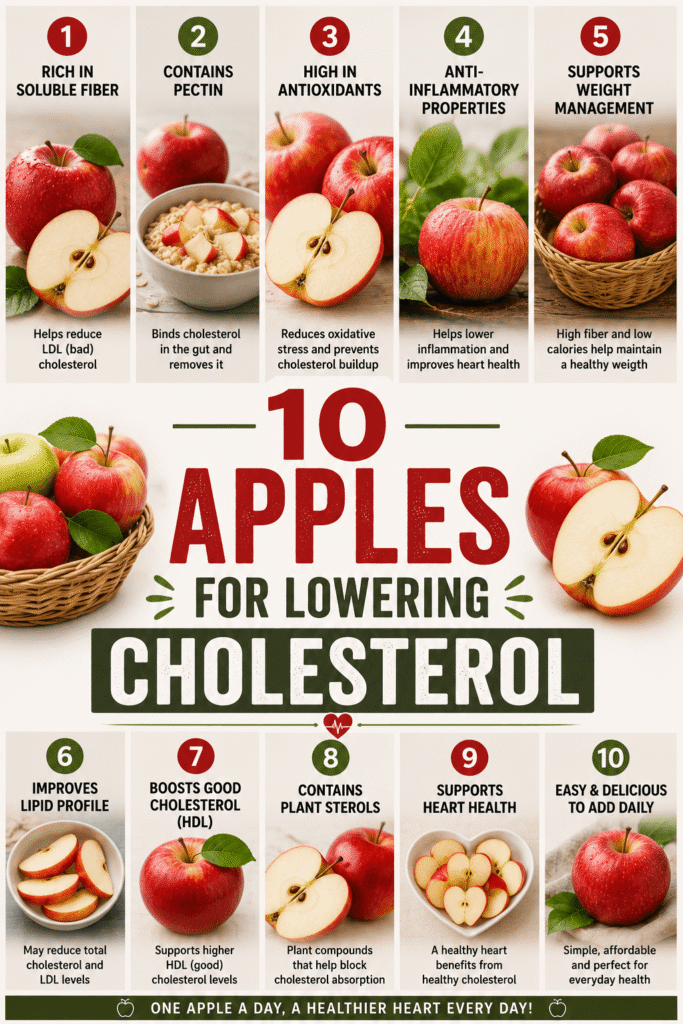
When people talk about apples for lowering cholesterol, they are usually referring to the fiber found in apples, especially soluble fiber. Soluble fiber can support healthy cholesterol by helping reduce the amount of cholesterol absorbed in the digestive tract. Apples also contain plant compounds that make them a smart choice for an overall wellness-focused diet.
Of course, apples are not a magic cure or a replacement for medical care, cholesterol medication, or advice from your healthcare provider. But they can be a helpful part of a balanced eating pattern that includes fruits, vegetables, whole grains, beans, nuts, seeds, lean proteins, and healthy fats.
Why Apples Are Linked to Cholesterol Support
Apples contain a type of soluble fiber called pectin. This fiber forms a gel-like texture during digestion and can help support healthy cholesterol levels when eaten as part of a balanced diet. The peel also contains beneficial plant compounds, so eating the whole apple is usually better than drinking apple juice.
Another reason apples are helpful is that they can replace less heart-friendly snacks. Choosing an apple with nut butter instead of a sugary pastry, or sliced apples instead of chips, can make your overall diet more supportive of heart health over time.
Small food swaps matter because cholesterol support is usually about patterns, not one single food. Eating apples regularly can be one easy habit within a bigger heart-healthy lifestyle.
How Many Apples Should You Eat?
There is no perfect number of apples that works for everyone. For many people, one apple a day is a simple and realistic place to start. Some people may enjoy more, while others may prefer to rotate apples with berries, pears, citrus, or other high-fiber fruits.
The most important thing is consistency. Eating an apple once in a while is fine, but adding fiber-rich foods to your daily routine is more useful than relying on occasional healthy choices.
If you have diabetes, digestive issues, kidney concerns, allergies, or a specific medical diet, ask your healthcare provider or dietitian how apples fit your needs. Personalized guidance is always best when you are managing a health condition.
1. Eat Apples With the Peel
One of the easiest ways to get more benefit from apples is to eat them with the peel. The peel adds extra fiber and contains many of the fruit’s natural plant compounds.
Wash apples well, slice them, and enjoy them as a quick snack. If the texture of the peel bothers you, try thin slices or choose apple varieties with softer skin.
Keeping the peel is a small habit, but it helps you get more nutrition from the fruit you are already eating.
2. Pair Apple Slices With Nut Butter
Apple slices with almond butter, peanut butter, or cashew butter make a satisfying snack that feels sweet, creamy, and filling. The apple provides fiber and freshness, while the nut butter adds healthy fats and protein.
This combination can be especially helpful when you want a snack that keeps you full longer. It is also a simple way to replace packaged sweets with something more nourishing.
Choose natural nut butter with minimal added sugar when possible. A sprinkle of cinnamon on top makes it taste even more dessert-like.
3. Add Apples to Oatmeal
Oats and apples are a classic heart-friendly pairing because both contain soluble fiber. Together, they make breakfast warm, filling, and naturally sweet.
Dice an apple and simmer it with oats, cinnamon, and a splash of milk or water. You can also add walnuts, chia seeds, flaxseed, or Greek yogurt for extra texture and staying power.
This is one of the easiest ways to turn a basic bowl of oatmeal into a cozy, cholesterol-conscious breakfast.
4. Make a Crunchy Apple Salad
Apples add crisp texture and sweetness to salads. They pair beautifully with leafy greens, cabbage, carrots, walnuts, pumpkin seeds, chicken, lentils, or chickpeas.
For a simple heart-healthy salad, combine sliced apples, mixed greens, walnuts, red onion, and a light vinaigrette. The flavor is fresh, slightly sweet, and satisfying without feeling heavy.
Salads are also a great way to combine apples with other fiber-rich foods. The more colorful your plate, the easier it becomes to support your overall wellness.
5. Use Apples Instead of Sugary Desserts
If you enjoy something sweet after dinner, apples can help satisfy that craving in a more nourishing way. Baked apples, cinnamon apples, or apple slices with yogurt can feel comforting without relying on heavily processed desserts every night.
Try baking apple halves with cinnamon, oats, and chopped nuts. The result tastes warm and cozy, almost like apple pie, but with more fiber and less added sugar.
This does not mean you can never enjoy dessert. It simply gives you a simple option for nights when you want something sweet and heart-conscious.
6. Add Apples to Smoothies
Whole apples can add sweetness, fiber, and freshness to smoothies. For the best texture, chop the apple first and blend it with ingredients like spinach, oats, Greek yogurt, chia seeds, cinnamon, and unsweetened milk.
Unlike apple juice, whole apples keep the fiber intact. That makes the smoothie more filling and more supportive of a balanced routine.
A simple combination is apple, spinach, cinnamon, oats, and plain yogurt. It tastes fresh and lightly sweet while still feeling like a real breakfast or snack.
7. Try Apples With Greek Yogurt
Apples and Greek yogurt make a quick snack or breakfast that feels creamy, crunchy, and refreshing. The apple brings fiber and sweetness, while the yogurt adds protein.
Top plain Greek yogurt with diced apples, cinnamon, walnuts, and a small drizzle of honey if you need extra sweetness. This combination is easy to prepare and works well for busy mornings.
For a dessert-style version, use baked cinnamon apples over yogurt. It tastes cozy but still fits beautifully into a healthier eating pattern.
8. Pack Apples for On-the-Go Snacks
Apples are one of the easiest fruits to take with you. They travel well, do not need much preparation, and can help you avoid less nourishing convenience snacks when you are busy.
Keep apples in your bag, desk drawer, lunchbox, or car when the weather allows. Pair them with nuts, string cheese, yogurt, or a boiled egg if you need a more filling snack.
Having easy options ready makes healthy eating less dependent on willpower. It gives you something simple to reach for when hunger hits.
9. Add Apples to Savory Meals
Apples are not just for snacks and breakfast. They can add brightness and natural sweetness to savory meals too.
Try diced apples in chicken salad, turkey wraps, grain bowls, roasted vegetables, cabbage slaw, or lentil salads. They pair especially well with walnuts, mustard, herbs, greens, and lean proteins.
Using apples in savory meals is a great way to keep your routine interesting. The more enjoyable your meals are, the easier it is to stick with heart-conscious habits.
10. Combine Apples With Other Cholesterol-Friendly Foods
Apples are helpful, but they work best as part of a bigger pattern. Pair them with other foods that support heart health and fiber intake.
Good options include oats, beans, lentils, barley, vegetables, berries, nuts, seeds, avocado, olive oil, and fatty fish. These foods can help create meals that are filling, colorful, and supportive of healthy cholesterol goals.
Instead of asking one food to do all the work, build a plate that supports your body from several angles.
Best Apple Varieties to Try
Any apple variety can fit into a heart-healthy routine, so choose the ones you actually enjoy. A crisp, sweet apple is more useful if it helps you eat fruit regularly.
- Honeycrisp for a sweet and juicy snack
- Granny Smith for a tart flavor and firm crunch
- Fuji for natural sweetness
- Gala for a mild, easy everyday apple
- Pink Lady for a sweet-tart balance
- Cosmic Crisp for a firm texture and bold flavor
Trying different varieties can make apples feel less boring. Keep a few options on hand so you can match the flavor to your mood or recipe.
Simple Apple Snack Ideas for Cholesterol Support
When you want something quick, apples can be turned into easy snacks in just a few minutes. These ideas are simple, satisfying, and great for a busy routine.
- Apple slices with peanut butter and cinnamon
- Diced apples mixed into plain Greek yogurt
- Apple wedges with walnuts and a few dark chocolate chips
- Apple slices with cottage cheese
- Baked apple with oats and chopped nuts
- Apple and cheese slices on whole grain crackers
- Chopped apple stirred into overnight oats
- Apple slices with hummus for a sweet-savory snack
The goal is to make apples easy to choose. When your snacks are simple and enjoyable, you are more likely to repeat them.
What to Avoid When Using Apples for Cholesterol Goals
Apples are healthy, but the way you eat them matters. Apple juice, apple candy, sugary apple pastries, and heavily sweetened apple desserts do not offer the same benefits as whole apples.
Juice removes much of the fiber and is easier to overconsume. Pastries and sweet desserts may include refined flour, butter, and lots of added sugar. These foods can still be enjoyed occasionally, but they should not be your main apple habit if cholesterol support is your goal.
Choose whole apples most often, and use sweetened apple treats as treats rather than daily staples.
Healthy Lifestyle Habits That Work With Apples
If you are trying to lower cholesterol, apples can be one helpful step, but lifestyle patterns matter too. A heart-conscious routine often includes movement, balanced meals, sleep, stress management, and regular medical checkups.
- Eat more soluble fiber from oats, beans, lentils, apples, and pears
- Choose unsaturated fats like olive oil, nuts, seeds, and avocado
- Limit frequent fried foods and heavily processed snacks
- Move your body regularly in a way you can maintain
- Get enough sleep and manage stress when possible
- Follow your healthcare provider’s advice for cholesterol testing and treatment
These habits do not need to happen perfectly. Even small improvements can support better long-term health when you practice them consistently.
Final Thoughts on Apples for Lowering Cholesterol
Apples can be a simple, realistic, and delicious part of a cholesterol-friendly lifestyle. Their fiber, crunch, natural sweetness, and versatility make them easy to include in meals and snacks throughout the week.
For the best results, enjoy whole apples with the peel, pair them with other nourishing foods, and use them as part of a balanced eating pattern. Try apples with oats, yogurt, salads, nut butter, or baked cinnamon toppings to keep things interesting.
Lowering cholesterol is usually about consistent habits, not one perfect food. But if you are looking for an easy place to start, adding apples to your daily routine is a smart, simple, and satisfying step.