Mud kitchen ideas are perfect for creating an outdoor play space that feels imaginative, messy, natural, and fun. A mud kitchen gives kids a place to mix soil, water, leaves, flowers, sticks, stones, and pretend ingredients while enjoying open-ended outdoor play.
The beauty of a mud kitchen is that it does not need to be expensive or complicated. You can build one from pallets, old furniture, crates, benches, shelves, buckets, or repurposed kitchen items. With a few simple pieces, an ordinary backyard corner can become a creative outdoor cooking station.
Mud kitchens are also popular because they encourage sensory play, creativity, problem-solving, and independent exploration. Kids can make mud pies, nature soup, flower potions, leaf tea, rock cakes, and endless pretend meals. The goal is not perfection. The goal is messy, joyful, hands-on play.
Why Mud Kitchens Are So Popular
A mud kitchen is more than a cute backyard feature. It gives children a space where they can use their imagination without worrying too much about making a mess indoors.
Kids love mud kitchens because they feel real. They can scoop, stir, pour, wash, mix, decorate, and serve just like they see adults doing in a real kitchen. The difference is that everything happens outside, where mess is part of the fun.
Parents also love mud kitchens because they can be simple to set up and easy to customize. Whether you have a large garden, a small patio, or a narrow side yard, there are many ways to create a mud kitchen that fits your space.
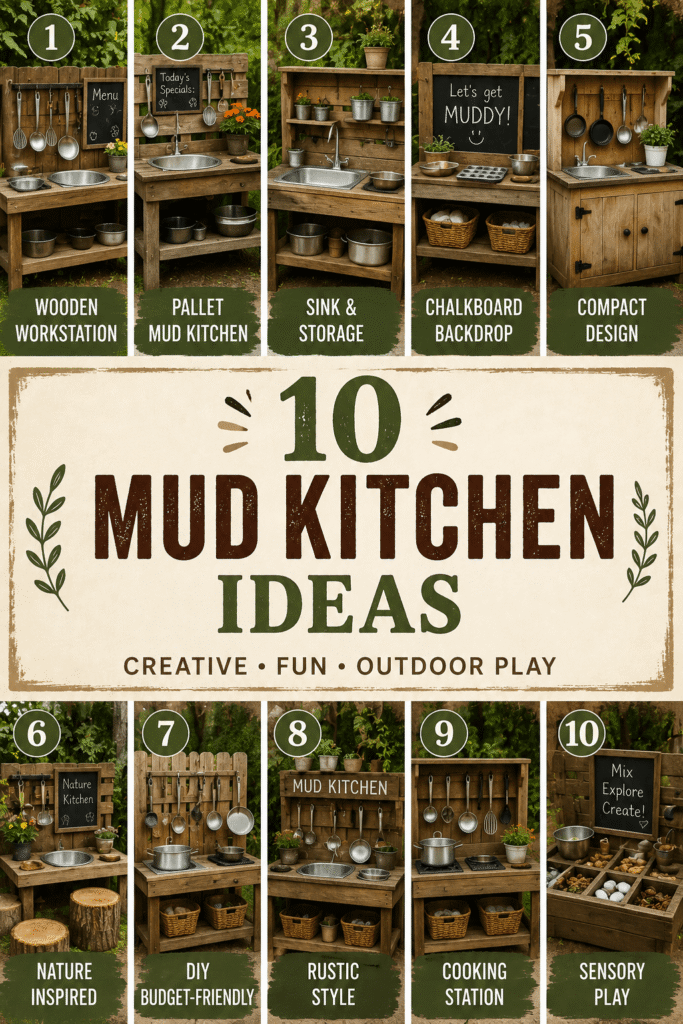
1. Wooden Pallet Mud Kitchen
A wooden pallet mud kitchen is one of the most budget-friendly ideas. Pallets can be transformed into a rustic outdoor kitchen with shelves, hooks, a worktop, and a pretend sink.
You can keep the look simple by sanding the wood and leaving it natural, or paint it in cheerful outdoor colors. Add a metal bowl as a sink, old spoons for stirring, and a few hooks for hanging utensils.
This style works especially well in garden spaces because the wood blends naturally with plants, soil, and outdoor textures.
2. Mud Kitchen With a Real Sink Bowl
A sink makes a mud kitchen feel much more realistic. You do not need plumbing to make it work. A simple metal bowl, plastic basin, or old sink insert can become the washing and mixing area.
Kids can use the sink to rinse stones, float leaves, mix muddy water, or wash pretend dishes. Place a bucket underneath to catch water or let the sink drain into a safe outdoor area.
For extra fun, keep a small water container nearby so children can pour water into the sink whenever they need it.
3. Nature Ingredient Station
A nature ingredient station turns a mud kitchen into a creative outdoor recipe zone. Instead of only using mud, kids can collect natural materials and sort them into bowls, jars, trays, or baskets.
Leaves, petals, pinecones, pebbles, twigs, grass, seed pods, and small shells can all become pretend ingredients. This encourages children to notice textures, colors, shapes, and patterns in nature.
Use simple labels like leaves, stones, flowers, sticks, and mud if you want the station to feel organized. Keep the labels short and easy to understand.
- Use old bowls for sorting nature finds
- Add small baskets for leaves and sticks
- Keep stones and pebbles in shallow trays
- Use flower petals for colorful pretend recipes
4. Mud Pie Baking Station
A mud pie baking station is a classic mud kitchen idea. Kids can press mud into old muffin tins, cake pans, pie dishes, and baking trays to create pretend outdoor treats.
Give them wooden spoons, cookie cutters, measuring cups, and small pans to make the play feel more realistic. They can decorate their mud pies with leaves, flowers, stones, grass, or small twigs.
This is a great idea for kids who love pretend cooking because it gives them lots of ways to create, arrange, and present their mud recipes.
5. Outdoor Shelves and Hanging Utensils
Shelves and hooks can make a mud kitchen look organized while keeping everything easy to reach. A simple wooden shelf can hold bowls, cups, jars, and pretend ingredients.
Hooks are useful for hanging spoons, ladles, small pans, measuring cups, and toy tools. This also helps children learn to put things back after playtime.
If the mud kitchen is against a fence or wall, you can install a small pegboard, wooden rail, or row of hooks above the worktop.
6. Mud Kitchen With Chalkboard Menu
A chalkboard menu adds a fun restaurant-style feeling to a mud kitchen. Kids can write pretend recipes, draw pictures, or name their outdoor café.
You can attach a small chalkboard to the back of the kitchen, hang one on a fence, or paint a wooden panel with chalkboard paint. It becomes a simple but creative feature that changes every time children play.
Menu ideas might include mud soup, flower stew, leaf salad, pebble pie, stick spaghetti, or rainwater tea. The sillier the menu, the more fun it becomes.
7. Compact Mud Kitchen for Small Gardens
You do not need a large backyard to make a mud kitchen work. A small mud kitchen can fit against a fence, on a patio, in a corner of the garden, or beside a shed.
Use a narrow bench, small table, crate, or outdoor shelf as the base. Add a few bowls, a bucket of soil, a water container, and a small tray for mixing.
For small spaces, keep the setup simple and easy to tidy. Choose stackable containers and hang utensils vertically to save room.
- Use a narrow table or bench
- Hang utensils on hooks
- Store bowls in one basket
- Keep mud and water in small containers
- Place the kitchen near washable ground if possible
8. Colorful Painted Mud Kitchen
A colorful painted mud kitchen can make the backyard feel cheerful and playful. Bright paint helps the kitchen stand out and gives children a space that feels made just for them.
You can paint the base in soft pastels, bold primary colors, garden green, sunny yellow, sky blue, or cottage-style cream. Outdoor paint works best because it can handle weather and messy play.
For a more modern look, use one main color with simple natural wood accents. For a whimsical look, mix several colors and add painted flowers, stars, fruits, or pretend stove burners.
9. Mud Kitchen With Water Play
Water play makes a mud kitchen even more exciting. A simple water jug, pump bottle, watering can, or outdoor tap nearby can give kids more ways to mix, pour, and experiment.
Water helps turn dry soil into mud, makes pretend soup more fun, and gives children a reason to scoop, transfer, and measure. It also adds a calming sensory element to outdoor play.
To keep things manageable, use a small refillable water container instead of unlimited water access. This gives children enough water to play while reducing waste and mess.
10. Rustic Garden Mud Kitchen
A rustic garden mud kitchen is perfect if you want the play area to blend beautifully into the backyard. Use natural wood, metal bowls, terracotta pots, woven baskets, and simple garden tools.
This style feels charming and timeless. It works especially well near flower beds, herb gardens, raised beds, or a shady tree.
Add a few potted herbs like mint, rosemary, or lavender nearby so children can smell and touch real plants while they play. The result is a mud kitchen that feels like part of the garden instead of a separate toy area.
What to Put in a Mud Kitchen
A mud kitchen does not need fancy accessories. In fact, some of the best items are things you already have at home.
- Old mixing bowls
- Wooden spoons
- Metal ladles
- Muffin tins
- Measuring cups
- Small pots and pans
- Plastic jugs
- Watering cans
- Trays and plates
- Small buckets
Choose items that are safe, sturdy, and easy to wash. Avoid anything sharp, breakable, rusty, or too heavy for children to handle.
Best Place to Put a Mud Kitchen
The best location for a mud kitchen is somewhere children can play freely without worrying about ruining indoor floors or delicate outdoor areas. A corner of the garden, a patio edge, a shaded fence line, or a spot near a water source can all work well.
If possible, place the mud kitchen on grass, gravel, bark chips, concrete, or another surface that can handle mess. Shade is also helpful, especially if children will play there during warm weather.
Keep it close enough that you can supervise easily, but far enough from doors and clean walkways that muddy footprints do not become a constant problem.
How to Keep a Mud Kitchen Tidy
Mud kitchens are meant to get messy, but a simple storage system makes cleanup easier. Keep a basket, crate, or outdoor bin nearby for loose utensils and bowls.
At the end of playtime, rinse the main tools, empty standing water, and return everything to its place. You do not need to make it perfect. You only need enough order so the kitchen is ready for the next play session.
- Use one bin for utensils
- Use hooks for frequently used tools
- Empty water containers after play
- Store dry ingredients in covered bins
- Rinse bowls before putting them away
Mud Kitchen Safety Tips
A mud kitchen should be fun, but it should also be safe. Make sure the structure is sturdy and does not wobble when children lean on it.
Sand rough wood edges, check for nails or splinters, and avoid glass items. If you use repurposed furniture, make sure it can handle outdoor use and does not have peeling paint that could be unsafe.
It is also helpful to teach children not to eat anything from the mud kitchen. Even when the pretend food looks creative, it should stay pretend.
Final Thoughts on Mud Kitchen Ideas
Mud kitchen ideas are a wonderful way to bring creativity, nature, and sensory play into the backyard. They give children a place to explore freely, make a mess, and use their imagination in a way that feels exciting and meaningful.
You can keep your mud kitchen simple with a small table and a few bowls, or you can build a full outdoor play kitchen with shelves, hooks, a sink, a chalkboard, and storage. Both can be just as fun.
The best mud kitchen is one that fits your space, your budget, and your child’s imagination. With mud, water, natural ingredients, and a few basic tools, your backyard can become a tiny outdoor restaurant, bakery, garden café, or magical potion station.