A good pantry organization system can completely change the way your kitchen feels. When everything has a clear place, cooking becomes easier, grocery shopping becomes less stressful, and your shelves stop turning into a messy pile of half-used bags, cans, boxes, and snacks.
The best pantry organization systems are not just pretty. They are practical, easy to maintain, and designed around how your household actually uses food. Whether you have a walk-in pantry, a small cabinet pantry, open shelving, or a narrow kitchen closet, the right system can help you save space and keep everything visible.
These pantry organization systems ideas are perfect if you want a kitchen that feels cleaner, calmer, and more functional. You can use one idea or combine several to create a pantry setup that looks beautiful and works every single day.
Why Pantry Organization Systems Matter
A pantry can quickly become one of the most cluttered areas in the home because it holds so many different things. Dry foods, snacks, baking supplies, breakfast items, drinks, canned goods, spices, paper products, and extras often get pushed onto the same shelves without a clear plan.
That is why a system matters. Instead of simply arranging items once and hoping they stay neat, a pantry organization system gives every category its own home. This makes it easier to put groceries away, find what you need, and avoid buying duplicates.
A good system also helps you see what is running low. When food is visible and grouped properly, you are less likely to waste money on items you already have hiding behind other things.
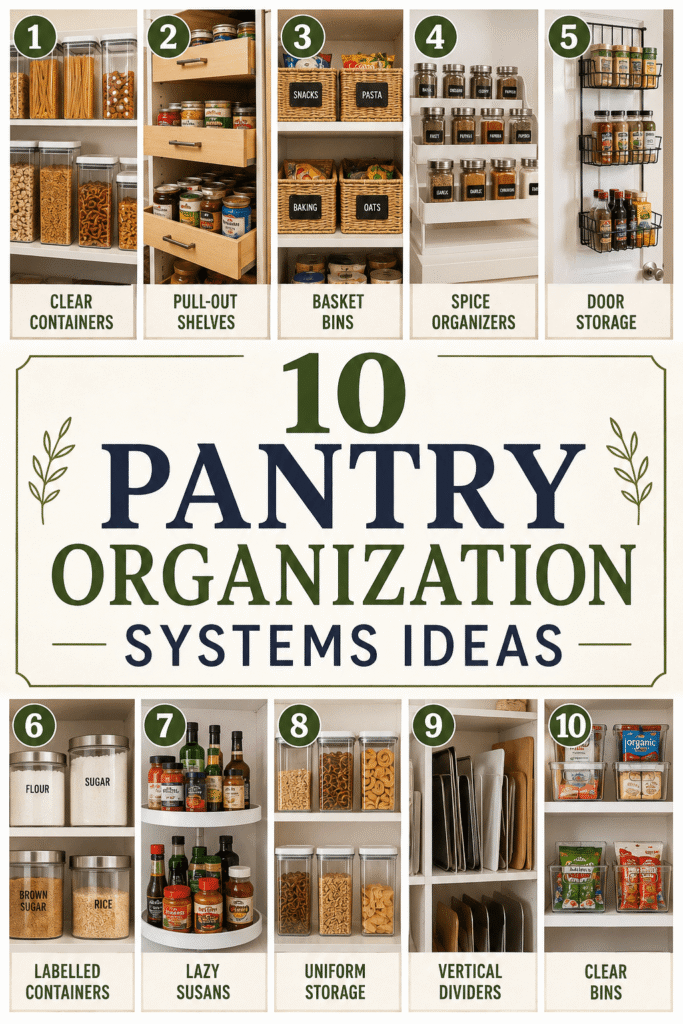
1. Clear Container Pantry System
Clear containers are one of the most popular pantry organization systems because they make everything easy to see. They work especially well for dry goods like rice, pasta, flour, sugar, cereal, oats, coffee, beans, and snacks.
The goal is to remove bulky packaging and create a cleaner, more uniform look. Clear containers also help you know when you are running low because you can see the amount left at a glance.
For the best results, choose stackable containers in different sizes. Tall containers are great for pasta and cereal, medium containers work for grains and baking ingredients, and small containers are useful for nuts, seeds, and toppings.
- Use airtight containers for dry goods
- Choose stackable shapes to save shelf space
- Label each container clearly
- Keep frequently used items at eye level
2. Basket Zone Organization System
Baskets are perfect for grouping similar items together. Instead of lining up every single snack, pouch, packet, or bag on the shelf, you can place them into labeled baskets by category.
This system works well for busy families because it is easy to maintain. You do not have to make every item look perfect. You only need to return it to the right basket.
Use baskets for chips, breakfast bars, kids’ snacks, baking extras, drink mixes, sauces, lunch items, or backup supplies. Woven baskets create a warm natural look, while white or clear bins feel more modern and clean.
3. Lazy Susan Corner System
A lazy Susan is one of the smartest pantry organization ideas for corners, deep shelves, and awkward spaces. Instead of losing bottles and jars at the back of the shelf, you can simply spin the tray to reach what you need.
This system is especially useful for oils, vinegars, sauces, spreads, condiments, spices, baking extracts, and small jars. It keeps smaller items from disappearing behind larger ones.
For a cleaner look, use one lazy Susan per category. For example, keep oils on one turntable, sauces on another, and baking flavors on another.
4. Can Storage System
Canned food can take over a pantry quickly if it is not organized well. A can storage system helps you stack, sort, and rotate cans without creating a messy tower.
You can use tiered can risers, wire can racks, clear can bins, or drawer-style can organizers. The best option depends on your shelf depth and how many canned goods you usually store.
Group cans by type so you can find them quickly. Keep soups together, vegetables together, beans together, tomatoes together, and canned fruit together.
- Use tiered risers so back cans stay visible
- Group cans by food type
- Place older cans toward the front
- Avoid stacking cans too high
5. Pull-Out Drawer Pantry System
Pull-out drawers are a great pantry organization system for deep cabinets and lower shelves. They let you see everything without bending, digging, or removing several items first.
This idea works beautifully for snacks, baking supplies, potatoes, onions, lunch items, bottled drinks, and backup groceries. If your pantry shelves are deep, pull-out drawers can make the entire space much easier to use.
You can install permanent sliding drawers or use removable pull-out bins. Removable options are often easier if you are renting or want a simpler upgrade.
6. Door Rack Organization System
The back of a pantry door is valuable storage space. A door rack system can hold spices, sauces, foil, wraps, snacks, seasoning packets, small jars, and lightweight pantry extras.
This is one of the best pantry organization systems for small kitchens because it adds storage without taking up shelf space. It also keeps small items visible instead of letting them get lost.
Choose a sturdy over-the-door rack or a mounted door organizer with slim shelves. Before buying one, measure your door clearance so it can close properly.
7. Label-Based Pantry System
Labels make a pantry easier to maintain because they show everyone where things belong. Without labels, organized shelves can slowly become messy again because items get returned to random spots.
You can use printed labels, chalk labels, handwritten labels, clip-on basket tags, or minimalist sticker labels. The style can be simple, elegant, farmhouse, modern, or bold depending on your kitchen decor.
Label containers, baskets, shelves, and zones. Common pantry labels include pasta, rice, cereal, snacks, baking, breakfast, canned goods, sauces, spices, tea, coffee, and backstock.
8. Shelf Zone Pantry System
A shelf zone system means every shelf has a clear purpose. This is one of the easiest pantry organization systems because it does not require expensive products.
For example, the top shelf can hold backup items, the middle shelves can hold everyday foods, and the lower shelves can hold heavier items or family snacks. This keeps the pantry logical and simple.
The key is to organize by how often you use each item. Everyday ingredients should be easy to reach, while occasional items can go higher or lower.
9. Snack Station System
A snack station is a smart pantry organization idea for families, busy adults, packed lunches, and quick grab-and-go moments. Instead of letting snacks scatter across the pantry, keep them in one clearly labeled section.
Use bins, baskets, or clear drawers to sort snacks by type. You can have one bin for sweet snacks, one for salty snacks, one for lunchbox items, and one for healthier options.
This system also helps with grocery planning. When the snack bin looks low, you know exactly what to restock.
10. Backstock Pantry System
Backstock is where many pantries become messy. Extra bags of flour, unopened cereal boxes, spare sauces, paper towels, bulk snacks, and duplicate groceries can easily crowd your main shelves.
A backstock system keeps extras separate from everyday items. This helps your pantry stay neat while still letting you buy in bulk when it makes sense.
Use upper shelves, large bins, floor baskets, or a separate cabinet for backstock. Label the area clearly so extra items do not mix with your daily-use pantry zones.
Best Pantry Organization Systems for Small Spaces
If your pantry is small, focus on visibility, vertical storage, and easy access. Small pantries can become frustrating when shelves are deep, dark, or overcrowded, so the right system matters even more.
Clear bins, narrow baskets, door racks, stackable containers, and tiered risers can make a small pantry feel much bigger. The trick is to avoid bulky organizers that waste space.
- Use slim bins instead of oversized baskets
- Choose stackable containers for dry goods
- Add a door rack for small items
- Use tiered risers for cans and spices
- Keep only daily-use items at eye level
How to Start Organizing Your Pantry
Before you buy containers or baskets, empty the pantry and sort everything into categories. This helps you see what you actually own and what kind of storage system you need.
Throw away expired food, combine duplicates where possible, and wipe down the shelves. Then group items into simple zones like breakfast, baking, snacks, canned goods, pasta, rice, sauces, drinks, and backstock.
Once everything is grouped, choose organizers based on the category. Dry goods may need airtight containers, snacks may need baskets, cans may need risers, and small jars may need a lazy Susan.
Pantry Organization Mistakes to Avoid
One common mistake is buying too many organizers before measuring the pantry. This can leave you with bins that do not fit properly or containers that waste shelf height.
Another mistake is making the pantry beautiful but not practical. If the system is too complicated, it will be hard to maintain after grocery day.
A good pantry should look nice, but it should also work for real life. Choose simple systems that match your cooking habits, grocery habits, and storage needs.
Final Thoughts on Pantry Organization Systems Ideas
Pantry organization systems can make your kitchen feel cleaner, more efficient, and easier to use every day. You do not need a luxury pantry or custom built-ins to create a space that works well.
Start with categories, add containers or baskets where they make sense, label the zones, and keep everyday items easy to reach. Once your pantry has a system, it becomes much easier to keep it neat long-term.
Whether you love clear containers, woven baskets, pull-out drawers, lazy Susans, door racks, or labeled snack bins, the best pantry organization system is the one that makes your kitchen routine feel smoother and less stressful.