Start here for soft snack inspiration and simple teething food ideas.
Teething can make babies want to chew, gnaw, and explore new textures. At the same time, babies who are learning to eat are still developing chewing, swallowing, and hand-to-mouth skills. That is why snack choices should be gentle, age-appropriate, and always served with close supervision.
This guide shares easy baby snack ideas, soft teething food options, and practical serving tips for parents who want simple foods that feel manageable. Always follow your baby’s readiness cues and ask your pediatrician if you have questions about allergies, feeding milestones, or special health needs.
When Can Babies Start Snacks and Teething Foods?
Many babies begin exploring solid foods around 6 months, when they show signs of readiness. Those signs may include sitting with support, holding their head steady, showing interest in food, and being able to move food around in the mouth.
In the beginning, “snacks” do not need to look like packaged snack foods. They can be small servings of soft fruits, cooked vegetables, plain yogurt, mashed beans, oatmeal, egg strips, or other simple foods your baby can safely manage.
Milk feeds remain an important part of baby nutrition during the first year. Solid foods are introduced gradually as babies learn new tastes, textures, and feeding skills.
Baby Snack Safety First
Safety matters more than convenience when feeding babies. Babies should always sit upright while eating, and an adult should stay nearby and watch closely. Avoid letting your baby eat while crawling, lying down, walking, playing, or riding in a car seat.
Foods should be soft enough to mash between your fingers or prepared in a shape and texture that matches your baby’s stage. Hard, round, sticky, chewy, or slippery foods can be choking risks if they are not modified carefully.
- Always supervise your baby while eating.
- Serve food while your baby is sitting upright.
- Choose soft textures that break down easily.
- Cut or prepare foods to reduce choking risk.
- Avoid honey before 12 months.
- Avoid added sugar and high-salt snack foods.
- Skip whole nuts, popcorn, hard raw vegetables, whole grapes, and sticky spoonfuls of nut butter.
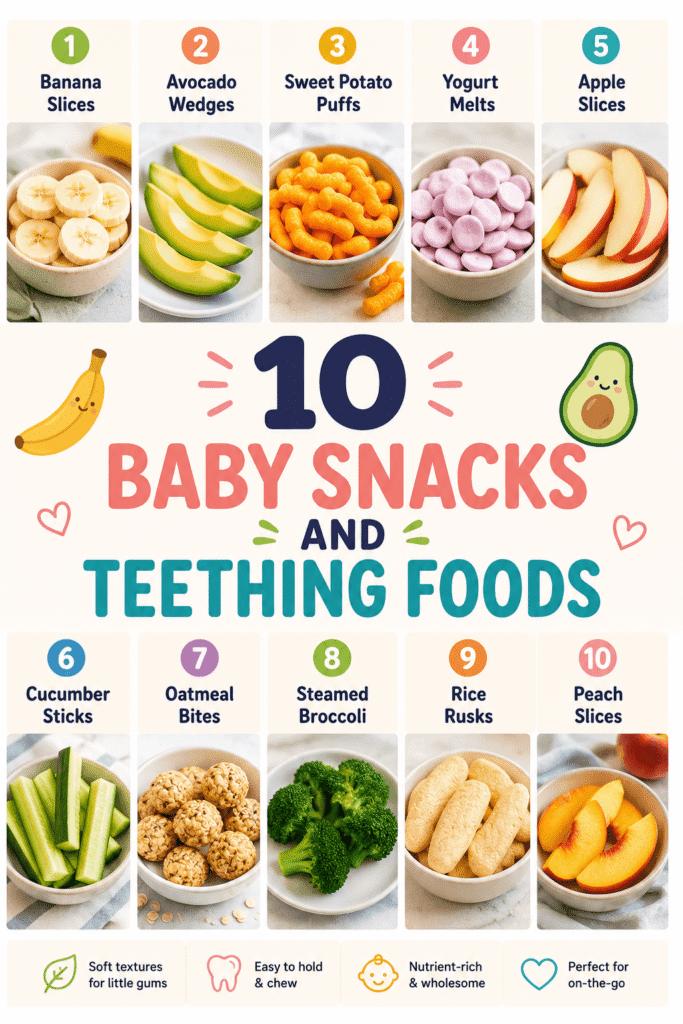
1. Chilled Banana Spears
Banana is one of the easiest baby snacks because it is naturally soft, sweet, and easy to hold. For teething comfort, serve ripe banana chilled from the refrigerator. Cut it into long spears so your baby can grip it with part of the piece sticking out of their hand.
Banana can be slippery, so rolling it lightly in finely ground oats or baby cereal can make it easier to hold. Avoid very firm banana pieces and always watch your baby closely while eating.
2. Avocado Strips
Avocado is soft, creamy, and full of healthy fats. It works well as a finger food because it can be sliced into strips that are easy for little hands to grab. Like banana, avocado can be slippery, so you can roll it in crushed unsweetened cereal or finely ground oats for grip.
Serve avocado plain, mashed on toast fingers, or cut into long strips. It is a gentle snack for babies who are learning to chew and explore soft textures.
3. Steamed Sweet Potato Sticks
Sweet potato is a cozy, naturally sweet option for baby snacks and teething foods. Steam or roast it until very soft, then cut it into thick sticks that your baby can hold. The texture should be tender enough to mash easily between your fingers.
Sweet potato sticks are especially nice for babies who like warm, soft foods. You can serve them plain or with a tiny sprinkle of mild seasoning like cinnamon, as long as there is no added sugar or salt.
4. Soft Pear Slices
Ripe pear can be a refreshing teething food when it is soft enough for your baby to manage. Peel the pear and serve very ripe slices, or gently steam harder pear until it becomes tender. Chilled soft pear can feel soothing on sore gums.
Avoid firm raw pear chunks for younger babies. The goal is a soft texture that breaks down easily, not a crunchy bite that could be difficult to chew.
5. Plain Full-Fat Yogurt
Plain full-fat yogurt can be a simple snack for babies who tolerate dairy. Choose unsweetened yogurt with no added sugar. You can serve it on a preloaded spoon, mix it with mashed fruit, or offer a small amount alongside soft finger foods.
For teething babies, cool yogurt from the refrigerator may feel comforting. Avoid sweetened yogurts, honey-sweetened yogurts, and dessert-style yogurt cups for babies.
6. Soft Oatmeal Fingers
Oatmeal fingers are a soft homemade snack made by cooking oats with water, breast milk, formula, or unsweetened milk appropriate for your baby’s age. Once thickened, spread the oatmeal into a shallow dish, let it cool, and cut it into soft strips.
This snack is easy for babies to hold and can be flavored with mashed banana, applesauce, or a little cinnamon. Keep the texture soft and avoid adding honey, sugar, or large mix-ins.
7. Steamed Carrot Sticks
Raw carrots are too hard for babies, but steamed carrot sticks can be a helpful finger food when cooked until soft. Cut carrots into long sticks, steam until tender, and test them with your fingers before serving.
Carrot sticks should be soft enough to squish, not firm or crunchy. They are a good way to introduce a vegetable snack while giving teething babies something gentle to hold and gum.
8. Toast Fingers
Toast fingers can be useful for older babies who are ready for more texture. Lightly toast bread, cut it into long strips, and serve it plain or topped with a thin layer of mashed avocado, hummus, or smooth nut butter thinned safely with water, breast milk, or formula.
Avoid thick sticky spreads, seeded breads, hard crusty pieces, and breads with whole nuts or large grains. The toast should be manageable and never served without supervision.
9. Mashed Beans or Lentils
Beans and lentils are soft, filling, and easy to season gently. Cook them until very tender, then mash them before serving. You can offer mashed beans on a preloaded spoon, spread a thin layer on toast strips, or serve them with soft vegetables.
Choose low-sodium or no-salt-added canned beans when using canned options, and rinse them well. Avoid serving whole firm beans to younger babies because they may be difficult to manage.
10. Soft Egg Strips
Egg can be a useful baby snack when cooked fully and served in an easy-to-hold shape. Try a plain omelet cut into strips or soft scrambled egg offered in small manageable pieces. Make sure the egg is cooked through and cooled before serving.
Because eggs are a common allergen, ask your pediatrician for guidance if your baby has eczema, previous reactions, or a family history that makes you concerned. Introduce new foods one at a time when needed so you can watch for reactions.
Best Teething Food Textures
Teething foods should be soothing without being dangerous. Many parents like chilled foods because cool textures can feel comforting on sore gums. Chilled does not have to mean frozen solid. Very hard frozen foods can be difficult for babies to manage.
- Soft and squishable fruits
- Steamed vegetables cut into easy-to-hold sticks
- Cool plain yogurt
- Soft oatmeal fingers
- Avocado strips
- Soft toast fingers with thin spreads
Watch your baby’s cues. If they are frustrated, tired, gagging often, or not ready for a texture, pause and try again another day with something softer or simpler.
Foods to Avoid for Babies and Teething Snacks
Some foods are not safe choices for babies because of choking risk, added sugar, salt, or food safety concerns. Even foods that seem common for older children may not be appropriate for babies.
- Honey before 12 months
- Whole grapes, cherries, berries, or cherry tomatoes unless safely cut
- Whole nuts, seeds, and thick spoonfuls of nut butter
- Popcorn, chips, pretzels, hard crackers, and granola bars
- Hard raw apple, raw carrot, or crunchy vegetable chunks
- Hot dogs, sausages, tough meat chunks, or large cheese cubes
- Sticky candy, gummies, marshmallows, and chewy fruit snacks
- Sweetened drinks, juice for babies under 12 months, and caffeinated drinks
When in doubt, choose soft, simple, whole foods and prepare them carefully. A few extra minutes of cutting, steaming, cooling, or mashing can make snack time safer and calmer.
Easy Baby Snack Combinations
Once your baby has tried individual foods, you can begin combining simple flavors. Keep portions small and textures manageable. Babies do not need complicated snacks to enjoy variety.
- Plain yogurt with mashed banana
- Avocado strips with soft sweet potato
- Oatmeal fingers with soft pear
- Mashed lentils with steamed carrot sticks
- Toast fingers with thin avocado spread
- Soft egg strips with steamed broccoli
Simple combinations help babies explore new tastes without overwhelming them. Try offering a familiar food next to a new one to make snack time feel more comfortable.
Tips for Teething Babies Who Do Not Want to Eat
Teething can make some babies less interested in food for a short time. Sore gums, drooling, and fussiness can make meals feel harder. Keep snacks gentle, relaxed, and pressure-free.
Offer cool soft foods, keep portions small, and let your baby explore at their own pace. If your baby refuses a food, try again later. Appetite can change from day to day during teething.
Contact your pediatrician if your baby is refusing feeds, showing signs of dehydration, has a high fever, seems unusually sleepy, or you are worried about their symptoms. Teething can be uncomfortable, but not every symptom is caused by teething.
Final Thoughts on Baby Snacks and Teething Foods
Baby snacks and teething foods do not need to be complicated. Soft banana, avocado, steamed sweet potato, tender pear, plain yogurt, oatmeal fingers, steamed carrots, toast fingers, mashed beans, and soft egg strips can all be simple options when prepared safely.
The most important things are readiness, texture, supervision, and thoughtful preparation. Choose foods that are soft, easy to hold, and appropriate for your baby’s stage. Avoid honey before 12 months, skip added sugar and salty packaged snacks, and stay aware of choking hazards.
With a little planning, snack time can become a calm, nourishing, and fun part of your baby’s day. Save these ideas for teething days, first finger foods, and easy baby-led snack inspiration.