Finding jeans that feel flattering, comfortable, and confidence-boosting can be frustrating, especially if you are trying to smooth or minimize a lower belly area. The good news is that you do not need to give up on jeans at all. With the right fit, rise, fabric, and styling tricks, jeans can actually become one of the easiest pieces to wear in a way that feels supportive and polished.
When people talk about how to hide a FUPA in jeans, what they usually want is a smoother front, less cling in the lower stomach area, and a more balanced overall silhouette. That does not mean squeezing into stiff denim or covering your body with oversized clothes. It simply means choosing jeans and outfit combinations that work with your shape instead of against it.
In this guide, you will find easy tips and tricks to hide FUPA in jeans while still looking stylish and feeling comfortable. These ideas are practical, wearable, and easy to use in everyday outfits. Whether you prefer skinny jeans, straight-leg styles, mom jeans, or wide-leg denim, the right details can make a huge difference.
1. Choose High-Rise Jeans Instead of Low-Rise Styles
One of the easiest ways to create a smoother look through the lower stomach area is to choose high-rise jeans. A higher rise gives more coverage and helps hold everything in more evenly, which can make the front of the jeans lie flatter.
Low-rise jeans tend to cut across the lower belly at the widest point, which can create extra emphasis or visible digging. High-rise styles do the opposite. They extend above that area and often make the whole waistline look more streamlined.
If you want the most flattering option, look for jeans that hit at or just above your natural waist. That placement usually offers the best balance of comfort, support, and shape.
2. Look for Structured Denim with a Little Stretch
Fabric matters more than many people realize. Jeans that are too thin or too soft can cling to the lower stomach and highlight every line underneath. On the other hand, denim that is too stiff can feel uncomfortable and create bunching in awkward places.
The sweet spot is usually structured denim with a little stretch. This kind of fabric holds its shape better and smooths more effectively without feeling restrictive. It gives support while still allowing enough movement for real life.
When shopping, try to find jeans that feel substantial rather than flimsy. A supportive fabric often creates a cleaner look right away.
3. Avoid Jeans That Are Too Tight Across the Front
Many people think tighter jeans will hold everything in better, but jeans that are too snug across the lower stomach often do the opposite. They can pull, crease, and create more attention in the exact area you are trying to smooth.
A better approach is to choose jeans that skim the body instead of squeezing it. You still want shape, but you do not want strain lines, pulling at the zipper, or pockets that flare open. Those are signs the fit is too tight.
If you are between sizes, trying the next size up can sometimes create a much more flattering result. A smoother fit usually looks better than a smaller size that digs in.
4. Try Straight-Leg or Wide-Leg Jeans for Balance
The overall silhouette of the jeans can help balance the body visually. Straight-leg jeans and wide-leg jeans often work beautifully because they create a longer, smoother line from the hips downward. This can take attention away from the lower stomach area and make the outfit feel more proportioned.
Very tight jeans can sometimes emphasize the midsection because the whole outfit becomes more body-hugging. A straighter or slightly looser leg shape gives the eye somewhere else to go and often makes the look feel more effortless.
You do not have to avoid fitted jeans completely, but if your main goal is a more balanced silhouette, straight-leg and wide-leg cuts are often easier to style.
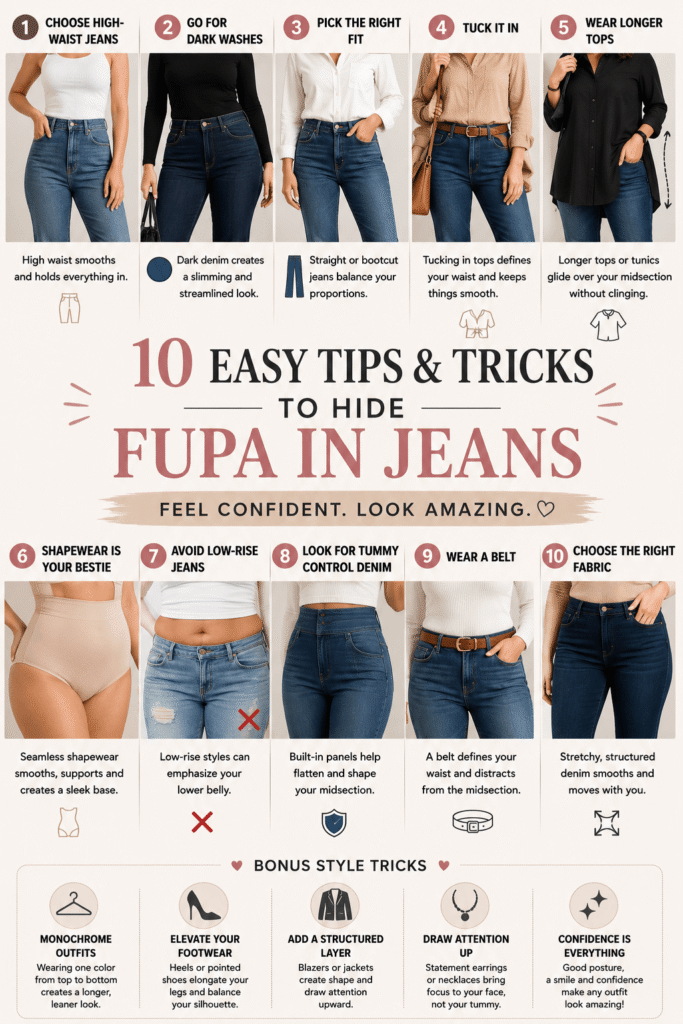
5. Pick Dark Washes for a Smoother Look
Dark-wash jeans are a classic trick for a reason. Darker denim tends to look cleaner, sleeker, and a little more forgiving through the front and upper thigh area. It can visually minimize bulk and create a more streamlined effect.
That does not mean you can never wear light-wash jeans, but if you want the easiest styling shortcut, dark indigo, deep blue, charcoal, and black denim are excellent options. They also tend to look a little dressier, which makes them easy to pair with polished tops and shoes.
If a pair of jeans also has fading or whiskering across the lower stomach, that can draw more attention to the area. A cleaner wash often works better when your goal is a smoother front.
6. Use Longer Tops or Front-Tuck Styling Wisely
The top you wear with jeans makes a big difference. Longer tops that hit just below the lower belly can provide coverage without looking boxy. This is especially helpful if you want a little extra confidence while still wearing jeans comfortably.
A soft front tuck can also work well when done carefully. Instead of tucking in a clingy top tightly, try a looser blouse, tee, or sweater with just a small front tuck. This gives shape at the waist without fully outlining the stomach area.
The goal is not to hide under oversized clothing. It is to create a gentle drape that makes the whole outfit feel balanced and flattering.
7. Add a Supportive Base Layer if You Want Extra Smoothing
If you want an extra smoothing effect under jeans, a lightweight shaping short, smoothing brief, or supportive base layer can help. This is completely optional, but some people find it makes jeans sit better and feel more secure.
The key is choosing something comfortable. You do not need extremely tight shapewear that makes sitting and breathing difficult. A light to medium smoothing layer is often enough to create a cleaner line under denim.
If you dislike shapewear, that is fine too. The right jeans alone can still make a huge difference. Base layers are simply one optional styling trick, not a requirement.
8. Pay Attention to Pocket Placement and Front Details
Small design details can change how jeans look on the body. Bulky front pleats, heavy whiskering, and extra distressing around the lower stomach can draw more attention to that area. Cleaner front panels usually look smoother and more flattering.
Back pocket placement matters too because it affects the overall proportions of the jeans. Well-placed back pockets can make the whole fit look more lifted and balanced, which helps the silhouette from every angle.
When possible, choose jeans with minimal front detail and a simple, clean finish. These subtle choices can make the jeans look much more streamlined.
9. Wear Thicker, Smoother Tops with Your Jeans
Sometimes the issue is not the jeans themselves but the top layered over them. Very thin, clingy fabrics can stick to the stomach and show every contour underneath, even if the jeans fit well. A slightly thicker knit, woven blouse, structured tee, or soft sweater often creates a much nicer drape.
This is especially useful when you want your outfit to look polished without adding bulk. A top with a bit of structure can skim over the midsection and help the jeans look better at the same time.
Think in terms of balance. The best outfits usually combine jeans that smooth and tops that softly float rather than cling.
10. Focus on Fit and Confidence More Than Perfection
The most important tip is to stop chasing the idea of a perfectly flat front in every pair of jeans. Real bodies have shape, and comfort matters. The goal is not perfection. It is finding jeans that fit well, feel good, and help you move through the day with more confidence.
Sometimes the most flattering pair is simply the one that does not pinch, gap, sag, or fight your shape. When jeans fit properly and the outfit feels balanced, you usually look better because you feel more relaxed and confident wearing it.
That confidence shows. A good pair of jeans should support your style, not make you feel like you need to hide.
Quick Outfit Ideas That Work Well
- High-rise straight-leg jeans with a slightly loose blouse and ankle boots
- Dark-wash wide-leg jeans with a structured tee and blazer
- Black high-rise jeans with a soft sweater and long pendant necklace
- Supportive stretch jeans with a half-tucked button-down shirt
- Clean straight-leg denim with a longer cardigan and simple sneakers
These combinations help create balance and keep the front of the outfit looking smooth without feeling overly styled. Little choices like hem length, top fabric, and rise can completely change how jeans feel on your body.
Final Thoughts on Easy Tips and Tricks to Hide FUPA in Jeans
If you want to hide a FUPA in jeans, the best approach is to focus on smart fit choices instead of harsh rules. High-rise denim, supportive fabric, balanced leg shapes, dark washes, and tops that drape well can all help create a smoother and more flattering silhouette.
You do not need to squeeze into uncomfortable jeans or cover yourself in oversized layers. Often, the most effective tricks are the simplest ones. A better rise, a better wash, a slightly different cut, or a more flattering top can make a big difference.
The right jeans should make you feel supported, stylish, and comfortable at the same time. Once you find the shapes and styling tricks that work for you, getting dressed becomes much easier and much more confidence-boosting.