Building better exercise habits does not have to mean waking up at 5 a.m., forcing yourself through workouts you hate, or completely changing your life overnight. The most effective fitness routines are usually the ones that feel realistic, repeatable, and easy enough to come back to again tomorrow.
When exercise becomes a habit, it stops feeling like a huge decision you have to make every day. Instead, it becomes part of your normal rhythm, just like brushing your teeth, making coffee, or planning dinner. The goal is not perfection. The goal is consistency that fits your real life.
Whether you are starting from scratch, getting back into movement, or trying to stay motivated after several failed attempts, these exercise habits can help you create a routine that feels sustainable. Small changes matter more than dramatic plans, especially when you repeat them week after week.
Why Exercise Habits Matter More Than Motivation
Motivation is helpful, but it is not reliable. Some days you feel excited to work out. Other days you feel tired, busy, stressed, or completely uninterested. That is why strong exercise habits are so powerful.
A habit reduces the amount of mental energy required to take action. Instead of asking, “Do I feel like exercising today?” you already have a simple routine in place. You know when you will move, what you will do, and how to make it easy to begin.
This is what makes exercise feel less overwhelming. You do not need to reinvent your routine every morning. You simply follow the pattern you have created.
1. Start With a Workout So Small It Feels Easy
One of the best exercise habits for beginners is starting smaller than you think you need to. A 10-minute walk, a five-minute stretch, or one simple bodyweight circuit can be enough to build momentum.
The mistake many people make is starting with a routine that is too intense. They plan long workouts, push too hard, get sore, and then quit because it feels impossible to maintain. Small workouts remove the pressure and help you prove to yourself that you can show up.
Once the habit is in place, you can always add more time, intensity, or variety. First, make exercise feel doable.
2. Schedule Exercise Like an Appointment
If exercise only happens when you “find time,” it will usually get pushed aside. A simple but powerful habit is choosing a specific time for movement and treating it like a real appointment.
You might walk after breakfast, stretch before bed, go to the gym after work, or do a quick home workout during lunch. The exact time matters less than having a clear plan.
When your workout has a place on your calendar, it becomes easier to protect. You are no longer hoping exercise will happen. You are making room for it on purpose.
3. Prepare Your Workout Clothes in Advance
Removing friction is one of the easiest ways to build better exercise habits. When your shoes, clothes, water bottle, headphones, or yoga mat are ready, starting becomes much easier.
Lay out your outfit the night before. Keep walking shoes near the door. Pack your gym bag before you go to sleep. Set your mat where you can see it in the morning.
These small visual cues remind your brain what comes next. They also reduce the number of excuses that can appear between you and your workout.
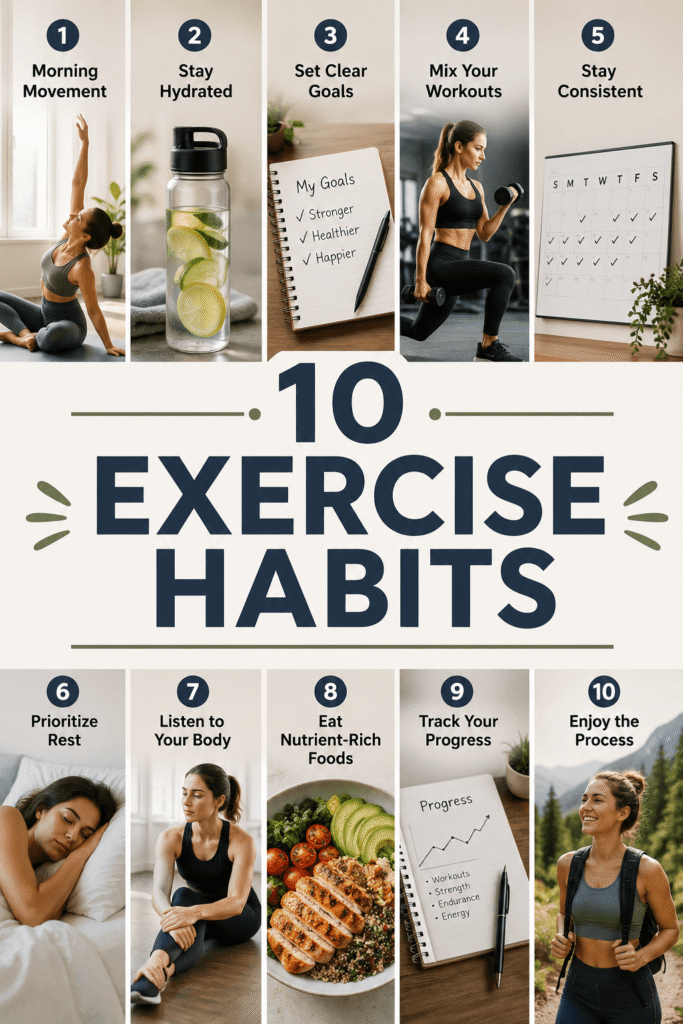
4. Choose Movement You Actually Enjoy
You are much more likely to stick with exercise when you enjoy at least part of it. That does not mean every workout has to feel exciting, but your routine should not feel like punishment.
Try different types of movement until you find options that feel good for your body and personality. Walking, dancing, cycling, swimming, strength training, Pilates, yoga, hiking, and sports can all count as exercise.
The best workout is not always the most intense one. It is the one you are willing to repeat.
5. Use the Two-Minute Rule to Beat Procrastination
When you do not feel like exercising, tell yourself you only have to do two minutes. Put on your shoes and walk around the block. Do one stretch. Start one song and move your body until it ends.
This habit works because starting is often the hardest part. Once you begin, you may decide to keep going. Even when you stop after two minutes, you still strengthen the identity of someone who shows up.
Not every workout has to be impressive. Sometimes the win is simply keeping the habit alive.
6. Track Your Progress Visually
Visual progress can make exercise habits more satisfying. You can use a habit tracker, calendar, notebook, fitness app, or simple checklist to mark each day you move.
Seeing your progress builds motivation because it gives you proof that your effort is adding up. A row of check marks can be surprisingly powerful, especially on days when you feel like nothing is changing.
Keep the tracking simple. The goal is not to create more work. The goal is to celebrate consistency and notice your patterns.
7. Pair Exercise With Something You Already Love
Exercise becomes easier when you connect it to something enjoyable. This is called habit pairing, and it can make workouts feel more rewarding.
Listen to your favorite podcast while walking. Save a playlist for gym sessions. Watch a show while cycling indoors. Drink your favorite smoothie after strength training. Call a friend during an easy walk.
When movement is connected to something positive, your brain starts to associate exercise with pleasure instead of pressure.
8. Build a Flexible Weekly Routine
A good exercise routine needs structure, but it also needs flexibility. Life changes from day to day, so your plan should give you options instead of making you feel like you failed when things get busy.
Create a weekly rhythm with a few different types of movement. For example, you might aim for three walks, two strength sessions, and one stretching day. If you miss a day, you can simply move the workout to another day instead of giving up completely.
Flexible routines are easier to maintain because they allow you to stay consistent without being rigid.
9. Focus on How Exercise Makes You Feel
Many people start exercising because they want physical results, but those results can take time. Focusing only on appearance can make it harder to stay motivated in the beginning.
Instead, pay attention to the immediate benefits. Notice your energy after a walk, your mood after a workout, your sleep after stretching, or your confidence after completing a strength session.
When you connect exercise with feeling better now, it becomes easier to keep going long enough to see bigger changes later.
10. Make Recovery Part of the Habit
Rest and recovery are not signs of laziness. They are part of a healthy exercise habit. Your body needs time to repair, rebuild, and adapt, especially when you are starting a new routine.
Recovery can include gentle stretching, sleep, hydration, walking, mobility work, or simply taking a day off from intense exercise. Building recovery into your routine helps prevent burnout and makes your workouts feel more sustainable.
A balanced routine should leave you feeling stronger over time, not constantly exhausted.
Simple Exercise Habit Ideas for Busy Days
Busy days do not have to break your routine. Having a short list of quick movement options can help you stay consistent even when your schedule is packed.
- Take a 10-minute walk after a meal
- Do five minutes of stretching before bed
- Complete one round of squats, push-ups, and lunges
- Use the stairs when possible
- Dance to two favorite songs
- Do a short yoga flow in the morning
- Walk while taking a phone call
These small actions may not feel dramatic, but they help you stay connected to the habit. Consistency is built through repeated small choices.
How to Stay Consistent With Exercise Habits
Consistency becomes easier when you lower the pressure and focus on repeatable actions. You do not need the perfect workout plan, the perfect equipment, or the perfect schedule to begin.
Start with what you can do today. Choose movement that fits your current energy level. Celebrate small wins. Adjust your routine when life changes. Most importantly, do not let one missed workout turn into a missed week.
A strong exercise habit is not built by never missing a day. It is built by returning to the routine again and again.
Common Exercise Habit Mistakes to Avoid
When trying to build a new fitness routine, it is easy to fall into patterns that make exercise feel harder than it needs to be. Avoiding these common mistakes can help you stay on track.
- Starting with workouts that are too long or intense
- Choosing exercises you dislike because they seem trendy
- Skipping recovery and rest days
- Expecting instant results
- Comparing your progress to someone else’s routine
- Giving up completely after missing one workout
The goal is to create a routine that supports your life, not one that makes you feel guilty. Exercise should help you feel stronger, more energized, and more connected to your body.
Final Thoughts on Building Better Exercise Habits
Exercise habits become easier when you stop chasing perfection and start creating simple systems. A prepared outfit, a short walk, a scheduled workout, or a favorite playlist can all help movement become part of your everyday life.
The most successful routines are usually built from small, repeatable choices. You do not need to change everything at once. You just need to make exercise easier to start and easier to repeat.
Begin with one habit from this list and practice it this week. Over time, those small actions can grow into a fitness routine that feels natural, enjoyable, and sustainable.