The good news is that cleaning a Mr. Coffee coffee maker is simple. Most standard drip coffee machines can be cleaned with white vinegar, water, mild dish soap, and a few basic steps. You do not need to scrub aggressively or use harsh chemicals. A regular cleaning routine can help your coffee maker brew more smoothly and keep every pot tasting fresh.
This guide explains how to clean a Mr. Coffee drip coffee machine, including the carafe, filter basket, water reservoir, warming plate, exterior, and internal brewing system. You will also learn how often to clean it, what to avoid, and how to keep your coffee maker fresher between deep cleans.
Why You Should Clean Your Mr. Coffee Coffee Machine
A coffee maker is used with water and coffee grounds every day, which means it can collect both mineral deposits and coffee residue. Hard water can leave limescale inside the machine, while coffee oils can cling to the carafe, basket, and drip area. If this buildup is not removed, your coffee may taste bitter, stale, weak, or slightly off.
Cleaning also helps the machine work better. Mineral buildup can slow the brewing process, make the machine noisier, or cause uneven water flow. If your Mr. Coffee machine is taking longer than usual to brew, cleaning may help restore a smoother cycle.
A clean coffee maker also makes your kitchen routine feel better. The carafe looks clearer, the machine smells fresher, and your first cup of coffee tastes closer to the way it should.
How Often Should You Clean a Mr. Coffee Coffee Maker?
For everyday maintenance, wash the removable parts after each use or at least once a day if you brew daily. This includes the carafe, lid, and removable filter basket. Empty used grounds right away so they do not sit in the machine and create odors.
For deeper cleaning, descale the machine every 40 to 80 brews, or sooner if you have hard water. You may also need to clean it sooner if brewing slows down, the coffee tastes strange, the machine smells stale, or you notice chalky white buildup.
If your model has a clean indicator light or clean function, use that as your reminder. Different Mr. Coffee models may vary, so always check your manual if your machine has special instructions.
Supplies You Need
You only need a few simple supplies to clean a standard Mr. Coffee drip coffee maker. Keep everything gentle and food-safe since the machine touches the water used for your coffee.
- White vinegar
- Fresh water
- Mild dish soap
- Soft sponge or dishcloth
- Microfiber cloth
- Clean paper filter if your machine uses one
- Soft toothbrush for small areas
- Dry towel
Avoid abrasive scrubbers, bleach, harsh household cleaners, and anything with a strong scent. These can damage parts of the machine or leave behind residue that affects the flavor of your coffee.
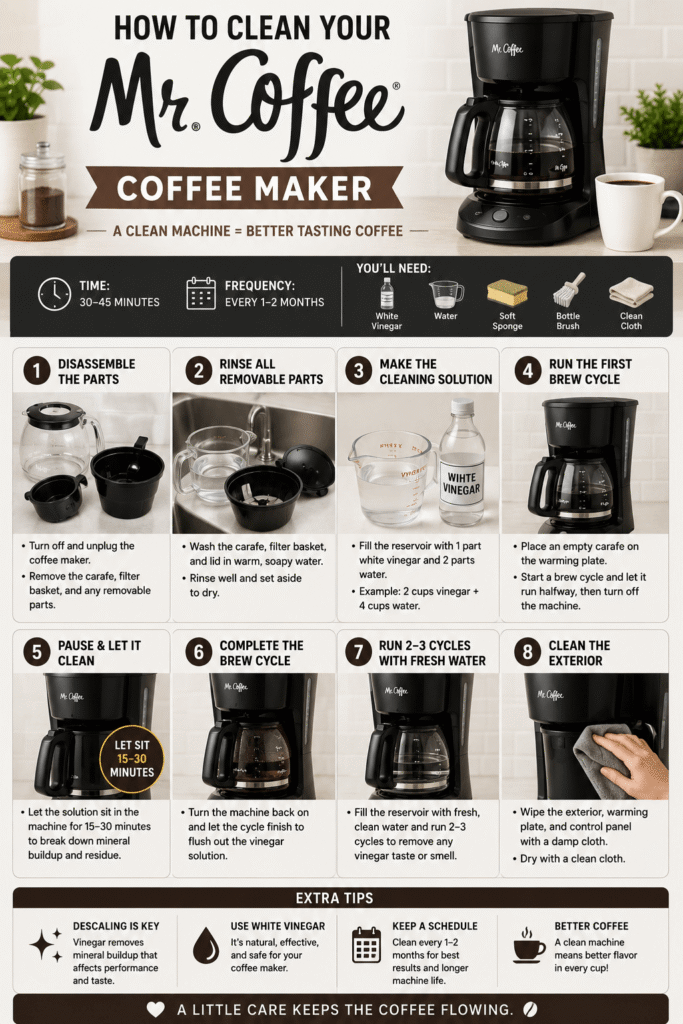
Step 1: Empty the Coffee Maker
Start by turning off the coffee maker and unplugging it. Let it cool completely before cleaning. Remove the carafe, discard any leftover coffee, and empty the filter basket. Throw away used paper filters or empty reusable filters.
Check the basket area for loose grounds. Coffee grounds can get stuck around the filter holder, drip area, and lid. Wipe away any visible grounds with a damp cloth before running a cleaning cycle.
Step 2: Wash the Carafe and Filter Basket
Wash the carafe, lid, and removable filter basket with warm water and mild dish soap. Use a soft sponge to remove coffee stains and oily residue. Rinse everything thoroughly so no soap remains.
If the carafe has dark coffee stains, let it soak with warm soapy water for a few minutes before washing. For stubborn marks, add a small amount of baking soda to the damp sponge and rub gently. Rinse well and dry with a clean towel.
If your removable parts are dishwasher-safe according to your model manual, you can use the dishwasher. If you are unsure, hand washing is the safest option.
Step 3: Fill the Reservoir with Vinegar and Water
To descale the inside of the machine, fill the water reservoir with a mixture of white vinegar and water. A common method is to use about one part vinegar to two parts water. For a stronger clean, some people use equal parts vinegar and water, but a gentler mixture is usually enough for routine cleaning.
Place the empty carafe back on the warming plate. If your coffee maker uses paper filters, place a clean paper filter in the basket to catch loosened residue during the cleaning cycle.
Do not add coffee grounds during this process. The goal is to flush mineral buildup and residue out of the internal water lines.
Step 4: Run the Clean Cycle or Brew Cycle
If your Mr. Coffee machine has a clean function, use it according to your model instructions. The clean cycle is designed to run the vinegar solution through the machine in a way that helps loosen buildup.
If your model does not have a clean function, run a normal brew cycle with the vinegar and water mixture. Some people pause the machine halfway through and let it sit for 20 to 30 minutes before finishing the cycle. This gives the vinegar more time to work on mineral deposits.
Once the cycle is complete, carefully pour out the vinegar solution from the carafe. The liquid may look cloudy or slightly discolored if it removed buildup from inside the machine.
Step 5: Let It Sit if Needed
If your coffee maker has heavy buildup or has not been cleaned in a long time, one cycle may not be enough. You can let the vinegar solution sit in the carafe for about 30 minutes after the brew cycle, then discard it.
For very stubborn mineral buildup, repeat the vinegar cleaning cycle one more time. However, avoid overdoing vinegar cleaning too frequently. Regular light maintenance is better than waiting until the machine needs multiple heavy cycles.
Step 6: Rinse with Fresh Water
Rinsing is one of the most important steps. Fill the reservoir with fresh water only and run a full brew cycle. Discard the water from the carafe. Repeat this rinse cycle at least one more time, or until the vinegar smell is gone.
If you can still smell vinegar, run another fresh-water cycle. Coffee can easily pick up lingering flavors, so it is worth taking the extra time to rinse the machine thoroughly.
Step 7: Wipe the Exterior
After the internal cleaning cycles are finished, wipe the outside of the coffee maker with a damp microfiber cloth. Clean the lid, handle, control panel area, warming plate, and base. Be careful around buttons, cords, and electrical areas.
For sticky spots, use a cloth with a tiny amount of mild dish soap, then wipe again with a clean damp cloth. Dry the exterior with a towel so water spots do not remain.
Step 8: Clean the Warming Plate
The warming plate can collect coffee drips, burnt residue, and water marks. Make sure the machine is unplugged and completely cool before cleaning it. Wipe the plate with a damp cloth and mild dish soap if needed.
If there is stuck-on residue, place a damp cloth over the spot for a few minutes to soften it. Then wipe gently. Avoid scraping with metal tools because this can scratch or damage the warming plate.
Step 9: Clean Small Crevices
A soft toothbrush can help clean small areas around the filter basket, lid hinge, drip spout, and carafe opening. Dip the toothbrush in warm soapy water, shake off excess moisture, and gently brush away residue.
Wipe the area again with a damp cloth and dry it well. Do not pour water directly into exterior crevices or around electrical parts.
Step 10: Reassemble and Brew Fresh Coffee
Once everything is clean and dry, place the basket, carafe, and lid back into position. Make sure the vinegar smell is gone before brewing coffee. If the machine smells clean and the rinse water runs clear, it is ready to use.
Your next pot of coffee should taste fresher and cleaner. If the flavor still seems off, check the coffee grounds, water quality, filter, and carafe cleanliness. Sometimes stale coffee or old filters can also affect taste.
How to Keep Your Mr. Coffee Machine Cleaner Longer
Small habits make deep cleaning easier. The cleaner you keep the removable parts, the less residue builds up inside the machine. A quick daily reset can make a big difference.
- Empty used grounds after each brew.
- Wash the carafe and basket daily.
- Leave the reservoir lid open briefly so moisture can air out.
- Use filtered water if hard water causes heavy scale.
- Wipe spills from the warming plate right away after it cools.
- Descale every 40 to 80 brews or when the clean light turns on.
- Keep the exterior dry and free from sticky coffee splashes.
These habits help prevent odor, stains, and slow brewing. They also make each deep clean faster because the machine never gets extremely dirty.
What Not to Do When Cleaning a Mr. Coffee Coffee Maker
Cleaning a coffee maker is simple, but a few mistakes can damage the machine or leave behind unpleasant residue. Always use gentle cleaning methods and avoid soaking electrical parts.
- Do not immerse the coffee maker base in water.
- Do not use bleach inside the machine.
- Do not mix vinegar with other cleaners.
- Do not use abrasive pads on the carafe, warming plate, or exterior.
- Do not brew coffee until all vinegar has been rinsed out.
- Do not leave wet coffee grounds sitting in the basket.
- Do not ignore the clean light if your model has one.
If your coffee maker is an espresso machine, iced coffee maker, single-serve machine, or a specialty Mr. Coffee model, check the manual for model-specific cleaning directions. Those machines may have different parts, pressure systems, milk tubes, or cleaning steps.
Final Thoughts on Cleaning a Mr. Coffee Coffee Machine
Cleaning a Mr. Coffee coffee machine is an easy routine that can improve coffee flavor and help the machine work better. Wash the removable parts regularly, run a vinegar and water cleaning cycle when needed, rinse with fresh water, and wipe down the outside for a complete refresh.
The most important steps are consistency and thorough rinsing. If you clean the machine every 40 to 80 brews, empty grounds daily, and keep the carafe and basket fresh, your coffee maker will be easier to maintain. A clean machine means a fresher cup, a better morning routine, and a kitchen appliance that feels ready for daily use.