Learning how to clean retainers the right way is one of the easiest ways to keep your smile fresh, your mouth healthier, and your retainer in better condition. Retainers sit directly against your teeth, so they can collect plaque, saliva, bacteria, food residue, and odors if they are not cleaned regularly. Even a clear retainer that looks clean can develop a cloudy film over time.
The good news is that retainer cleaning does not have to be complicated. A gentle daily routine and a deeper weekly clean can help prevent buildup, bad smells, discoloration, and that unpleasant “dirty retainer” feeling. You do not need harsh chemicals or hot water. In fact, gentle cleaning is usually best because many retainers are made from plastic or acrylic that can warp, scratch, or discolor.
This guide explains how to clean clear retainers, Hawley retainers, and fixed retainers with simple, safe habits. You will also learn what to avoid, how often to clean your retainer, and how to keep your retainer case fresh too.
Why Cleaning Your Retainer Matters
Your retainer spends a lot of time in your mouth, which means it comes into contact with saliva, plaque, and bacteria every day. If you put it back in without cleaning it, that buildup goes right back onto your teeth. Over time, this can lead to odors, cloudy residue, stains, and an uncomfortable fit.
A clean retainer also feels better to wear. It is smoother, fresher, and less likely to taste unpleasant. Since retainers are custom-made and can be expensive to replace, taking care of them helps protect your investment after braces or aligner treatment.
Cleaning is especially important if you wear your retainer overnight. During sleep, saliva flow naturally slows down, which can make your mouth and retainer feel less fresh in the morning. A quick morning clean helps remove overnight buildup before it hardens.
What You Need to Clean Retainers
You only need a few simple supplies to keep most retainers clean. The goal is to remove plaque and odor without scratching, warping, or weakening the retainer material.
- A soft-bristled toothbrush used only for your retainer
- Cool or lukewarm water
- Mild liquid soap
- A clean retainer case with ventilation
- Retainer cleaning tablets or an orthodontist-approved soaking solution
- A clean towel for air-drying
- Floss threaders or interdental brushes for fixed retainers
It is a good idea to keep your retainer toothbrush separate from your regular toothbrush. This makes the routine feel more organized and helps you avoid mixing toothpaste with retainer cleaning if your orthodontist has told you not to use it.
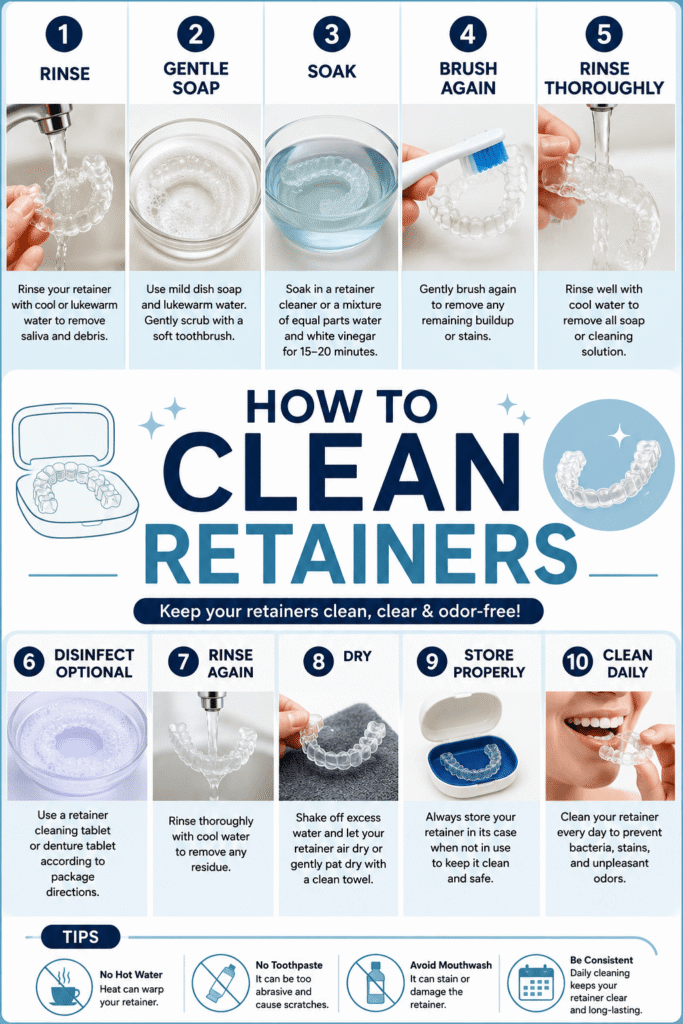
How to Clean Retainers Daily
A daily retainer cleaning routine is the most important step. It only takes a few minutes, but it helps stop plaque from drying onto the retainer and becoming harder to remove.
- Remove your retainer carefully with clean hands.
- Rinse it under cool or lukewarm water.
- Add a small drop of mild liquid soap to a soft toothbrush.
- Brush all surfaces gently, including grooves and edges.
- Rinse thoroughly until no soap remains.
- Let the retainer air-dry before placing it in the case, unless you are putting it back in right away.
Gentle brushing is key. Do not scrub aggressively because scratches can create tiny rough areas where buildup collects more easily. Pay attention to the inside grooves of clear retainers because they fit closely around each tooth and can trap residue.
How to Deep Clean Retainers Weekly
Daily cleaning helps with routine plaque, but a weekly deep clean can make your retainer feel extra fresh. This is especially helpful if your retainer looks cloudy, smells stale, or has light buildup that does not come off with brushing alone.
Use a retainer cleaning tablet or an orthodontist-approved retainer cleaning solution. Follow the directions on the package because soaking times can vary. Many products only need a short soak, and leaving a retainer in solution too long may not be recommended.
- Place the retainer in a clean cup or container.
- Add cool or lukewarm water according to the cleaner instructions.
- Add the retainer cleaning tablet or solution.
- Soak only for the recommended time.
- Brush gently after soaking if needed.
- Rinse very well before putting the retainer back in your mouth.
A weekly deep clean should freshen the retainer without replacing daily brushing. Think of it like laundry: a soak can help, but it works best when the item is already being cleaned regularly.
How to Clean Clear Plastic Retainers
Clear plastic retainers, sometimes called Essix-style retainers, need gentle care because they can scratch, stain, or warp. Always rinse them with cool or lukewarm water after removing them. Brush gently with mild soap and a soft toothbrush, then rinse thoroughly.
Avoid hot water because heat can change the shape of the plastic. Even a small change in shape can affect how the retainer fits. You should also avoid placing clear retainers near heaters, in a hot car, in the dishwasher, or anywhere they may be exposed to high heat.
If a clear retainer looks cloudy, try a recommended retainer cleaning tablet or solution. Do not use abrasive powders or rough scrubbing pads. If the cloudiness does not improve, ask your orthodontist whether the buildup needs professional cleaning or whether the retainer should be replaced.
How to Clean Hawley Retainers
Hawley retainers usually have an acrylic plate and a metal wire. These retainers are sturdy, but they still need gentle cleaning. Rinse the retainer after removing it, then brush the acrylic and wire carefully with mild soap and a soft toothbrush.
Pay attention to the area where the wire meets the acrylic because residue can collect around small bends and edges. Rinse very well so no soap remains before wearing it again.
For weekly cleaning, use a retainer-safe soaking product if your orthodontist approves it. If the metal wire looks dull or the acrylic develops stubborn buildup, do not scrape it with sharp tools. A dental professional can tell you the safest way to clean or repair it.
How to Clean Fixed Retainers
A fixed retainer is bonded behind your teeth, so you cannot remove it for cleaning. The goal is to clean around the wire and the bonding spots every day. Brush carefully along the gumline and behind the teeth, making sure the toothbrush reaches around the retainer wire.
Flossing is especially important with fixed retainers. A floss threader, orthodontic floss, interdental brush, or water flosser can help clean between the teeth and under the wire. Your orthodontist or dental hygienist can show you the best technique for your specific retainer.
If you notice hardened buildup around a fixed retainer, schedule a dental cleaning. Hardened tartar cannot usually be removed safely at home, and trying to scrape it off yourself may damage your teeth or the retainer.
Can You Use Toothpaste on Retainers?
Some people use toothpaste on retainers, but many orthodontic care instructions recommend avoiding regular toothpaste on certain retainers because it can be abrasive or cause discoloration. This is especially important for clear plastic retainers that can become scratched or cloudy.
If your orthodontist specifically told you to use toothpaste, follow their instructions. Otherwise, a soft toothbrush with mild liquid soap and water is a gentle everyday option. The most important step is rinsing thoroughly so your retainer is clean and comfortable before it goes back in your mouth.
What Not to Use on Retainers
Some cleaning methods can damage retainers even if they seem convenient. Avoid anything that may warp plastic, corrode metal, or leave unsafe residue behind.
- Do not use boiling water or very hot water.
- Do not put retainers in the dishwasher.
- Do not soak retainers in bleach.
- Do not use harsh household cleaners.
- Do not scrub with steel wool or abrasive pads.
- Do not leave retainers in mouthwash unless your orthodontist says it is safe.
- Do not scrape buildup with knives, pins, or sharp tools.
Heat is one of the biggest retainer mistakes because it can warp plastic quickly. If your retainer no longer fits properly, feels painful, or looks bent, contact your orthodontist instead of forcing it into place.
How to Clean a Retainer Case
Your retainer case needs cleaning too. If the case is dirty, your clean retainer can pick up bacteria, lint, crumbs, or odors as soon as you put it away. Make it a habit to wash the case at least a few times a week.
Wash the case with warm soapy water, rinse it well, and let it air-dry completely. Check the corners and hinge area where moisture and debris can collect. Replace the case if it cracks, smells bad after washing, or no longer closes securely.
Never wrap a retainer in a napkin or tissue. It is very easy to accidentally throw it away. A labeled retainer case is much safer and keeps the retainer protected in a bag, drawer, or bathroom cabinet.
How Often Should You Clean Retainers?
Clean removable retainers every day, ideally every time you take them out for a longer period. At minimum, rinse them whenever they come out of your mouth and brush them gently once a day. Add a deeper clean about once a week or as recommended by your orthodontist.
Fixed retainers should be cleaned every time you brush and floss. Since they stay attached to your teeth, they are part of your daily oral hygiene routine. Regular dental checkups are also important because your dentist or hygienist can clean areas that are difficult to reach at home.
Tips to Keep Retainers Fresh Longer
Good habits make retainer cleaning much easier. The cleaner your mouth is when you wear your retainer, the cleaner the retainer stays. Brush and floss your teeth before putting your retainer in, especially at night.
- Rinse your retainer as soon as you remove it.
- Brush your teeth before wearing your retainer overnight.
- Store your retainer in a clean, ventilated case.
- Keep retainers away from pets, especially dogs.
- Do not eat while wearing a removable retainer.
- Drink plain water only while wearing retainers unless your orthodontist says otherwise.
- Bring your retainer to dental visits if you want it checked.
These small habits help prevent odors, stains, and sticky buildup. They also make your retainer feel better when you wear it.
When to Call Your Orthodontist
Sometimes cleaning is not enough. Contact your orthodontist if your retainer is cracked, warped, painful, loose, or no longer fits the way it should. You should also ask for advice if buildup will not come off, the retainer has a persistent odor, or the wire on a Hawley or fixed retainer feels bent.
Do not try to adjust a retainer yourself. Even small changes can affect how it holds your teeth. Your orthodontist can check the fit and tell you whether it needs cleaning, repair, or replacement.
Final Thoughts on Cleaning Retainers
Cleaning retainers is simple when you build it into your daily routine. Rinse with cool or lukewarm water, brush gently with mild soap, deep clean weekly with a retainer-safe product, and store the retainer in a clean case. These habits help keep your retainer fresh, clear, and comfortable.
The most important thing is to be gentle. Avoid heat, harsh chemicals, abrasive scrubbing, and risky shortcuts. With consistent care, your retainer can stay cleaner for longer and continue doing its job of helping protect your smile.