Decorating a bedroom can feel exciting and overwhelming at the same time. You want it to look beautiful, feel relaxing, and reflect your personal style, but it is not always easy to know where to start. The good news is that you do not need a huge budget or a professional designer to create a bedroom that feels put together and inviting.
The best bedrooms are not just pretty. They are also comfortable, functional, and easy to live in every day. A well-decorated bedroom should help you rest, recharge, and enjoy being in the space. That means thinking about color, furniture, lighting, layout, storage, and texture in a way that feels balanced rather than cluttered.
If you have been wondering how to decorate a bedroom without making it look random or unfinished, this guide will help. You will learn simple step-by-step ideas for choosing a style, layering decor, adding warmth, and making the room feel more polished. Whether your bedroom is large, small, modern, cozy, minimal, or somewhere in between, these tips can help you create a space you genuinely love.
Start with the Mood You Want the Room to Have
Before buying decor, take a moment to think about how you want your bedroom to feel. This step matters more than people often realize. When you know the mood you are aiming for, it becomes much easier to choose colors, furniture, and accessories that actually work well together.
Some people want a bedroom that feels calm and minimal. Others want it to feel warm, layered, and cozy. You might prefer something light and airy, dark and moody, soft and feminine, or modern and clean. There is no single right answer. What matters is that the room supports the atmosphere you want to come home to every day.
Once you have a mood in mind, keep it consistent. This does not mean every item has to match perfectly. It simply means the room should tell one clear visual story instead of competing with itself.
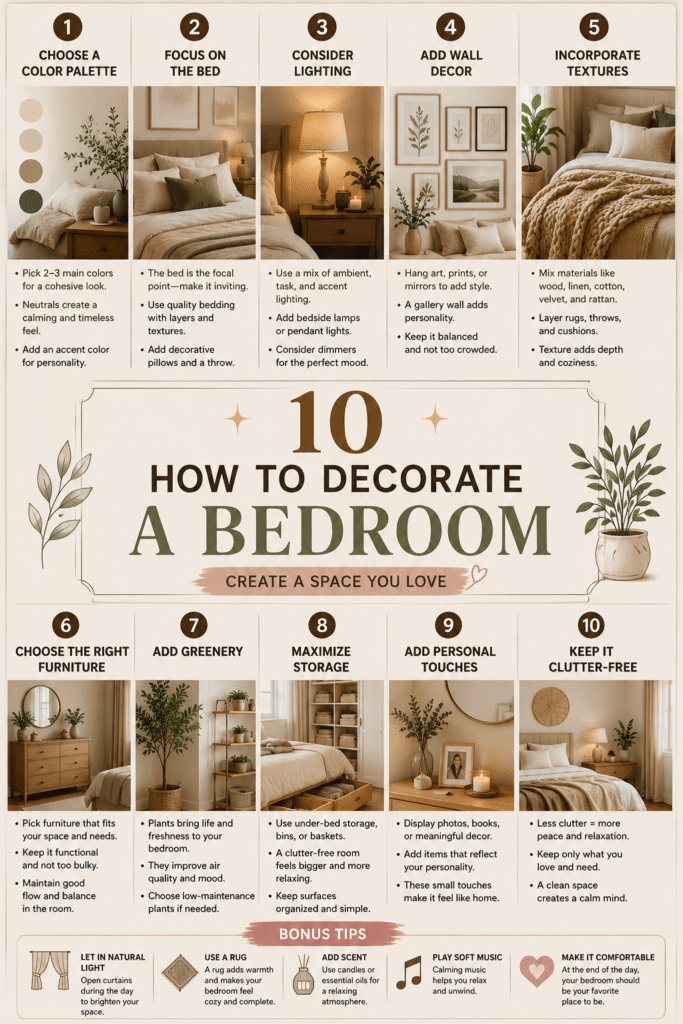
Choose a Color Palette First
One of the easiest ways to decorate a bedroom beautifully is to begin with a simple color palette. A limited palette helps the room feel more intentional and less chaotic. It also makes shopping easier because you can quickly tell whether a new item fits the look you are building.
A good starting point is to choose one main color, one supporting color, and one or two accent tones. Bedrooms often look best with softer, calmer shades, but that does not mean they have to be boring. Neutrals, dusty blues, sage green, warm beige, soft pink, charcoal, cream, and muted terracotta can all work well depending on the style you want.
- For a calm look, try white, beige, taupe, or soft gray.
- For a cozy look, use warm neutrals, brown tones, or muted rust.
- For a fresh look, combine cream with green or pale blue.
- For a dramatic look, add black, deep navy, or dark olive in small doses.
Even if your walls stay neutral, your bedding, curtains, rug, art, and accessories can carry the palette and make the room feel styled.
Use Bedding as the Main Focal Point
In most bedrooms, the bed is the natural centerpiece, so it should do a lot of the visual work. If you want your room to feel more decorated quickly, focus on making the bed look inviting and layered. Good bedding can change the entire room.
Start with simple, comfortable basics like clean sheets, a duvet or comforter, and sleeping pillows. Then add decorative layers that bring in texture and color. A quilt, throw blanket, or extra coverlet at the foot of the bed can make the setup feel more complete. Decorative pillows can also help, but it is best not to overdo them.
Try mixing textures rather than relying only on pattern. Linen, cotton, chunky knits, velvet, or soft woven fabrics can make the room feel richer and more comfortable without looking busy. This is one of the easiest ways to make a bedroom look expensive on a realistic budget.
Add a Rug to Warm Up the Space
A rug can make a bedroom feel softer, cozier, and more grounded. It helps define the room and adds warmth underfoot, especially if you have wood, tile, or laminate flooring. Even a simple neutral rug can make a big difference in how finished the room feels.
Size matters here. A rug that is too small can make the room feel disconnected. Ideally, the rug should sit partly under the bed and extend out enough to be seen on the sides and foot of the bed. In smaller rooms, even runners placed beside the bed can help create a softer look.
If your room already has enough color, choose a subtle rug with texture. If the space feels plain, a patterned rug can add interest without taking up extra visual clutter on surfaces.
Layer Your Lighting
Lighting is one of the most overlooked parts of bedroom decorating, but it has a huge effect on how the space looks and feels. A single overhead light often makes a bedroom feel flat or harsh. Layered lighting creates a softer and more welcoming atmosphere.
Start with your main light source, then add secondary lighting like bedside lamps, wall sconces, or a small table lamp on a dresser. If you want extra coziness, consider warm bulbs, fairy lights, or a soft accent lamp in a corner. The goal is to make the room feel comfortable at different times of day.
Matching bedside lamps can create a balanced look, but they do not have to be identical if your style is more collected and relaxed. As long as the lighting feels intentional, a little variety can still work beautifully.
Bring in Wall Decor Without Overcrowding the Room
Blank walls can make a bedroom feel unfinished, but too much wall decor can make it feel crowded. The key is to choose a few pieces that add personality while still keeping the room restful. Bedrooms usually benefit from a more edited approach than living rooms or entryways.
Art above the bed is a classic choice and can help anchor the space. You might choose a large framed print, a pair of artworks, a textile hanging, or a small gallery arrangement. Mirrors also work well in bedrooms because they reflect light and make the room feel larger.
When choosing wall decor, think about scale. Pieces that are too small can look lost, while oversized items can sometimes overwhelm the space. Aim for wall decor that feels proportionate to the furniture beneath it.
Use Curtains to Make the Room Feel Finished
Window treatments often have a bigger impact than people expect. Curtains can soften the room, add texture, frame the windows, and make the bedroom feel more complete. Even a simple set of neutral curtains can elevate the whole space.
For a fuller and more polished look, hang curtain rods a little higher and wider than the window frame. This can make the windows appear larger and the ceiling feel taller. Light-filtering curtains create an airy feel, while blackout curtains are practical for sleep and privacy.
If your bedroom is small, choose curtains that blend with the wall color for a calm, seamless look. If the room feels plain, patterned or textured curtains can add gentle visual interest.
Decorate Surfaces with a Light Touch
Dressers, nightstands, and shelves should feel styled, but they should also stay functional. A bedroom looks better when surfaces are thoughtfully arranged instead of filled with too many random items. Less clutter usually makes the space feel calmer and more relaxing.
A simple styling formula works well here. Try combining one practical item, one decorative object, and one organic element. For example, a nightstand might hold a lamp, a small stack of books, and a vase or candle. A dresser might include a mirror, a tray, and a plant.
- Add a candle for warmth and softness.
- Use a tray to group smaller items neatly.
- Include books or a small bowl for texture.
- Bring in greenery or flowers for life and color.
This approach keeps the room feeling intentional without making it busy.
Mix Texture to Create a Cozy Bedroom
If a bedroom feels flat, it often needs more texture rather than more stuff. Texture is what makes a space feel layered and inviting. It adds depth even when the color palette is simple.
You can bring in texture through bedding, rugs, curtains, baskets, lampshades, wood furniture, upholstered headboards, throws, and accent pillows. Mixing smooth and soft materials with woven and natural finishes helps the room feel balanced and lived-in.
For example, a bedroom with white walls and beige bedding can still feel rich if it includes linen pillowcases, a boucle bench, a woven basket, a wood nightstand, and a plush rug. The colors stay calm, but the room still feels interesting.
Do Not Forget Storage and Function
A beautiful bedroom still needs to work well in real life. If the room feels messy or hard to maintain, even lovely decor can get lost. That is why smart storage is part of decorating too.
Baskets, under-bed storage, storage benches, drawer organizers, and nightstands with drawers can help keep the space tidy. Decorative storage is especially useful because it contributes to the look of the room while also solving a practical problem.
Think about what tends to pile up in your bedroom. Clothes, books, cables, blankets, and accessories all need a home. When the essentials are easier to put away, the room stays peaceful for longer.
Personalize the Room in Small Meaningful Ways
The most inviting bedrooms usually include a few personal touches. This is what stops the space from looking like a showroom. You do not need to fill the room with sentimental items, but a little personality makes the design feel more real and comforting.
That might mean framed photos, a favorite candle scent, meaningful books, a handmade quilt, travel finds, or artwork you genuinely love. These details help the bedroom reflect who you are instead of just following trends.
Try to keep those personal details edited and intentional. A few special pieces often have more impact than many small things competing for attention.
Final Thoughts on How to Decorate a Bedroom
Learning how to decorate a bedroom becomes much easier when you break it into simple steps. Start with the mood, choose a color palette, make the bed a focal point, add warmth through rugs and lighting, and finish the room with art, curtains, texture, and a few personal touches. Each layer helps the room feel more complete.
You do not have to redo everything at once. In fact, bedrooms often come together best when they are built slowly and thoughtfully. Start with the pieces that make the biggest difference, then add smaller details as you go.
With a little planning and a clear vision, you can create a bedroom that looks stylish, feels restful, and works beautifully for everyday life. The goal is not perfection. It is creating a space that feels like you and supports the way you want to live and relax.