Learning how to make caramel at home is a kitchen skill that feels fancy, but it is much easier than many people think. With just sugar, butter, cream, and a little patience, you can create a rich golden caramel sauce that tastes smooth, buttery, and homemade in the best way.
Caramel is perfect for drizzling over ice cream, swirling into brownies, spooning over cheesecake, dipping apples, filling cupcakes, or stirring into coffee. Once you know the basic method, you can use it for desserts, gifts, holiday treats, and cozy weekend baking projects.
The key to making great caramel is understanding how sugar behaves as it cooks. Sugar can change from pale and bubbly to golden and flavorful very quickly, so caramel is a recipe that rewards attention. When you prepare your ingredients first and watch the color closely, the process becomes simple and reliable.
What Is Caramel?
Caramel is made by heating sugar until it melts and turns golden brown. As the sugar cooks, it develops a deep flavor that can taste buttery, toasted, nutty, and slightly smoky depending on how dark it becomes.
Caramel can be made into a thin sauce, thick sauce, chewy candy, hard candy, filling, glaze, or drizzle. For beginners, caramel sauce is the easiest place to start because it is versatile and does not require shaping or cutting candy pieces.
Homemade caramel sauce usually includes sugar, butter, heavy cream, and salt. The butter adds richness, the cream makes the caramel smooth and pourable, and the salt balances the sweetness.
Ingredients You Need
You only need a few basic ingredients to make homemade caramel sauce. Because the ingredient list is short, each ingredient matters.
- 1 cup granulated sugar
- 1/4 cup water
- 6 tablespoons unsalted butter, cut into pieces
- 1/2 cup heavy cream, slightly warmed
- 1/2 teaspoon salt
- 1 teaspoon vanilla extract, optional
Granulated white sugar is the best choice for classic caramel because it melts evenly and lets you clearly see the color change. Heavy cream creates the smoothest texture, while unsalted butter gives you more control over the final flavor.
Tools You Need
Caramel does not require special equipment, but the right tools make the process easier and safer. A medium saucepan with tall sides is important because the caramel bubbles up when butter and cream are added.
- Medium saucepan with tall sides
- Whisk or heat-safe spatula
- Measuring cups and spoons
- Heat-safe jar or container
- Pastry brush, optional
- Candy thermometer, optional
A light-colored saucepan is helpful because it allows you to see the caramel color clearly. Dark pans can make it harder to tell when the sugar has reached the perfect amber shade.
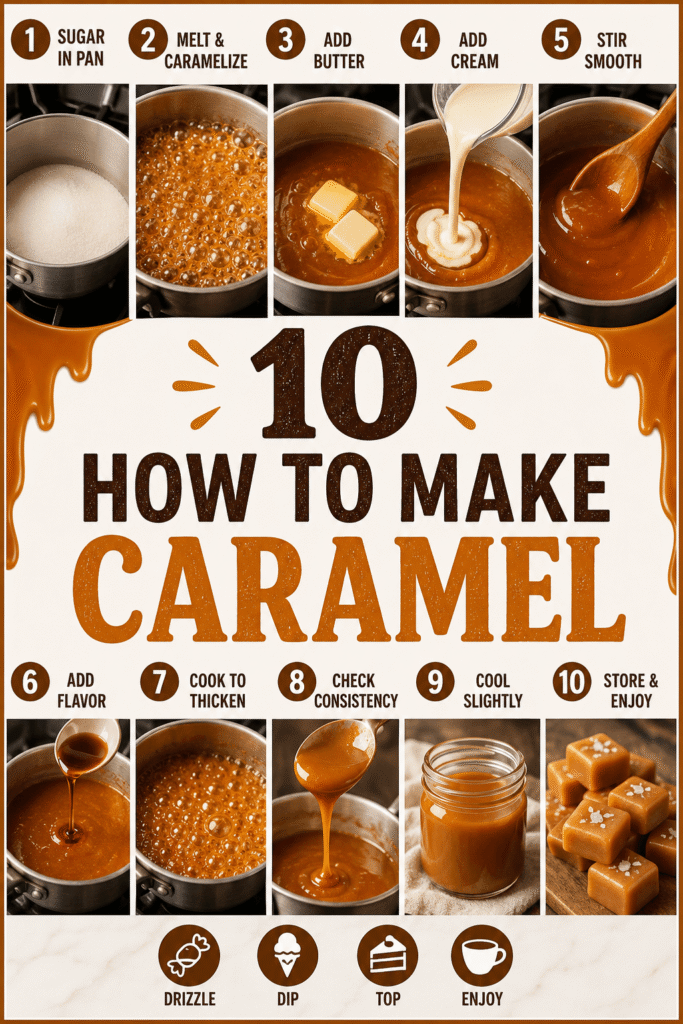
How to Make Caramel Step by Step
This method uses sugar and water to create a wet caramel. It is a great beginner-friendly method because the water helps the sugar dissolve evenly before it begins to caramelize.
Step 1: Prepare Everything First
Before turning on the stove, measure all your ingredients and place them close to your cooking area. Cut the butter into small pieces and warm the heavy cream slightly so it blends more smoothly into the hot caramel.
Caramel moves quickly once it starts to darken. Having everything ready prevents you from scrambling while the sugar is cooking.
Step 2: Add Sugar and Water to the Pan
Add the granulated sugar and water to a medium saucepan. Stir gently just until the sugar is evenly moistened. Once the pan goes on the heat, avoid stirring too much because stirring can cause sugar crystals to form.
Place the saucepan over medium heat. Let the sugar dissolve and begin bubbling. At first, the mixture will look clear and syrupy.
Step 3: Let the Sugar Cook
Allow the sugar mixture to bubble without stirring. You can gently swirl the pan if one side begins to color faster than the other, but avoid scraping the sides of the pan.
The mixture will slowly change from clear to pale yellow, then golden, then amber. Watch carefully because the color can deepen fast near the end.
Step 4: Look for a Golden Amber Color
The best caramel sauce usually starts with a deep golden amber color. If the caramel is too pale, the flavor may taste mostly sweet without much depth. If it gets too dark, it can taste bitter or burnt.
When the sugar reaches a warm amber shade, remove the saucepan from the heat. This helps prevent the caramel from overcooking while you add the next ingredients.
Step 5: Add the Butter
Carefully add the butter pieces to the hot caramel. The mixture will bubble, so add the butter slowly and keep your hands away from the steam.
Whisk until the butter melts completely and the sauce looks glossy. If the mixture separates slightly, keep whisking gently until it comes together.
Step 6: Add the Heavy Cream
Slowly pour in the warmed heavy cream while whisking constantly. The caramel will bubble up again, which is completely normal.
Continue whisking until the cream is fully mixed into the caramel. The sauce should look smooth, shiny, and pourable.
Step 7: Add Salt and Vanilla
Stir in the salt. If you want a classic salted caramel flavor, you can add a little more salt to taste after the sauce cools slightly.
Vanilla extract is optional, but it adds a warm bakery-style flavor. Stir it in at the end so the flavor stays noticeable.
Step 8: Let the Caramel Cool
Let the caramel cool in the pan for a few minutes before pouring it into a heat-safe jar. The sauce will look thinner while it is hot, but it thickens as it cools.
For a pourable drizzle, use the caramel while it is still slightly warm. For a thicker spoonable sauce, let it cool completely or chill it in the refrigerator.
How to Make Salted Caramel
Salted caramel is made using the same basic method, but with extra salt added at the end. The salt balances the sweetness and makes the caramel taste richer.
Start with 1/2 teaspoon of salt, then taste the caramel once it has cooled slightly. Add more if you want a stronger salted caramel flavor. Flaky sea salt is also beautiful sprinkled over the finished caramel before serving.
How to Store Homemade Caramel
Pour cooled caramel into a clean jar or airtight container. Store it in the refrigerator until you are ready to use it.
Caramel thickens when chilled, so warm it gently before serving. You can microwave it in short bursts, stirring between each one, or heat it in a small saucepan over low heat.
If the caramel becomes too thick, stir in a small splash of warm cream until it reaches your preferred consistency. Do not boil it again unless you want it to become thicker.
Ways to Use Homemade Caramel
Homemade caramel can make simple desserts feel special. A small drizzle adds rich flavor, glossy texture, and a beautiful finishing touch.
- Drizzle it over vanilla ice cream
- Spoon it over brownies or blondies
- Use it as a dip for apple slices
- Swirl it into cheesecake batter
- Add it to coffee, lattes, or hot chocolate
- Pour it over pancakes, waffles, or French toast
- Layer it in parfaits or trifles
- Use it as a cupcake or cake filling
- Drizzle it over apple pie or crisp
- Package it in jars for homemade gifts
Common Caramel Mistakes to Avoid
One common mistake is walking away from the stove. Caramel can go from golden to burnt quickly, especially once the sugar starts to darken.
Another mistake is stirring the sugar too much while it boils. Too much stirring can encourage crystallization, which may make the caramel grainy instead of smooth.
Adding cold cream can also make the caramel bubble more aggressively or seize. Slightly warm cream blends into the hot sugar more easily and helps create a smoother sauce.
Using too high of heat can cause uneven cooking. Medium heat is usually best because it gives the sugar enough time to melt, color, and develop flavor without burning too fast.
Tips for Smooth Caramel Every Time
Use a clean saucepan and clean utensils. Small sugar crystals on the sides of the pan can sometimes cause graininess, especially if they fall back into the caramel.
If you notice sugar crystals forming on the sides of the pan, you can brush them down with a pastry brush dipped in water. This helps keep the syrup smooth as it cooks.
Do not rush the color. Caramel needs enough time to develop that warm, toasty flavor. A deep golden amber shade usually gives the best balance of sweetness and richness.
Be careful when adding butter and cream. Hot caramel is extremely hot and can bubble up quickly. Use a saucepan with tall sides and pour slowly.
Final Thoughts on Making Caramel
Making caramel at home is a simple way to turn basic ingredients into something rich, glossy, and delicious. The process may feel intimidating the first time, but it becomes much easier when you prepare your ingredients, use steady heat, and watch the color closely.
Once you master homemade caramel sauce, you can use it in countless desserts and drinks. Drizzle it, dip with it, swirl it, gift it, or keep a jar in the fridge for whenever you want to make something sweet feel extra special.
With a little practice, homemade caramel can become one of your favorite from-scratch recipes. It is buttery, smooth, versatile, and so much better than anything squeezed from a bottle.