Learning how to build a mud kitchen is one of the easiest ways to create a fun, creative, and affordable outdoor play space for kids. A mud kitchen gives children a place to mix, pour, scoop, stir, splash, and pretend-cook with mud, water, leaves, flowers, stones, sticks, and other natural materials.
The best part is that a mud kitchen does not need to be perfect. It does not need expensive wood, fancy tools, or a professional finish. In fact, the most loved mud kitchens are often simple, sturdy, rustic, and full of little details that make outdoor play feel exciting.
You can build a mud kitchen from pallets, scrap wood, an old table, a small cabinet, crates, leftover boards, or repurposed outdoor furniture. As long as it is safe, stable, and child-friendly, it can become a magical backyard cooking station.
What Is a Mud Kitchen?
A mud kitchen is an outdoor pretend kitchen where children can play with mud, water, and natural materials. It usually has a worktop, a pretend sink, shelves, hooks, bowls, spoons, pots, pans, and storage for outdoor play tools.
Children use it to make mud pies, leaf soup, flower potions, stone stew, stick spaghetti, and all kinds of imaginative pretend meals. It encourages sensory play, creativity, fine motor skills, problem-solving, and independent outdoor exploration.
A mud kitchen can be large or small. It can be built against a fence, placed in a garden corner, added to a patio, or tucked beside a shed. The goal is to create a simple play station where mess is allowed and imagination can take over.
Materials You Need to Build a Mud Kitchen
You can build a basic mud kitchen with simple materials. Some people use new timber, but you can also use recycled wood, pallets, old shelves, or a secondhand cabinet.
- Wooden pallets, timber boards, or an old table
- Wood screws
- Drill or screwdriver
- Saw if you need to cut wood
- Sandpaper or electric sander
- Metal bowl, plastic basin, or old sink insert
- Outdoor paint or wood sealant
- Hooks for hanging utensils
- Small shelves or extra boards
- Pots, pans, spoons, cups, and trays
You do not need to buy everything new. Old kitchen utensils, thrifted pots, unused baking trays, and leftover garden containers work perfectly for a mud kitchen.
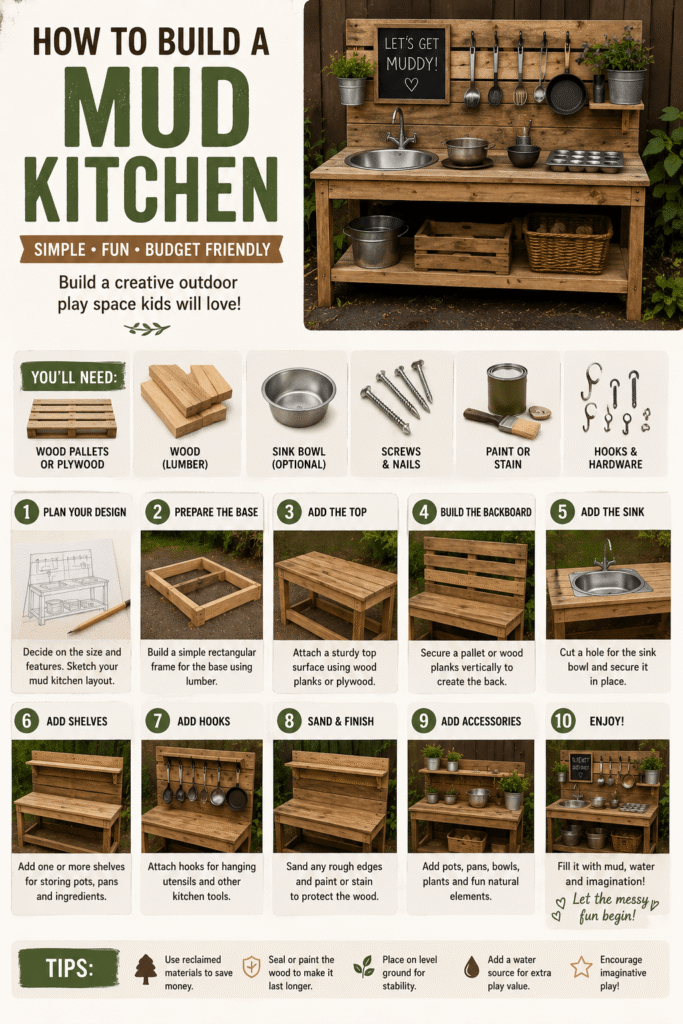
Step 1: Choose the Best Location
Before building, decide where the mud kitchen will go. The best spot is somewhere safe, easy to supervise, and able to handle mess.
A garden corner, fence line, patio edge, or shaded area usually works well. If possible, place it on grass, gravel, concrete, bark chips, or another surface that can be cleaned easily.
It is helpful to keep the mud kitchen close to a water source, but not directly in the way of doors, walkways, or clean outdoor seating areas. Kids will get muddy, so choose a spot where mess will not become stressful.
Step 2: Decide the Size and Layout
A mud kitchen does not need to be large. A small worktop, a sink bowl, and a few hooks can be enough for hours of play.
For younger children, keep the worktop low enough for them to reach comfortably. For older children, you can make it taller and add more shelves, storage, and pretend cooking areas.
A simple layout can include one main counter, one sink, one lower shelf, and one back panel for hooks. If you have more space, you can add side shelves, a chalkboard menu, a pretend stove, or ingredient bins.
Step 3: Build a Strong Base
The base is the most important part of the mud kitchen because it needs to be stable. You can use a wooden table, old cabinet, sturdy bench, pallet frame, or build a simple rectangular frame from timber.
If you are building from wood, create four legs and connect them with boards to form a solid frame. Add cross supports if the kitchen wobbles. The structure should not tip when a child leans on it.
If you are repurposing furniture, check that it is strong enough for outdoor use. Avoid weak particle board if it will get wet often, because it can swell and fall apart quickly.
Step 4: Add the Worktop
The worktop is where most of the play happens. It should be flat, sturdy, and wide enough for bowls, mud pies, trays, and mixing.
You can use timber boards, pallet wood, an old tabletop, or a leftover piece of outdoor-safe wood. Make sure the worktop is screwed down securely and does not move.
Sand the edges well so there are no sharp corners or splinters. Since children will touch the surface often, this step is very important.
Step 5: Create a Sink Area
A sink makes the mud kitchen feel more realistic. The easiest way to make one is to use a metal bowl, plastic washing-up bowl, or old sink insert.
Place the bowl upside down on the worktop and trace around it. Cut a hole slightly smaller than the rim so the bowl can sit inside without falling through. If you do not want to cut the worktop, simply place the bowl on top as a removable sink.
You do not need plumbing. Kids can pour water into the bowl from a jug, bucket, watering can, or refillable water container. A bucket underneath can catch water if you want easier cleanup.
Step 6: Add a Back Panel
A back panel gives the mud kitchen a finished look and creates a place for hooks, shelves, decorations, and a chalkboard. You can make it from pallet boards, fence panels, plywood, or leftover timber.
Attach the back panel securely to the rear of the base. If the kitchen will stand against a fence, you can also attach some storage features directly to the fence instead.
Once the back panel is in place, add hooks for spoons, ladles, small pans, measuring cups, and toy tools. This makes the mud kitchen easier to organize after playtime.
Step 7: Add Shelves and Storage
Shelves make the mud kitchen more useful because kids need places to keep bowls, pots, pretend ingredients, and outdoor play tools.
Add one shelf below the worktop for larger items like buckets, mixing bowls, and trays. Add a small shelf above the worktop for jars, cups, and nature ingredients.
You can also use baskets, crates, bins, or small wooden boxes for storage. Keep everything simple so children can put items away by themselves.
Step 8: Make a Pretend Stove
A pretend stove is easy to add and makes the mud kitchen feel more like a real outdoor kitchen. You can paint circles on the worktop to look like burners or attach round wooden discs as pretend hobs.
Use black outdoor paint for a classic stove look. You can also add small wooden knobs to the front of the kitchen to act as pretend controls.
This detail is not required, but it adds a lot of imagination to the play. Kids love pretending to boil soup, fry leaves, or bake mud cakes.
Step 9: Sand, Seal, and Paint
Once the mud kitchen is assembled, sand every surface carefully. Focus on corners, edges, screw areas, handles, and any place children may touch.
If you want a natural look, use outdoor wood sealant to protect the timber. If you want a colorful design, use outdoor paint in green, blue, yellow, cream, brown, or any cheerful color that suits your garden.
Painting can also make an old or mismatched mud kitchen look fresh and intentional. Let the paint or sealant dry fully before allowing children to play.
Step 10: Add Mud Kitchen Accessories
The final step is adding accessories. This is where the mud kitchen really comes to life.
- Old pots and pans
- Wooden spoons
- Metal ladles
- Muffin tins
- Measuring cups
- Small plates and bowls
- Watering cans
- Plastic jugs
- Cookie cutters
- Trays and baskets
You can also add natural materials like leaves, flowers, pinecones, stones, grass, twigs, and seed pods. Store them in bowls or small baskets so children can use them as pretend ingredients.
Easy Mud Kitchen Ideas to Add Later
Once the basic mud kitchen is built, you can upgrade it over time. Start simple, then add extra features as you see how the children use it.
- A chalkboard menu for pretend recipes
- A small herb garden beside the kitchen
- Ingredient bins for mud, sand, stones, and leaves
- A water dispenser for pouring and mixing
- Hanging baskets for tools
- A small curtain underneath for hidden storage
These little upgrades make the kitchen feel more interactive without making the project too complicated at the beginning.
How to Build a Mud Kitchen From Pallets
If you want a budget-friendly option, pallets are a great choice. Use one pallet as the back panel and another pallet or timber frame as the base.
Sand the pallets very well because pallet wood can be rough. Remove loose nails, check for broken boards, and make sure the pallet is safe before using it.
Add a simple worktop board across the front, cut or place a bowl for the sink, attach hooks to the back, and add a lower shelf for storage. This creates a rustic mud kitchen with very little cost.
How to Keep a Mud Kitchen Safe
Safety matters because a mud kitchen is made for active outdoor play. Make sure the structure is sturdy and cannot tip over easily.
Sand rough edges, cover sharp corners, tighten screws, and avoid glass accessories. Do not use rusty metal, broken ceramics, or anything sharp enough to cut small hands.
Teach children that mud kitchen food is pretend food only. They can mix, serve, and decorate it, but they should not eat it.
How to Keep a Mud Kitchen Clean
A mud kitchen is supposed to get messy, so do not worry about keeping it perfect. The goal is easy cleanup, not spotless play.
After playtime, empty standing water, rinse bowls, and store tools in a basket or bin. If the kitchen has a removable sink bowl, take it out and wash it when needed.
Every few weeks, check the wood, screws, hooks, and shelves. Outdoor play equipment lasts longer when you do small maintenance regularly.
Final Thoughts on How to Build a Mud Kitchen
Building a mud kitchen is a simple DIY project that can give kids years of outdoor fun. You can make it from pallets, scrap wood, an old table, a secondhand cabinet, or a few basic boards.
The most important features are a sturdy base, a safe worktop, a pretend sink, storage, and simple accessories. Once those are in place, children can use their imagination to create endless muddy recipes and outdoor adventures.
Whether your mud kitchen is rustic, colorful, compact, or full of little extras, it does not need to be perfect. It only needs to be safe, inviting, and ready for messy play.