A keystone pollinator garden is more than a pretty flower bed. It is a thoughtful garden designed around plants that provide major value for pollinators, insects, birds, and the wider backyard ecosystem. Instead of choosing flowers only for color, this type of garden focuses on plants that support life throughout the seasons.
The idea is simple: some plants do more ecological work than others. These plants may provide nectar, pollen, leaves for caterpillars, berries for birds, shelter for insects, or structure for small wildlife. When you build a garden around these important plants, your yard becomes more than decorative. It becomes a living habitat.
Keystone pollinator gardens can be large or small. You can create one in a front yard border, backyard corner, cottage garden bed, patio container collection, meadow strip, or sunny side yard. The key is to choose plants that are suited to your region, bloom across different seasons, and offer food and shelter for pollinators at every stage of life.
What Is a Keystone Pollinator Garden?
A keystone pollinator garden is a garden designed with high-impact plants that support many pollinators and beneficial insects. These plants are often native to the local area because native pollinators and wildlife have adapted to use them over time.
The word “keystone” means something that plays an important role in holding a system together. In a garden, keystone plants can act as the foundation of a healthy habitat. They help feed bees, butterflies, moths, beetles, hummingbirds, and other creatures that move pollen from flower to flower.
A strong keystone garden usually includes nectar plants, host plants, shrubs, grasses, water sources, and nesting areas. The result is a garden that looks beautiful while supporting pollinators from spring through fall.
Why Keystone Plants Matter
Not all garden plants provide the same value to pollinators. Some ornamental plants look beautiful but offer very little nectar, pollen, or habitat. Others are full of life and become busy feeding stations for bees, butterflies, and other insects.
Keystone plants matter because they support the food web. Flowers provide nectar and pollen for adult pollinators. Leaves feed caterpillars and other larvae. Seeds and berries feed birds. Shrubs and stems provide cover and nesting places.
When you choose the right plants, your garden can become a small but meaningful refuge. Even a single flower bed filled with useful plants can bring more movement, color, and life into your yard.
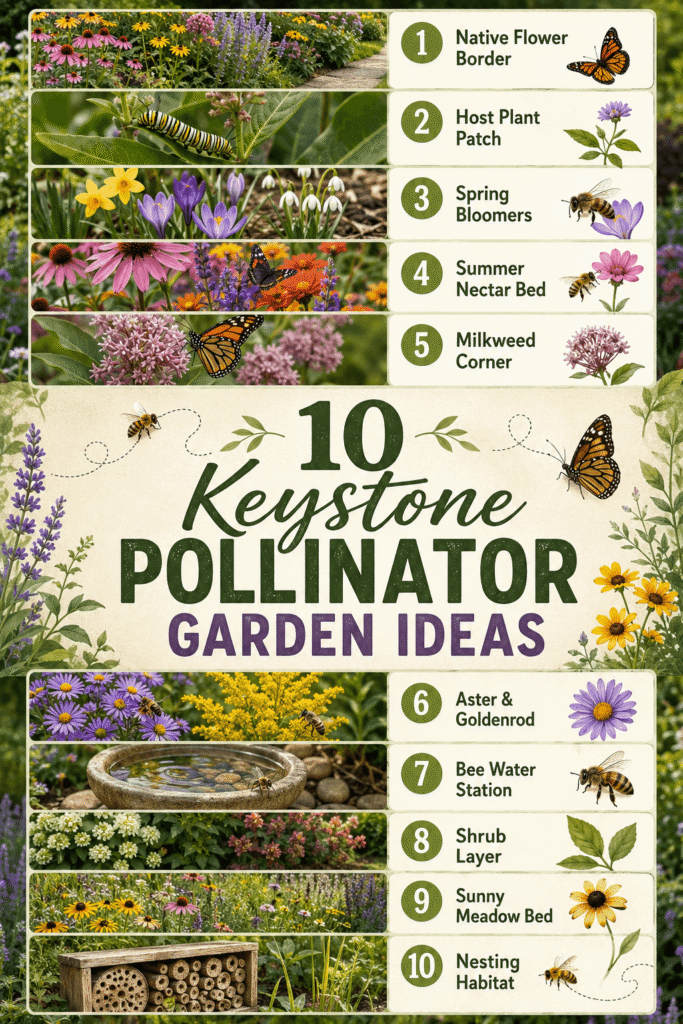
1. Native Flower Border
A native flower border is one of the best ways to start a keystone pollinator garden. Native flowers are often easier for local pollinators to recognize and use. They also tend to fit naturally with the local climate and soil.
Choose a mix of flowers with different heights, shapes, colors, and bloom times. Coneflowers, black-eyed Susans, bee balm, phlox, penstemon, yarrow, salvia, and native asters can all create a colorful and active border, depending on your region.
Plant flowers in groups instead of scattering one of each plant everywhere. Groupings make it easier for pollinators to find the blooms and make the garden look more intentional.
2. Host Plant Patch
A true pollinator garden should support more than adult butterflies and bees. It should also support the early life stages of insects. Host plants are the plants that caterpillars and larvae depend on for food.
For example, milkweed is well known as a host plant for monarch caterpillars. Other butterflies and moths also depend on specific plant families for their young. This is why a host plant patch is such a valuable part of a keystone garden.
Place host plants in a sunny or partly sunny area and allow some leaves to be eaten. Chewed leaves are not a failure in this kind of garden. They are a sign that your garden is feeding wildlife.
3. Spring Bloomer Zone
Early spring flowers are important because pollinators begin looking for food as soon as temperatures warm. A spring bloomer zone helps provide nectar and pollen at the beginning of the growing season.
Choose early flowers that suit your climate. Crocus, native violets, columbine, woodland phlox, serviceberry flowers, and early-blooming shrubs can help brighten the garden while supporting early pollinator activity.
Spring bloomers are especially helpful when they are planted near paths, patios, or entryways. They make the garden feel alive after winter and create a welcoming first wave of color.
4. Summer Nectar Bed
Summer is when many pollinator gardens reach their peak. A summer nectar bed should be full, colorful, and easy for pollinators to access. This is the place for long-blooming flowers that keep the garden buzzing.
Use plants with open flower shapes, tubular flowers, clustered blooms, and different heights. Coneflowers, bee balm, mountain mint, lavender, salvia, liatris, milkweed, coreopsis, and native sunflowers can create a rich summer nectar display.
Keep the planting dense enough to look lush, but leave narrow spaces for access and airflow. A healthy summer nectar bed should feel abundant without becoming chaotic.
5. Milkweed Corner
A milkweed corner is a beautiful and purposeful addition to a keystone pollinator garden. Milkweed flowers attract many pollinators, and the leaves support monarch caterpillars.
There are different types of milkweed, so choose varieties that are appropriate for your region and garden conditions. Some prefer drier soil, while others like more moisture.
Because milkweed can have a bold shape and strong presence, it works well in a dedicated corner or grouped with other prairie-style flowers. Pair it with coneflowers, grasses, asters, and goldenrod for a natural look.
6. Aster and Goldenrod Section
Asters and goldenrod are excellent plants for extending pollinator support into late summer and fall. When many other flowers begin to fade, these plants can keep the garden colorful and useful.
Purple asters and bright goldenrod look beautiful together because the colors contrast naturally. They also create a soft meadow-like effect when planted in groups.
This section is especially valuable near the back of a border, along a fence, or in a sunny meadow bed. It gives pollinators late-season food and keeps the garden looking alive well after summer’s peak.
7. Bee Water Station
Pollinators need water, but deep bowls and birdbaths can be difficult for small insects to use safely. A bee water station gives them a shallow place to drink.
Use a shallow dish, saucer, or low bowl filled with clean water. Add pebbles, stones, marbles, or small pieces of wood so bees and butterflies have landing spots.
Place the water station near flowering plants but away from heavy foot traffic. Refresh the water often to keep it clean and inviting.
8. Shrub Layer
Shrubs add structure to a keystone pollinator garden. They create height, shelter, flowers, berries, and nesting cover. Without shrubs, a garden can sometimes feel flat or overly seasonal.
Choose flowering or fruiting shrubs that work well in your region. Serviceberry, viburnum, elderberry, native roses, spicebush, blueberry, and dogwood can be beautiful options depending on your location.
Shrubs are also helpful for making the garden look good year-round. They give the space shape in winter and provide a backdrop for flowers in spring, summer, and fall.
9. Sunny Meadow Bed
A sunny meadow bed is a wonderful way to make a pollinator garden feel relaxed and natural. This area can include native grasses, wildflowers, seed heads, and loose drifts of color.
Meadow-style planting works best when the plants are repeated in groups. Instead of planting one of everything, choose a smaller plant palette and repeat it throughout the bed.
Let some flowers go to seed at the end of the season. Seed heads can feed birds, add texture, and give the garden winter interest.
10. Nesting Habitat
Pollinators need more than flowers. Many also need safe places to nest, rest, and overwinter. A nesting habitat can be simple, natural, and beautiful when it is planned intentionally.
Leave some hollow stems, small brush piles, bare soil patches, or leaf litter in quiet corners of the garden. You can also add a bee hotel, but it should be placed carefully and kept clean to avoid becoming a problem.
A slightly less tidy corner can be one of the most useful parts of a keystone pollinator garden. The goal is not to let the whole garden become messy, but to provide small pockets of real habitat.
Best Plants for a Keystone Pollinator Garden
The best plants depend on your region, climate, soil, and sunlight. A good rule is to start with native plants that are known to support local pollinators.
Popular pollinator-friendly plant ideas include:
- Milkweed
- Coneflower
- Bee balm
- Goldenrod
- Asters
- Black-eyed Susan
- Salvia
- Liatris
- Mountain mint
- Native grasses
How to Design a Keystone Pollinator Garden
Start by observing your space. Notice how much sun it gets, where water drains, where people walk, and which areas are easiest to maintain. Most pollinator flowers prefer sun, but there are also options for part shade.
Next, create layers. Use taller plants in the back, medium plants in the middle, and lower plants near the front. Add shrubs for structure and groundcover plants to fill gaps.
Plan for bloom succession. Try to include flowers that bloom in spring, summer, and fall. This keeps the garden attractive and useful for pollinators throughout the growing season.
Tips for Keeping the Garden Beautiful
A keystone pollinator garden can look natural and tidy at the same time. The secret is using defined edges, repeated plants, and clear paths.
Add a border of stone, brick, wood, or metal edging to make the planting area look intentional. Use mulch, gravel paths, or stepping stones to create structure.
Repeat colors and plant shapes throughout the garden. Repetition keeps the space from looking random and makes even a wildflower-style garden feel designed.
Common Mistakes to Avoid
One common mistake is choosing flowers only for appearance. A garden can look colorful but still offer limited value if the plants do not provide food or habitat.
Another mistake is planting only summer bloomers. Pollinators need support across the seasons, so include early and late flowers too.
It is also easy to overclean the garden in fall. Leaving some stems, seed heads, and leaves can provide shelter and food. You can still keep paths and main views tidy while allowing habitat areas to remain.
Final Thoughts on Keystone Pollinator Garden Ideas
A keystone pollinator garden is one of the most beautiful ways to make your yard more useful, lively, and meaningful. By choosing plants that support pollinators and wildlife, you create a garden that gives back season after season.
Start with a native flower border, add host plants, include spring and fall bloomers, and create simple habitat features like water, shrubs, and nesting areas. Even small changes can make a noticeable difference.
The best pollinator gardens are not perfect or overly controlled. They are colorful, layered, active, and full of life. With the right keystone plants and thoughtful design, your garden can become a beautiful place for both people and pollinators to enjoy.