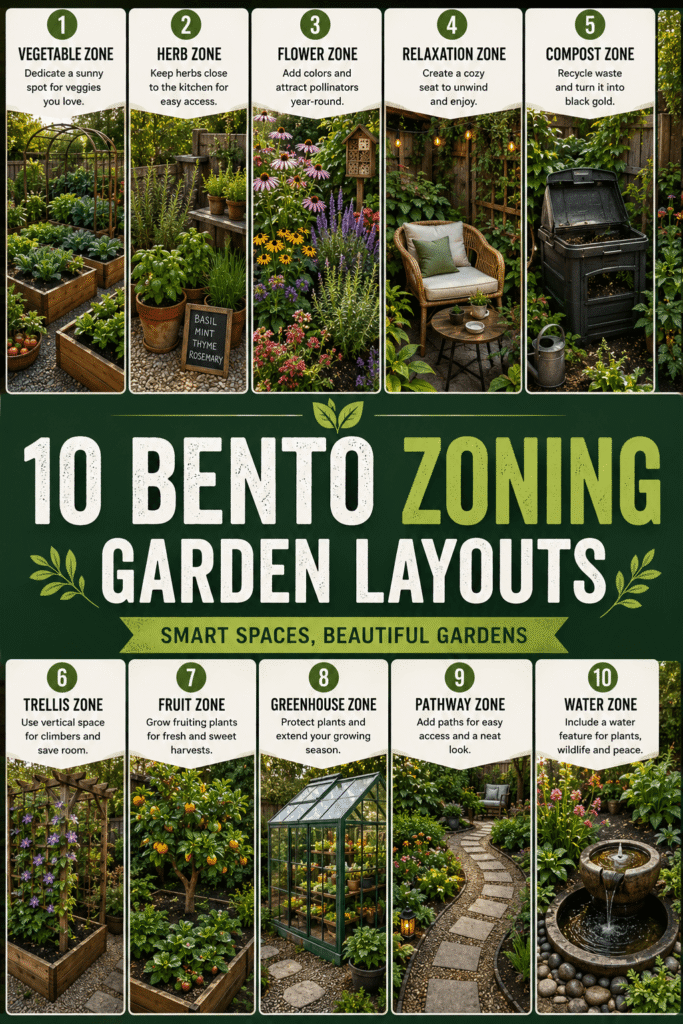
Bento zoning garden layouts are a clever way to make an outdoor space feel more organized, intentional, and easy to enjoy. Inspired by the neat compartments of a bento box, this garden layout approach divides your yard, patio, balcony, or courtyard into smaller zones that each have a clear purpose.
Instead of treating a small garden as one open area, bento zoning breaks it into mini spaces. One zone might be for seating, another for herbs, another for flowers, another for dining, and another for storage or a water feature. The result is a garden that feels layered, functional, and visually calm.
This style works especially well for small gardens because it helps every inch do something useful. It also makes the space feel bigger because your eye moves from one area to the next instead of taking in the entire garden all at once. With the right materials, plants, and layout, even a tiny outdoor area can feel like a complete garden with multiple little moments to enjoy.
What Is Bento Zoning in Garden Design?
Bento zoning in garden design is the idea of organizing an outdoor space into clearly defined sections, similar to the compartments in a bento lunchbox. Each section has its own purpose, but all of the zones work together as one cohesive design.
A bento garden does not have to look Japanese or formal. It can be modern, cottage-inspired, Mediterranean, minimalist, rustic, or lush and romantic. The important part is the structure. Every area should feel intentional instead of random.
For example, a small rectangular garden could include a gravel seating zone, a raised herb bed, a flower border, a narrow path, and a compact storage corner. Each area is separate, but the materials and colors repeat so the whole garden feels connected.
Why Bento Zoning Works So Well in Small Gardens
Small gardens can easily feel cluttered when everything is mixed together. Seating, pots, tools, plants, and pathways can compete for attention. Bento zoning solves this by giving each part of the garden its own place.
When every zone has a purpose, the garden becomes easier to use. You know where to sit, where to grow herbs, where to display flowers, where to walk, and where to store essentials. This makes the space feel calmer and more practical.
Bento zoning also creates visual rhythm. Defined areas, repeated materials, and tidy edges help the garden feel designed rather than crowded. It is a great layout idea for patios, townhouses, balconies, side yards, courtyards, and compact back gardens.
1. Dining Zone with Raised Planters
A dining zone is one of the best sections to include in a bento garden layout. Even a small bistro table can turn a corner of the garden into a useful outdoor room.
Use raised planters around the dining area to create a natural boundary. Herbs, lavender, rosemary, compact shrubs, or edible flowers can make the space feel pretty and practical.
Choose furniture that fits the scale of the space. A round table, folding chairs, or a slim bench can work well in small gardens. Keep the colors simple so the dining zone blends with the rest of the layout.
2. Lounge Zone with Gravel and Potted Plants
A lounge zone gives your garden a place to relax. This could be a small outdoor sofa, two chairs, a bench, or even floor cushions on a weatherproof rug.
Gravel is a great surface for this zone because it feels relaxed, drains well, and visually separates the seating area from planting beds or pathways. Add potted plants around the edges to soften the space.
For a cozy look, include lanterns, outdoor pillows, a small side table, and a few tall plants for privacy. This creates a mini retreat that feels intentional without needing a large yard.
3. Herb Garden Compartment
A herb garden compartment is perfect for bento zoning because it is small, useful, and easy to define. You can grow herbs in a raised bed, trough planter, wall planter, or a cluster of matching pots.
Good herbs for a compact garden include basil, thyme, rosemary, parsley, chives, oregano, sage, and mint. Mint spreads quickly, so it is best kept in its own pot.
Place the herb zone near the kitchen door, outdoor dining area, or sunny walkway. This makes it easy to snip herbs while cooking or serving food outside.
4. Flower Cutting Zone
A flower cutting zone adds color and beauty to the garden while giving you blooms to bring indoors. This zone can be a raised bed, narrow border, or group of large containers.
Choose flowers that fit your sunlight and space. Cosmos, zinnias, dahlias, sweet peas, calendula, snapdragons, and lavender can all work beautifully in a small cutting garden.
To keep the bento look tidy, use defined edges. A timber border, stone strip, metal edging, or gravel path can help separate the flower zone from other parts of the garden.
5. Quiet Reading Nook
A quiet reading nook is a lovely bento zone for anyone who wants a peaceful corner. You only need a chair, a small table, and a little privacy to make it feel special.
Place the nook against a fence, under a tree, beside a trellis, or near tall planters. Add climbing plants, bamboo screens, ornamental grasses, or evergreen shrubs to create a tucked-away feeling.
This zone works best when it feels slightly separate from busier areas like dining or play spaces. A different floor material, outdoor rug, or row of pots can help define it.
6. Wildlife-Friendly Mini Zone
A wildlife-friendly zone can make even a small garden feel alive. This area can include pollinator plants, a bird bath, bee-friendly flowers, a small log pile, or a shallow water dish.
Choose plants that attract bees, butterflies, and birds. Lavender, echinacea, salvia, foxgloves, verbena, alliums, and native wildflowers are beautiful options depending on your region.
Keep this zone slightly natural but still contained. A small meadow-style patch, corner planter, or dedicated border can add biodiversity without making the garden feel messy.
7. Vertical Growing Zone
Vertical growing is ideal for bento zoning because it uses wall and fence space instead of taking up valuable floor area. This is especially helpful in balconies, courtyards, and narrow gardens.
Use trellises, wall planters, hanging pots, plant ladders, or vertical herb pockets. Climbing plants, trailing flowers, strawberries, herbs, and compact vegetables can all work well.
A vertical zone also adds height, which makes the garden feel more layered. It draws the eye upward and helps the space feel fuller without becoming crowded.
8. Water Feature Zone
A small water feature can become a beautiful bento garden compartment. It adds sound, movement, and a calming focal point. You do not need a large pond to create the effect.
Try a small bowl fountain, wall fountain, ceramic water bowl, or mini container pond. Place it in a quiet corner or near a seating zone so you can enjoy the sound.
Surround the water feature with simple planting, stones, or gravel to make it feel intentional. Keep the design uncluttered so the water remains the main focus.
9. Potting and Storage Corner
A potting and storage corner is a practical zone that keeps your garden tools and supplies organized. In small gardens, storage can quickly become clutter, so giving it a defined place is important.
Use a slim storage bench, compact shed, wall hooks, potting table, or cabinet. Add baskets, labeled containers, or shelves to keep everything neat.
To make the storage zone attractive, choose materials that match the rest of the garden. Wood, metal, woven baskets, and neutral containers can help practical storage feel stylish.
10. Pathway Grid Layout
A pathway grid layout is one of the clearest ways to create a bento-style garden. Paths divide the garden into tidy compartments while making the space easier to move through.
Use gravel, stepping stones, brick, pavers, timber sleepers, or stone tiles. The path does not have to be perfectly symmetrical, but it should guide the eye and connect each zone.
This layout works especially well in narrow gardens and rectangular patios. A simple central path with zones on either side can make a small garden feel structured and surprisingly spacious.
Best Materials for Bento Zoning Garden Layouts
Materials are important because they help define each zone. Repeating a few materials throughout the garden keeps the layout cohesive and prevents it from looking too busy.
Beautiful material ideas include:
- Gravel paths
- Timber raised beds
- Stone pavers
- Brick edging
- Corten steel planters
- Wood decking
- Woven outdoor baskets
- Concrete stepping stones
- Metal garden edging
- Natural stone borders
Best Plants for a Bento Garden
The best plants for bento zoning garden layouts are plants that look good in groups and stay within their zone. Repeating a small plant palette can make the garden feel calm and intentional.
Try mixing evergreen structure with seasonal color. Boxwood, pittosporum, lavender, rosemary, ornamental grasses, ferns, hostas, hydrangeas, salvia, and compact herbs can all work beautifully.
For small spaces, avoid using too many different plant types. A limited palette repeated across zones creates a more polished look.
How to Plan a Bento Zoning Garden
Start by listing what you want your garden to do. Do you need a place to sit, eat, grow herbs, entertain, store tools, or create privacy? Your zones should match your real lifestyle.
Next, sketch your space as a simple rectangle, square, balcony, or courtyard shape. Divide it into small compartments, leaving clear paths between them. Think of each compartment as having one main job.
Finally, choose a simple color and material palette. Repeating materials like wood, gravel, stone, and terracotta will help the garden feel connected even though it has separate zones.
Tips for Making Bento Zones Feel Cohesive
The goal of bento zoning is not to create a busy garden full of random compartments. The zones should feel separate but harmonious. Repetition is the easiest way to do this.
Repeat the same plant colors, planter shapes, edging materials, or furniture finishes. For example, use the same timber for raised beds and seating, or repeat terracotta pots in several zones.
Keep the pathways clear and avoid overfilling each section. A bento garden looks best when every area has breathing room and a clear purpose.
Final Thoughts on Bento Zoning Garden Layouts
Bento zoning garden layouts are a smart way to make small outdoor spaces feel organized, beautiful, and useful. By dividing the garden into purposeful mini zones, you can create a space that supports relaxing, dining, growing, entertaining, and enjoying nature.
This layout style works for tiny patios, balconies, courtyards, side yards, and compact back gardens. It helps reduce clutter, improve flow, and make the space feel larger than it really is.
Start with the zones you need most, then use repeated materials, simple planting, and clear paths to tie everything together. With thoughtful planning, your garden can feel like a beautifully arranged bento box: compact, balanced, functional, and full of charm.
Pinterest Titles
- 10 Bento Zoning Garden Layouts That Make Small Gardens Feel Bigger
- Bento Zoning Garden Ideas for a Smart and Beautiful Outdoor Space
- Small Garden Layout Ideas Using the Bento Zoning Method
Pinterest Description
Discover bento zoning garden layouts for small gardens, patios, courtyards, and balconies. These smart garden ideas use mini zones for dining, lounging, herbs, flowers, wildlife, water features, vertical growing, storage, and pathways to create an outdoor space that feels organized, beautiful, and functional.
Hashtags
#BentoZoningGarden #GardenLayoutIdeas #SmallGardenIdeas #GardenZoning #BackyardIdeas #PatioGarden #CourtyardGarden #GardenDesignIdeas #OutdoorLivingIdeas #PinterestGarden